










Isracard in talks to acquire digital bank One Zero
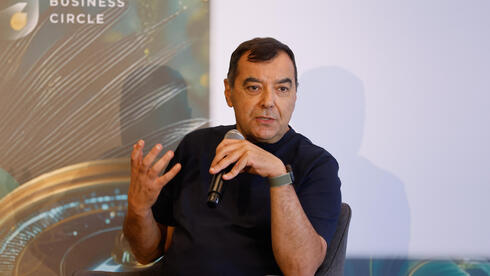
The credit card company is discussing a deal that would give it full ownership of the four-year-old bank and a foothold in banking, securities and capital markets. The talks come as One Zero’s controlling shareholder, Amnon Shashua, seeks to sell the bank.
Isracard is in talks with the management of One Zero about acquiring full ownership of the digital bank. Two weeks ago, Calcalist revealed that One Zero’s controlling shareholder, Amnon Shashua, had put the bank up for sale and was holding discussions with Meitav and businessman Moti Ben-Moshe. Shashua is seeking a valuation of NIS 1.1-1.2 billion ($331-361 million), although any eventual deal is likely to be completed at a lower, potentially significantly lower, price. Calcalist has learned that One Zero’s management, led by CEO Eyal Gafni and Chairman Shouky Oren, has begun discussions with Isracard on a potential transaction under which the credit card company would acquire the bank in full and bring it under its management by 2027.
Isracard held preliminary discussions with One Zero about six months ago, but those talks did not advance. The company is now revisiting the possibility of a deal. For Isracard, the acquisition would represent a significant strategic move, in line with the ambitions outlined by Delek Group, its controlling shareholder, when it acquired control of the company in August 2025.
Since Delek’s entry, Isracard has made several changes, including replacing CEO Ran Oz with Itamar Furman, who previously served as deputy CEO of Bank Hapoalim and head of its business division. The appointment signaled Isracard’s intention to expand beyond its traditional credit card business and move further into banking.
In March, Isracard surprised the market by winning the Fly Card loyalty program from CAL (Israel Credit Cards). The program is considered one of the most profitable and established loyalty clubs in Israel. Last week, El Al acquired The Phoenix’s stake in its Frequent Flyer club at an implied valuation of approximately NIS 4.2 billion ($1.27 billion). About one-third of that valuation has been attributed to the transfer of the Fly Card program from CAL to Isracard.
Isracard has issued approximately 390,000 Fly Card cards, according to its third-quarter financial statements. Its challenge now is to expand the membership base and demonstrate that the agreement can deliver the expected returns. Isracard’s market capitalization currently stands at approximately NIS 3.5 billion ($1.05 billion), not far from the valuation at which Delek acquired control of the company.
Isracard estimates that the Fly Card agreement with El Al will contribute NIS 1.2-1.6 billion ($361-482 million) in pre-tax profit over the life of the agreement. Earlier this month, alongside the release of its third-quarter results, which showed net profit falling to NIS 20 million ($6 million), the company announced an efficiency plan due to begin in 2027. The plan is expected to generate annual savings of approximately NIS 100 million ($30.1 million).
Acquiring One Zero, which has held a permanent banking license for about four years and has received approximately NIS 1.4 billion ($422 million) in investment from its owners, could give Isracard a foothold in areas where it currently has little or no presence. These include capital markets and securities services, which have become important sources of revenue for One Zero, accounting for approximately 30% of the bank’s revenue in the second quarter of 2026.
One Zero reported a 27% reduction in its first-half loss compared with the same period a year earlier. Its net loss for the six months ended June 30, 2026, stood at approximately NIS 84 million ($25.3 million). The bank has said it expects to reach quarterly profitability as early as 2027.
The potential acquisition would also mark a different approach for Isracard from its earlier attempt to enter digital banking through Esh, the digital bank founded by Nir Zuk. Several months ago, Isracard held negotiations to acquire Esh at a valuation of approximately NIS 400 million ($120.5 million), in a transaction that would have included both Isracard shares and cash. Esh has not yet received a permanent banking license and has a limited customer base of approximately 900, consisting largely of friends and family. In July, Isracard decided not to extend the negotiations, with people familiar with the discussions citing concerns about the maturity of Esh’s product.
Unlike Esh, One Zero is an operating commercial bank with approximately 200,000 customers and a permanent banking license. It also offers digital services in securities and capital markets. A deal would therefore give Isracard access to an established banking operation without having to build one from scratch or secure a new license.
For One Zero, Isracard’s backing could provide both a larger customer base and the capital needed to expand its business. In the first half of 2026, the bank reported revenue of approximately NIS 66 million ($19.9 million), while expenses fell 10% to NIS 149 million ($44.9 million). Customer deposits reached approximately NIS 3.8 billion ($1.14 billion), an increase of about 20%. The value of customers’ securities portfolios grew by approximately 151% during the period, with activity in the securities and capital markets business generating about 30% of the bank’s revenue in the second quarter.
One Zero has, however, struggled to build a substantial lending business. At the end of the first half of 2026, its credit portfolio stood at approximately NIS 500 million ($150.6 million). Its ability to expand lending has been constrained in part by its capital position, which stood at approximately NIS 50 million ($15.1 million) when the bank published its financial statements.
Isracard could provide the financial backing needed to expand One Zero’s credit portfolio, while also giving the bank access to Isracard’s customer base of approximately 5 million. The combination could create opportunities to cross-sell banking, credit and investment services, although the terms of any potential transaction and the extent of the operational integration have yet to be determined.



