






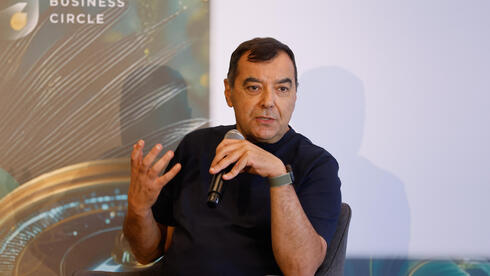
Amnon Shashua explores sale of controlling stake in One Zero at $375 million valuation
The digital bank has held discussions with several potential buyers, including Meitav and Moti Ben-Moshe, while Isracard has also examined a possible acquisition. The process faces a valuation gap, with a potential deal likely to involve both a capital injection and the sale of some of Shashua's shares. Shashua said in response: "The information is incorrect. There are discussions regarding investments."
Amnon Shashua is exploring the sale of a controlling stake in digital bank One Zero, as the entrepreneur seeks to bring in a new investor or strategic partner after years of funding the bank's expansion. Calcalist has learned that representatives of the bank, led by CEO Eyal Gafni and Chairman Shouky Oren, have held discussions and presented the business to potential buyers in recent weeks. At least three parties have been granted access to a data room set up for the process.
Among those that have expressed interest are investment firm Meitav and businessman Moti Ben-Moshe. Credit card company Isracard also held discussions several months ago, after negotiations to acquire the digital bank broke down. Those talks have since been suspended, although they could potentially resume. Discussions were also held with businessman Rami Levy and the Direct Insurance (Bituach Yashir) group, but neither progressed. Both have expressed interest in the lean banking model.
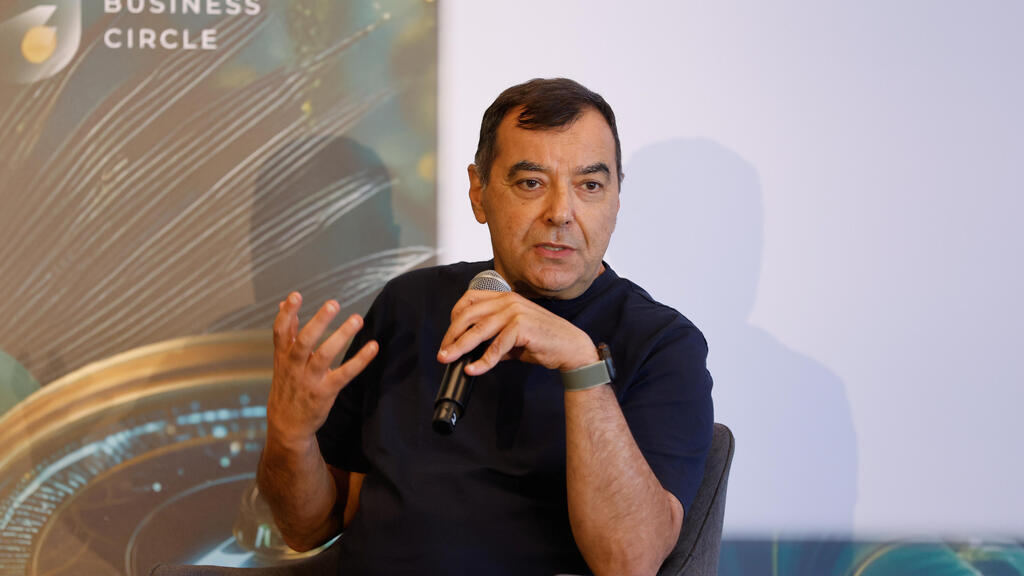
Shashua, who acquired One Zero from Marius Nacht in 2020, is valuing the bank at NIS 1.1 billion to NIS 1.2 billion ($345M-375M). He owns approximately 60% of its shares, with the remainder held by a group of investors that includes Julius Baer, Tencent, SBI, Hachshara, Cerberus, OurCrowd, the Hebrew University, a small Silicon Valley-based fund and investors from Singapore.
In response to Calcalist, Shashua rejected the report, saying: "The information is incorrect." He added that "there are discussions regarding investments, 'white label' arrangements, and the like."
Nevertheless, people familiar with the discussions describe a gap between Shashua's valuation expectations and the amount potential buyers are prepared to pay. The structure under consideration would involve an injection of new capital into the bank, potentially alongside the purchase of some of Shashua's shares, reducing his holding to a minority stake.
According to sources close to the discussions, Shashua, who has invested $114 million in the bank since acquiring it from Nacht, is unwilling to inject additional capital and would prefer to focus on his other business interests, particularly his artificial intelligence companies. People close to the bank strongly dispute that characterization.
In July, Shashua also stepped down as CEO of Mobileye, the autonomous-driving company he co-founded with Ziv Aviram and later sold to Intel for $15 billion.
One Zero's main attractions for potential buyers are its established technology and its banking license, which allows it to operate under a lean banking model. Acquiring the bank would spare a buyer the lengthy and costly process of building a banking operation and obtaining a license from scratch. Any change in control would, of course, still require approval from the Bank of Israel.
The bank is also seeking to demonstrate that it has established a meaningful foothold in a market dominated by a handful of large institutions. According to figures released by One Zero, the bank accounted for 25% of all new bank accounts opened in Israel during the first half of 2026, bringing its total customer base to 200,000. It also argues that its entry into the market has intensified competition, forcing established banks to work harder to retain customers considering a switch.
One Zero's management expects the bank to become profitable in 2027. Some potential buyers, however, are more cautious, noting that the bank has repeatedly presented itself as being close to profitability without yet reaching that milestone.
The financial picture remains challenging. At the end of the first half of 2026, One Zero had equity of NIS 53 million, while accumulated losses since its establishment had reached approximately NIS 1.3 billion. The bank expects its annual loss to decline to NIS 130 million in 2026, from NIS 214 million in 2025.
During the first half of this year, the bank generated NIS 66 million in income, up 33% from the corresponding period in 2025, while expenses fell by 10% to NIS 149 million. Its assets totaled approximately NIS 7 billion, and public deposits stood at NIS 3.8 billion at the end of June.
During their discussions with potential buyers, bank representatives presented One Zero as being on the verge of a breakthrough. Shashua himself is understood to have met with at least some of the interested parties to explain the bank's potential and the rationale for acquiring a stake.
For Meitav, controlled by Avner Stepak and brothers Nir and Eli Barkat, an investment in One Zero could provide a significant foothold in banking. The move would give the investment house access to new sources of credit and potentially improve margins through a lower cost of funds.
Ben-Moshe, meanwhile, has made no secret of his ambition to own a lean bank. He previously competed to acquire credit card company CAL, submitting the highest bid of NIS 4.18 billion. Discount Bank ultimately selected a lower offer from businessman George Horesh and Harel, believing it had a better chance of securing regulatory approval. That expectation proved misplaced: the deal eventually collapsed after the Competition Authority conditioned its approval on Horesh selling his holdings in Super-Pharm.
For Isracard, acquiring One Zero would be a natural extension of its ambitions to expand beyond credit cards and become a broader player in financial services. The company, controlled by Yitzhak Tshuva and led by CEO Itamar Furman, examined the possibility of acquiring One Zero several months ago, although those discussions have reportedly been put on hold and could yet resume.
Isracard has also pursued a banking strategy through negotiations to acquire Esh, the second digital bank, from Nir Zuk. The talks advanced to the signing of a memorandum of understanding but ultimately failed to produce a deal. One assessment is that Isracard was not convinced Esh's technology would be sufficient to meet its initial requirements.
One Zero was founded in 2019 by Marius Nacht and sold to Shashua a year later. It officially opened to the public in 2022, seeking to challenge Israel's highly concentrated banking market with a digital-first, lean operating model. But breaking into a sector dominated by established banks proved more difficult and expensive than its owners had anticipated. The bank required repeated capital injections, including investments from new shareholders, while its growth fell short of initial ambitions.
It has also been forced to cut costs. Last month, One Zero announced that it would lay off 30 employees, approximately 10% of its workforce. Gafni attributed the move to a structural reorganization. It was the bank's third round of layoffs, following the dismissal of 30 employees in January 2024 and another 23 in September of that year.
One Zero's most recent funding round took place in December 2021, when it raised $120 million at a pre-money valuation of $200 million and a post-money valuation of $320 million. Since then, the bank has sought to raise additional capital, primarily from Israeli institutional investors, but those efforts have failed to advance because of disagreements over valuation.



