










“AI will bend the arc of civilization”: SingleStore CEO’s stark warning
Raj Verma says drug discovery, cancer research, and global markets are on the brink of a historic transformation.
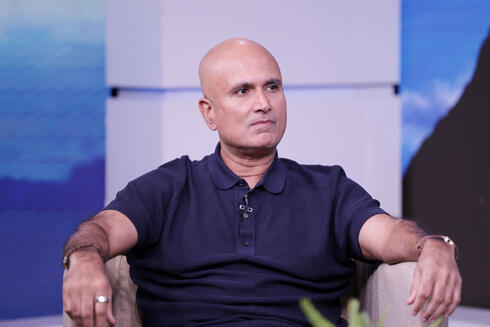
Raj Verma
(Ynet)


“This is going to bend the arc of civilization as we know it,” Raj Verma, CEO of database company SingleStore, said at Calcalist and Commit’s AI Week. Drawing on ideas from Yuval Noah Harari’s Sapiens, Verma argued that technology may compress humanity’s evolutionary horizon from “millions of years” to as little as 500. “Humans have gotten in their own way of evolution,” he said. “AI is going to be more revolutionary than anything we have seen.”
Verma delivered an unusually sweeping, and at times unsettling, vision of how artificial intelligence will reshape human life, economic structures, and even the trajectory of civilization itself. In a conversation punctuated by both optimism and caution, Verma cast AI not as another technological wave but as a civilizational force whose impact he believes will surpass electricity, the internet, and “all of that put together.”
To illustrate the scale of change he expects, Verma pointed to pharmaceutical development, where new drugs typically require seven to ten years of research before reaching patients. Within five years, he argued, that cycle will shrink to less than 12 months. “That is revolutionary,” he said. “Almost unthinkable.”
He expressed similar hopes for oncology. For decades, cancer research has struggled to keep pace with the disease’s ability to mutate. “The technology we have today cannot keep up with the way cancer evolves,” he said. AI, in his telling, is “our biggest hope” for finally staying ahead of that evolution and prolonging patients’ lives.
Related articles:
Verma did not dismiss the idea of an AI bubble. Instead, he defined it sharply. “There is absolutely no doubt we are in a bubble,” he said. But bubbles, he noted, have long-term winners. The dot-com boom of the late 1990s did not deliver on its three-year horizon, he said, but ultimately reshaped the world “many, many times” over.
AI, he argued, will follow a similar arc: the long-term value will exceed today’s expectations, but the short-term fallout will be severe.
“Not every company that has AI in its name is going to succeed,” he said. “The majority of AI companies are going to lose.” Still, he pointed to the unprecedented speed with which some firms have reached $100 million in revenue: “Faster than we’ve ever seen in our lives.”
Investors expecting rapid returns, he warned, are likely to be disappointed. “If you’re thinking short term on AI and betting money, you’re probably going to lose.”
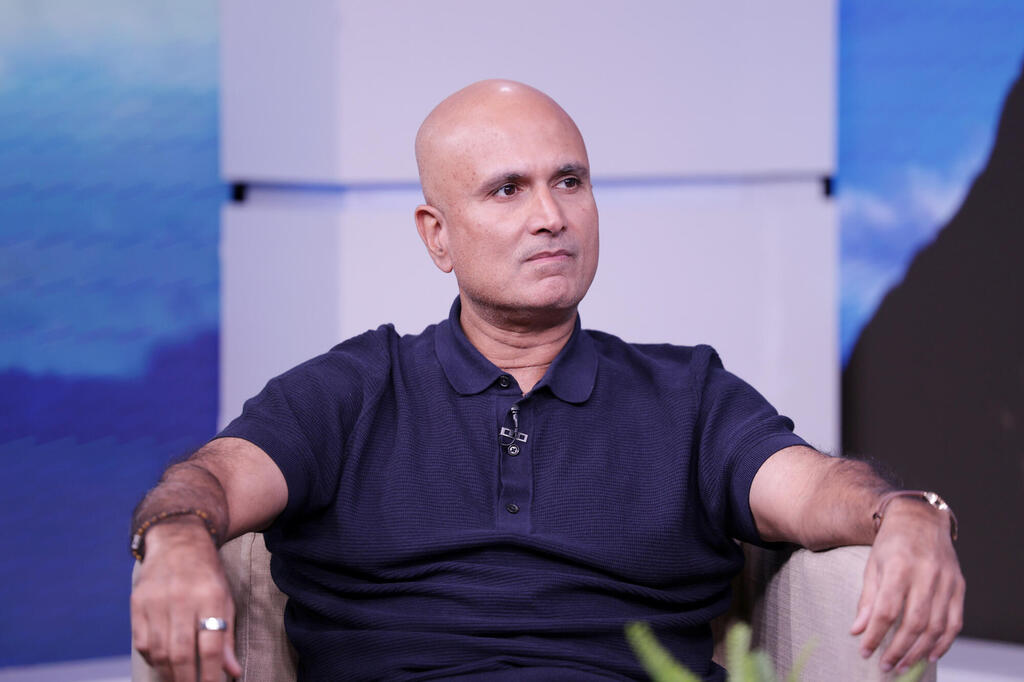
One of Verma’s more blunt assessments concerned the race for artificial general intelligence. Only 18 months ago, he said, many believed AGI was less than two years away. “We feel that it is at least seven years away,” he said. “Some would say 25.” He pointed to the “tepid response” to OpenAI’s latest model as evidence that expectations were ahead of reality.
Instead of a single “super brain” running organizations, Verma predicted a hybrid future: a large general model connected to networks of smaller, highly specialized ones. The real determinant of success, he argued, will be how enterprises manage and mobilize their data.
“If there are three vectors that define your AI strategy,” he said, “it’ll be fast compute, vast data, and a data platform that is nimble and responsive.” Companies that fail to align those three components, he warned, will struggle to implement AI effectively.
Verma repeatedly highlighted Israel’s role as an early indicator of global technology trends. “Israeli companies tend to find where the data is going about four to six months before the rest of the world does,” he said. That lead time, he noted, is one reason he regularly visits the country and its customers.
Roughly 7-9% of SingleStore’s global revenue comes from Israel, he said, through its partner Twingo. Some of the company’s “marquee” use cases come from Israeli clients, ranging from cybersecurity to HR technology, though he declined to name them, citing confidentiality.
He predicted that Israeli companies will adopt data-driven approaches to AI “a little sooner than the rest of the world,” and said that insight helps shape his own expectations for the industry.



