










"AI will not replace employees, but will replace employees who don’t know how to use AI"
AWS, HiBob, and Stampli executives discuss why even mature AI projects face hurdles.
"The issue of AI adoption is real and didn't just start with a two-year-old change to Generative AI. Our customers at AWS and Amazon have been integrating AI into our products for over 20 years. It's something you see everywhere in the industry, companies are building products that improve processes, enhance customer experience, and create new content using AI,” said Boaz Ziniman, Head of Developer Relations, EMEA, at AWS. “This trend has only intensified in recent years. Many companies start small and face challenges. Studies show that between 50% and 80% of projects don't reach production."
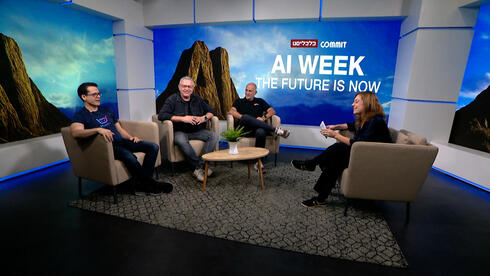
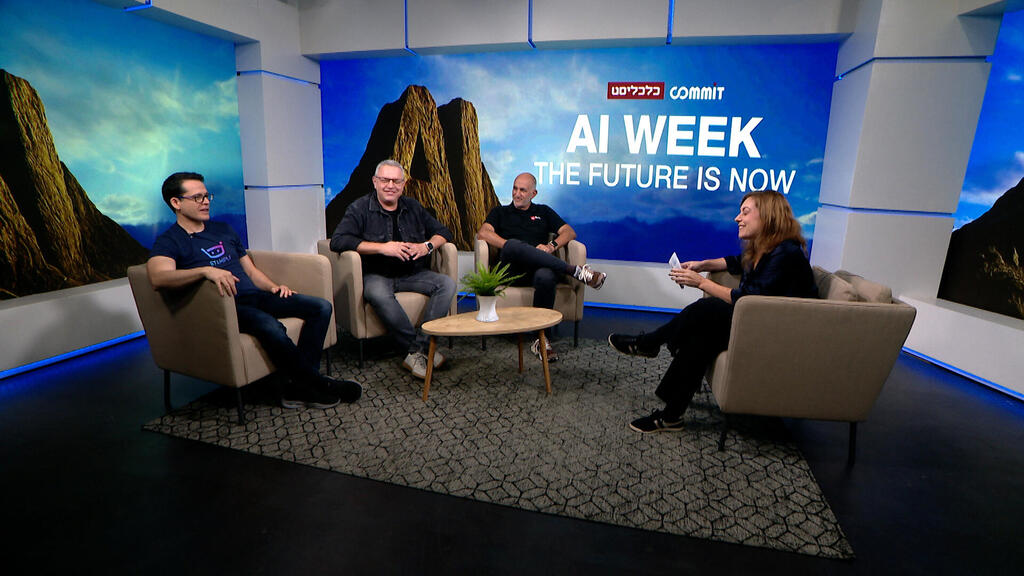
Zinman was speaking on a panel as part of Calcalist and Commit’s AI Week on how AI is changing the rules of the game in organizations. Panelists included Ronni Zehavi, Co-Founder and CEO, HiBob, and Ofer Feldman, Co-Founder and CTO, Stampli.
Ofer, your product is AI-first. What are the advantages and disadvantages for the user experience?
"We manage the procurement process in the organization, from product requests to supplier negotiations, payment, and invoice management in one system, and AI accompanies every stage of this process. Stampli has been implementing these solutions since our inception. We use Billy (the bot) as a brand that customers know and love and see as part of their team. The big advantage is that customers who are used to this expect more and more, so it is easy to add capabilities. With the new world of generative AI, you can implement features that were once considered imaginary."
Ronni, you have an existing product and added a layer of AI. How do you implement it?
"We are a global employee management platform with over a million users, and there were concerns about the data we manage for customers. At the beginning of 2024, we realized that AI is a serious event. We conducted multiple explorations, one internally, and another focusing on regulation, security, privacy, and the product itself. Internally, the challenge was to convince a company of 1,400 employees that AI was not against them but for them. AI will not replace employees, but will replace employees who do not know how to use AI. We established AI ambassadors in the company, specialists who write and run agents for various departments. The barriers were broken.
"On an internal level, it’s a mega event that changes culture, role structure, and the skills sought. On a product level, we realized that if we don’t integrate AI capabilities, we risk losing competitive advantage. There is also an expectation in the market that AI will deliver tangible results."
Boaz, why don't most projects get off the ground?
"There are many reasons, varying from organization to organization. One is business compatibility; another is data. An organization must have usable data to create solutions. Without it, projects struggle. Organizational structure also matters, especially management support. Projects initiated from below have lower chances of success. Other factors include manpower, knowledge, and experience."
Related articles:
Is there a life for products that don’t have AI?
"Yes. There are many products that don’t have AI, and they can still be effective," says Ziniman. "It’s important to start with the problem, not the technology. AI should be a solution to a defined business need. Simply turning everything into a chat interface is not enough; you must implement the right technology for the right purpose.
"The chat hype was attractive, but the customer’s business need determines the solution," says Feldman. "Customers today expect measurable results, labor savings, tangible improvements. Generative solutions must provide value to the customer."
How do you measure this?
Feldman: "It’s a challenge. We look at the actual work, how much time a task takes versus what AI can achieve, and calculate the percentage of savings for the client. Ultimately, it must be measurable in absolute terms."
Trust is critical. Do people struggle to release authority to AI?
Feldman: "Absolutely. We deal with money, and organizations are careful to monitor it. Customers expect control. AI solutions must operate in the background but remain observable. Our bot Billy is integrated into the workflow, so employees see it as a team member, and adoption is not intimidating."
Ronni, how do you build trust and transparency with AI in people-centric systems?
"Few companies have been recognized by OpenAI for excelling in AI product implementation. We conducted top-down and bottom-up initiatives: identifying areas for productivity improvements and enabling employees to use AI tools. Since the beginning of the year, 2,500 bottom-up agents and 200–300 top-down agents were created, with 95% employee adoption. AI and humans work together, complementing each other’s capabilities. The expectation is that productivity will increase, enabling more to be done with fewer people or in less time. Managers, up to CEO level, act as change agents to build trust and embed AI into the culture."
Boaz, how can user experience keep pace with technology changing every few months?
"It’s very challenging. Organizations need to maintain strong technological awareness and bring changes into the culture. Appointing a Chief AI Officer is one approach. Training is critical for technological and non-technological employees alike. Understanding who will use the tools daily is as important as developing the tools themselves. Organizations need to build teams, tools, and processes to stay connected, as AI models change weekly."
Ofer, is it possible to design user experience in this environment?
"Yes. With AI, user experience shifts, more actions happen autonomously, with the user providing control or approval. Where AI assists rather than replaces work, it’s vital to design a seamless, supportive experience. We have implemented AI solutions for employees, constantly integrating modern tools. Dedicated teams ensure technologies are implemented across the organization, and we continually learn about the employee user experience."



