










Inside the Shin Bet’s secret startup factory
As global defense budgets swell, Israel’s internal security service and TAU Ventures nurture startups born in conflict and now adapting to peacetime threats.
Israel’s war with Hamas may be coming to a precarious close, but that doesn’t mean Israel’s defensetech sector is showing any signs of slowing down. A summertime Demo Day for an accelerator program co-hosted by Shin Bet and TAU Ventures saw five startups complete four months of support. The program is led by The Garage on behalf of Shin Bet, the organization’s innovation hub responsible for identifying and integrating breakthrough technologies from the ecosystem into operational activities.
“I think that what we see in the last two years or so… governments all over the world realize that world peace is probably going to wait a little bit - and it's better to prepare ourselves for the next war,” said Nimrod Cohen, Managing Partner of TAU Ventures. “It doesn't matter if you are in Europe, Taiwan, Israel or any other place around the world: tons of money shifted towards let's prepare ourselves for the next war.”
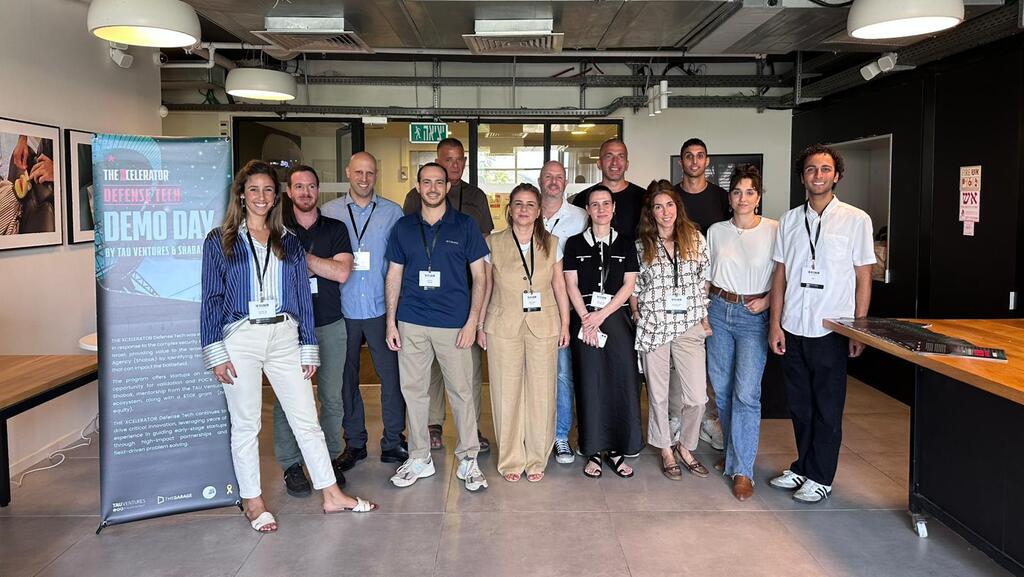
The five companies in the cohort presented their work at a closed-door Demo Day attended by senior figures from Israel’s security establishment. It occurred earlier in the summer when Israel was battling Hamas on all fronts in Gaza, and coming off the IDF's operation in Iran. While the dual-use potential of these technologies was recognized at the outset, the POC phase focused primarily on operational, real-time applications serving critical security needs.
However, as things settle down, the companies are now adjusting from immediate operational needs to how their solutions can be used in peacetime on long-term homeland security challenges such as border resilience, infrastructure protection, or disinformation defense, as some examples.
The program is part of a seven-year close collaboration between TAU Ventures and the Shin Bet, creating a direct connection between the Israeli startup ecosystem, essential operational needs in the field, and key Shin Bet personnel. Each company received a $50,000 grant with no equity taken, but one has decided to remain undisclosed for public knowledge. The other four are as follows:
- Conntour, which enables organizations to communicate with security cameras using natural language.
- PGI, which develops a DNA testing solution that does not require a lab, providing fast and accurate identification within minutes.
- Oterra.ai, which delivers real-time situational awareness in complex areas to detect threats and hazards on the ground.
- Waving, which develops a Wi-Fi-based security system for real-time human detection, even without line-of-sight and without blind spots.
Following the cohort, Conntour and Oterra are already working directly with Shin Bet, with two others still indirectly working in some other capacity during the POC process. One company from this cohort has already raised $7 million from leading investors such as Y Combinator and General Catalyst, while other companies are now starting their Seed fundraising rounds.
Defensetech has seen explosive growth in Israel following the start of the October 7 war in 2023. As of April 2025, there are roughly 310 active defenetech companies across the country, with the ecosystem being driven mainly by wartime imperatives. As is the case with many companies in Israel, the urgency to innovate has led to many technologies developed for the battlefield and later adapted for homeland security or civilian defense contexts.
“This program is top priority at the Shabak [Shin Bet],” added Cohen, who confirmed he had worked directly with Former Heads Ronen Bar and Nadav Argaman to arrange the demo days and maintain collaboration efforts. No one from Shin Bet was available to comment for this story.
The program has completed 11 cohorts over its seven year history, with the latest two focused solely on defensetech solutions that can help Israel on various battlegrounds. It also took place during unprecedented leadership change. Bar stepped down in June following 35 years of service, to be replaced by David Zini following a bumpy nomination process and alleged political interference from Prime Minister Benjamin Netanyahu.



