










Quantum Machines makes second European acquisition in six weeks
Israeli quantum computing company buys Hungary’s PCB Engineering, adding a Budapest R&D hub and 40 employees as competition intensifies in the race toward fault-tolerant quantum systems.
Quantum Machines, the Israeli company whose control systems are used by more than half of the world's quantum computing companies, is accelerating its European expansion with the acquisition of Hungary’s PCB Engineering, marking its second acquisition on the continent in just six weeks.
The deal will establish a new research and development hub in Budapest and add PCB Engineering’s 40 employees to Quantum Machines’ growing workforce.
1 View gallery
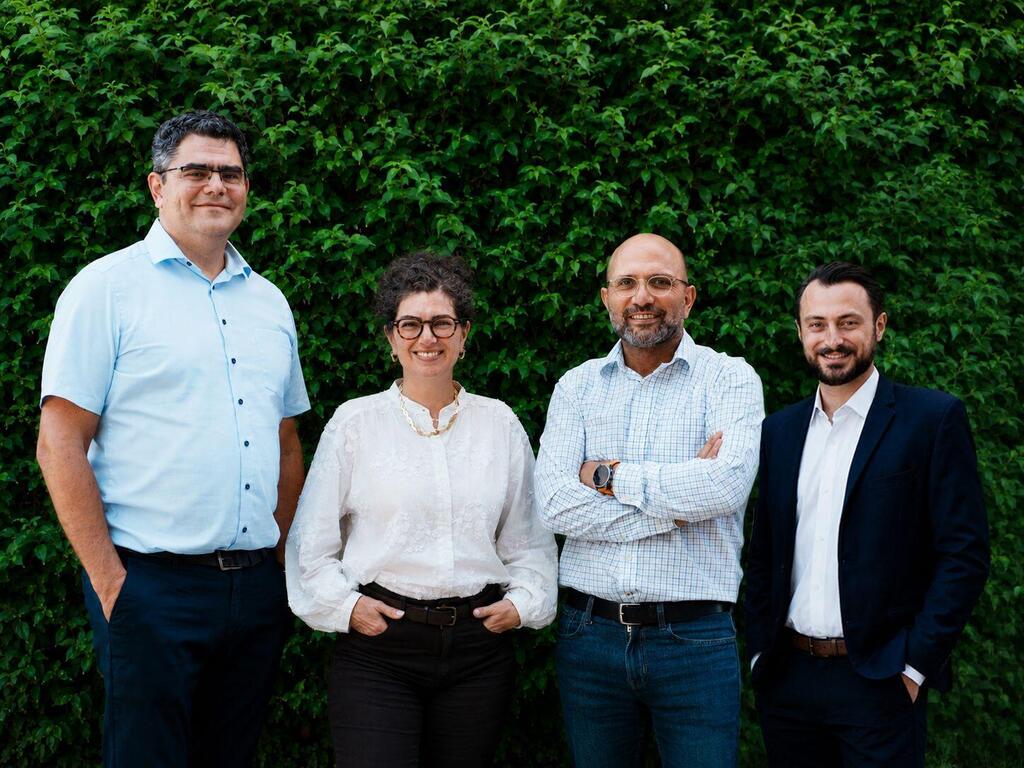
From left to right: János Lazányi, CEO of PCB Engineering; Hila Manoach, Chief People Officer at Quantum Machines; Shaul Galila, Chief Operating Officer (COO) at Quantum Machines; and Itamar Sivan, CEO and co-founder of Quantum Machines.
(Quantum Machines)
The acquisition follows Quantum Machines’ move last month to expand its European presence through the purchase of QHarbor, a spin-off from TU Delft, and the opening of a new office in Delft in the Netherlands. Together, the two transactions significantly broaden the company's engineering footprint across Europe at a time when competition in quantum computing is intensifying.
Quantum Machines occupies a distinctive position within the sector. Rather than building quantum processors themselves, the company develops the control systems that connect quantum processing units (QPUs) to the classical computing infrastructure required to operate them. Its technology is used across multiple quantum computing approaches, including superconducting qubits, trapped ions, neutral atoms and spin qubits, serving customers ranging from startups and university laboratories to national research centers and hyperscale computing companies.
The transaction further extends a global footprint that now includes employees in 22 countries and major offices across the United States, Denmark, Germany, Israel, Japan, Singapore, the Netherlands and Hungary.
The company enters this new phase following a $170 million Series C funding round completed in 2025, bringing its total funding to $280 million.



