










Analysis
As Intel stumbles, Nvidia emerges as Israel’s anchor tech employer
Mellanox, AI infrastructure, and a strategic bet that reshaped both Nvidia and Israel’s tech economy.
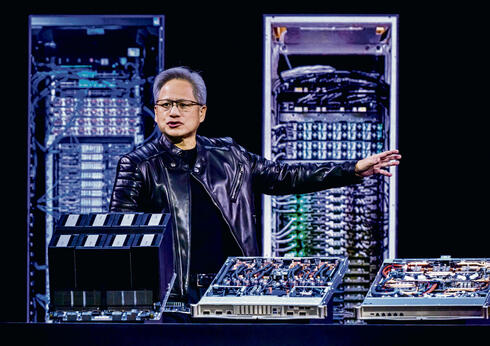
Jensen Huang’s words about Israel as Nvidia’s “second home” are neither accidental nor casual. Making such a statement about Israel today is not trivial for a company whose every move is scrutinized globally. But Nvidia owes Israel a great deal. Its meteoric rise, from a company best known for graphics cards for gamers to one shaping the future of artificial intelligence, almost perfectly coincided with its entry into Israel.
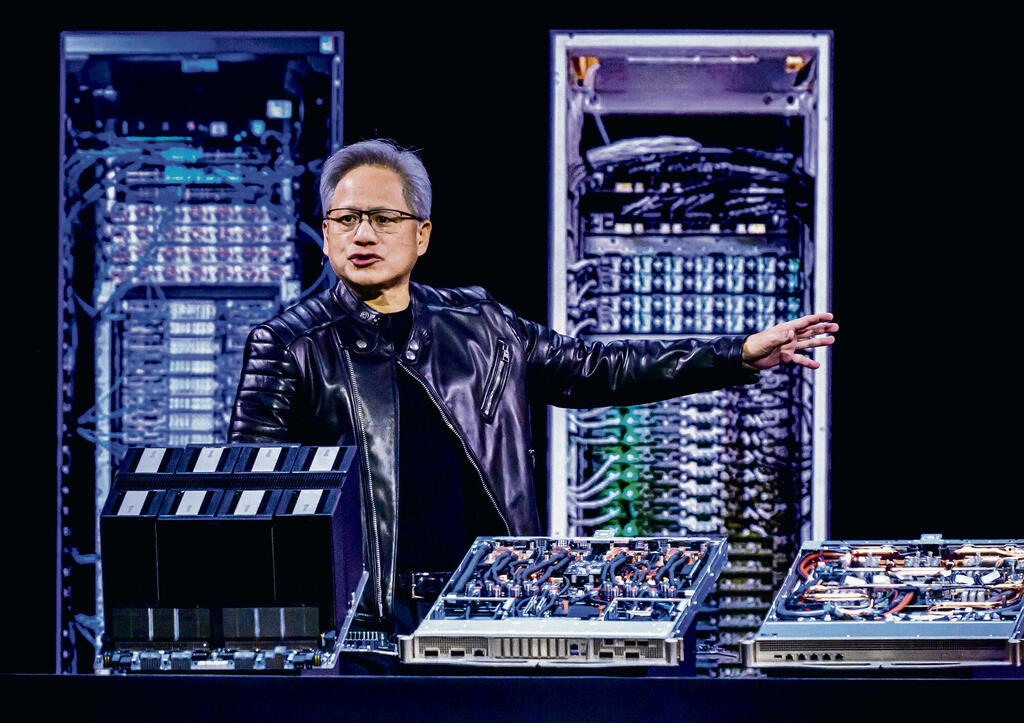
Without the networking technology acquired through Mellanox, Nvidia could not have reached its current position. The solutions developed by the company founded by Eyal Waldman in 1999 enable the data-processing speeds required in server farms built on Nvidia’s GPUs. They function as the “traffic lights” of modern data centers, managing and accelerating the flow of information. In the most recent quarter, reported at the end of November, Nvidia’s networking division accounted for nearly 15% of total revenue, which stood at $57 billion and is expected to rise to $65 billion in the current quarter. In absolute terms, that is $8.2 billion, meaning that in a single quarter, Mellanox-generated revenue already exceeded the $7 billion Nvidia paid for the company.
On an annual basis, Nvidia’s Israel operations now represent a business of more than $30 billion. It is no coincidence that Nvidia likes to describe the Mellanox acquisition as the only deal that combined a $93 billion market value at the time of announcement in 2019 with a $7 billion purchase price to create trillions in value. “There have been no other companies that turned $100 billion into $5 trillion,” Waldman recently told Calcalist. “I hope there will be more such deals. What did I do right? First of all, choosing reliable, professional people. Many Mellanox employees became millionaires, and I’m proud of that. It’s doing good for the country. I always saw myself as working for the employees, you have to make sure they’re well and that they earn.”
It is easy to forget that only in 2023, after the launch of ChatGPT at the end of 2022, Nvidia crossed a $1 trillion valuation for the first time. In just two years, it has become what Apple was a decade ago: a company whose earnings reports can move Wall Street more than an interest-rate decision. The surge in Nvidia’s stock has effectively turned anyone who has worked at the company for more than five years into a dollar millionaire. These rates are unprecedented even by tech-industry standards.
The ripple effects are already being felt locally. Real estate brokers in Kiryat Tivon and the surrounding area, long considered solid but sleepy, are preparing for a future transformed by Nvidia’s expansion. “Kiryat Tivon” may soon become “Kiryat Nvidia,” a hub and anchor of Israel’s AI ecosystem. Employees who might one day leave Nvidia to start their own companies are now far more likely to stay nearby, reinforcing the region’s long-term growth.
Since its AI breakthrough, Nvidia has made two additional acquisitions in Israel with both commercial and symbolic significance. Shortly after the October 7 attack, Huang signed off on the acquisitions of Deci and Run:AI for a combined sum exceeding $1 billion. From 2,000 employees at the time of the Mellanox acquisition, Nvidia now employs around 5,000 people in Israel, out of fewer than 40,000 globally. At the current pace, that figure could double to 10,000 within five years, positioning Nvidia to overtake Intel as Israel’s largest private employer.
This shift comes at a critical moment. Intel put Israel on the global technology map, but its recent weakness and layoffs could have weighed heavily on exports and employment. Nvidia’s expansion acts as a counterbalance. Beyond business, Huang maintained visible support throughout the war for Avinatan Or, an Nvidia employee kidnapped from the Nova music festival and released in the October deal. Nvidia mobilized publicly and financially for his return, an approach that stood in stark contrast to Amazon, whose management remained silent regarding the abduction of its employee, Sasha Troufanov.
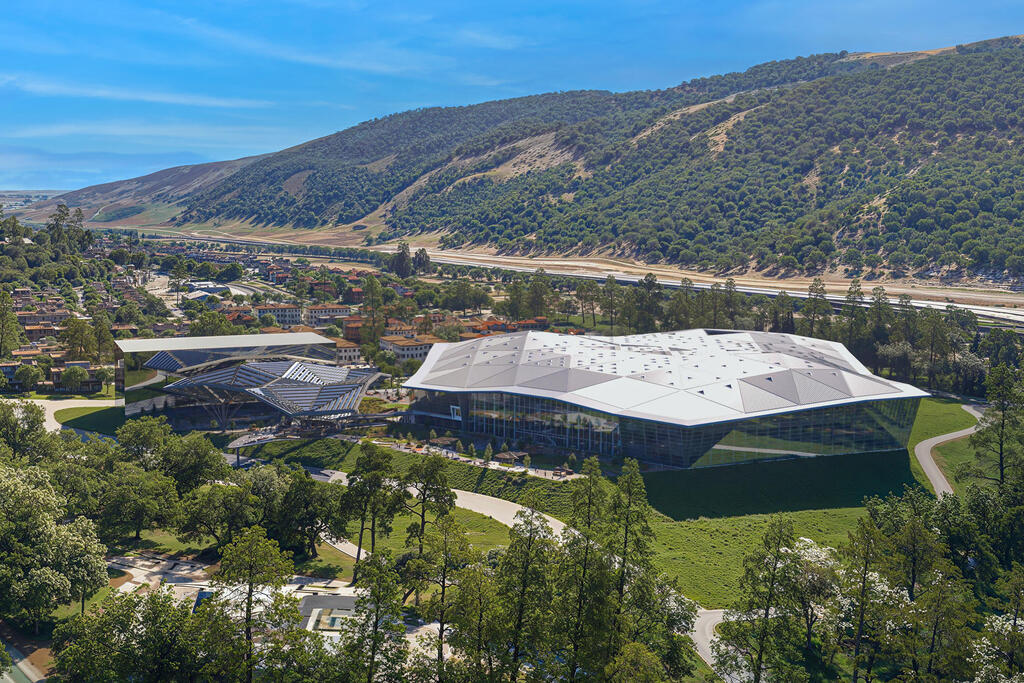
Employment is the most tangible impact of Nvidia’s presence, but the less measurable effects may be even more important. The decision to build a “spaceship” campus in Israel, comparable in size to Nvidia’s Silicon Valley headquarters, is a powerful endorsement of Israel’s AI industry, which until recently faced doubts about its depth and maturity. The campus will match the scale of Nvidia’s two main U.S. buildings, together spanning roughly 160,000 square meters, and will be built on land owned outright by Nvidia, a first outside the United States.
This move sends a global signal: Israel is becoming a major AI center. Data published this month by Startup Nation Central shows AI startup funding in Israel is expected to reach $8 billion in 2025, up from $4.9 billion in 2024, with particular strength in AI security. Around this core, a broader ecosystem is emerging, including companies like Decart, developing real-time video models, and Tower Semiconductor, which is becoming a leader in advanced silicon photonics for data centers. Cybersecurity is also consolidating its position, underscored this week by Palo Alto Networks CEO Nikesh Arora’s visit to Israel ahead of its merger with CyberArk, and his pledge to make the combined company the largest cyber employer in the country.
All of this, however, is happening largely despite, not because of, the Israeli government. In Taiwan, Nvidia’s home country, the government recently opened a joint server farm with the company using its latest Blackwell chips as part of a national AI strategy. Meanwhile, countries such as Saudi Arabia and Qatar are making aggressive, state-backed moves with Nvidia to reshape their economies.
In Israel, by contrast, government officials boast about a NIS 70 million discount on land granted to Nvidia, an amount smaller than the company’s hourly revenue. Rather than symbolic discounts and leaks, Israel could leverage Nvidia’s presence to build national AI infrastructure in academia, healthcare, and public services. Instead, Nvidia executives emerged from their first major interactions with Israeli officials frustrated by constant breaches of confidentiality during the site-selection process.
Finance Minister Bezalel Smotrich’s repeated mispronunciation of Nvidia’s name has become symbolic: a sense that the government does not fully grasp what it means for Israel to be Nvidia’s “second home.” As Waldman put it bluntly in a recent conversation with Calcalist: “Our government, especially the Likud ministers, is beyond criticism. I wouldn’t let any of them manage two people under my responsibility.”
First published: 06:00, 18.12.25



