










Cato Networks tops $415 million in ARR, still planning IPO
The Israeli cybersecurity company says growth accelerated in the second quarter, with major enterprise deals signed, even as it delays office expansion and keeps investors waiting for a public offering.
Cybersecurity company Cato Networks recently backed out of a planned office expansion, and a long-awaited Wall Street IPO is still not on the horizon. However, the company’s latest financial figures show continued momentum.
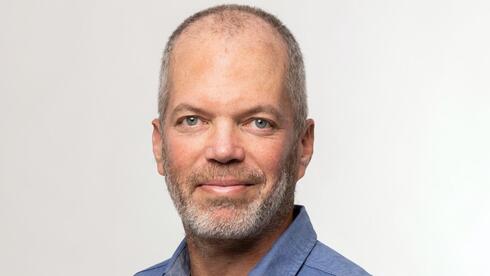
Shlomo Kramer’s company announced on Monday that it has reached an annual recurring revenue (ARR) rate of $415 million, representing 42% year-over-year growth. Although Cato has not disclosed profitability, approaching the $500 million revenue threshold while maintaining high double-digit growth puts the company closer to the scale typically required to attract public market investors.

Cato said that growth accelerated during the second quarter, with the company signing several significant contracts with large enterprises.
“We have not stopped planning the IPO and will certainly do so in the future,” said Eyal Webber-Zvik, Cato’s chief strategy officer, in a conversation with Calcalist. However, the company has not yet filed a prospectus, and recent market speculation suggested it may be holding advanced discussions over a possible acquisition by cybersecurity giant CrowdStrike. The reports were strongly denied by Cato CEO and founder Shlomo Kramer.
In its last funding round, completed a year ago, Cato was valued at nearly $5 billion.
Despite the growth figures, Cato recently decided to abandon a planned expansion of its Tel Aviv offices.
During the winter, the company signed an agreement to move into Farmers’ House in Tel Aviv, replacing internet company Fiverr. The move would have added approximately 6,400 square meters across seven floors. Instead, Cato canceled the relocation and decided to lease an additional floor in the Landmark Tower, where its headquarters are currently located.
Cato employs approximately 1,800 people, around half of them in Israel, following its acquisition of AI security company Aim Security for $350 million in September 2025. About a year ago, the company employed approximately 1,400 people.
“We are not laying off employees or freezing recruitment,” Webber-Zvik said. “We have more than 250 open positions, around 100 of them in Israel. The change in our real estate plans reflects a desire to remain more dynamic in the current environment. We are adding another floor at Landmark Tower and will reassess our needs next year.”
According to Webber-Zvik, the decision was unrelated to currency fluctuations or AI-driven changes in the market.
“The cyber market has already understood that AI is an opportunity, not a threat, but investments need to be managed correctly in this new reality,” he said. “Cybersecurity is one of the three essential foundations of the AI revolution, alongside energy and computing power. Without one of these elements, the revolution cannot succeed.”
Cato said it continues to see strong demand for its AI security offering, launched in March 2026 following the integration of technology from its acquisition of Aim Security.
During the second quarter, Cato expanded the platform with management and governance capabilities for different types of AI agents, including managed, local and internally developed systems.
The company said its AI engine can analyze interactions with AI tools, enforce security policies and provide detection capabilities that allow organizations to customize protections according to their needs.
The rise of AI is also compressing the time available for organizations to respond to newly discovered vulnerabilities. During the second quarter, Cato said it reduced its “time-to-protect” for newly disclosed CVE vulnerabilities to 45 minutes.
Traditional vulnerability response processes can take weeks between disclosure and deployment of protection measures. Cato said it combines automated threat research with its cloud-based architecture to accelerate protection against emerging attacks.
Cato was founded in 2015 by Shlomo Kramer and Gur Shatz, who later left the company. To date, the company has raised approximately $1.1 billion.



