








Iran missile strike on Tel Aviv exposes financial and bureaucratic hurdles to rebuilding
Eight months after the strike, a major residential project on Louis Marshall Street is finally moving toward reconstruction, following months of disputes over compensation, permits and responsibility for restoring the damaged buildings.
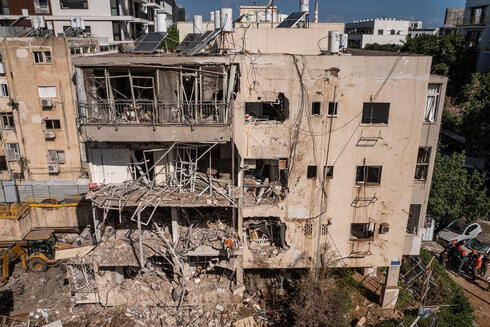
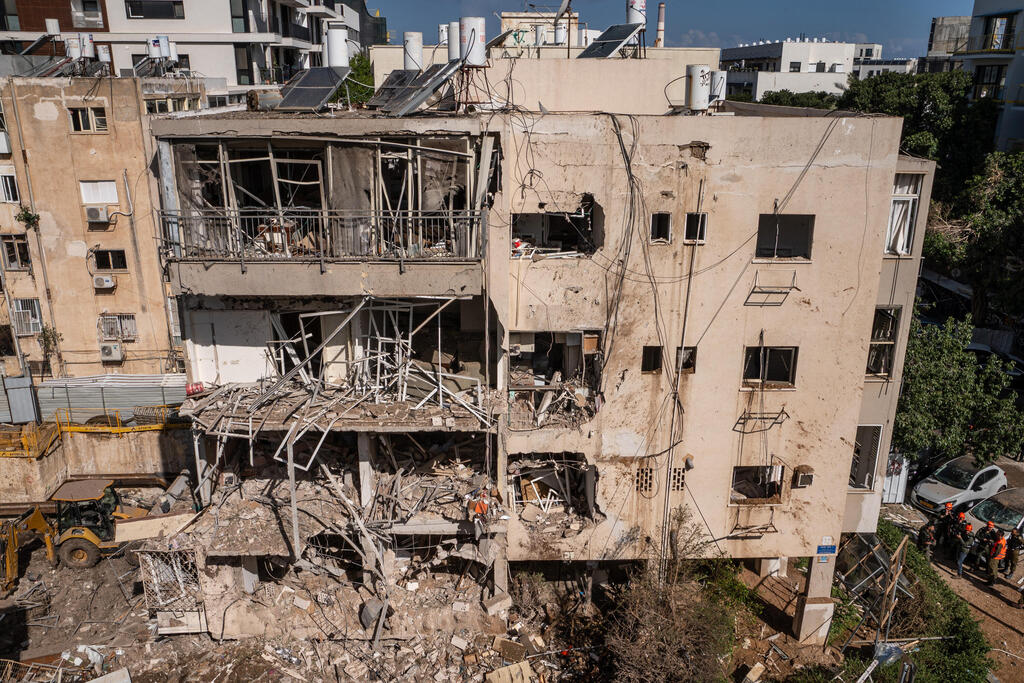
Demolition work began this week at the residential complex at 10-16 Louis Marshall Street, on the corner of De Haas Street, in Tel Aviv, approximately eight months after the buildings sustained a direct hit from an Iranian missile. The project will see four buildings containing 54 aging apartments demolished and replaced by Louis Garden, a new residential complex with 86 housing units. The project is being initiated by Ofer Investments and built by Electra Construction.
It is the first major urban renewal project involving buildings damaged during the war with Iran to reach the reconstruction stage. In most of the main impact zones, including Bat Yam, Ramat Gan, Tel Aviv and Haifa, damaged buildings have been demolished and cleared, but the sites remain vacant as they go through planning and development procedures. These include approval of new zoning plans, reviews by planning authorities, land consolidation and subdivision, organizing residents and selecting developers through tenders.
Even under the expedited planning procedures introduced specifically for post-war reconstruction, the process, including handling objections and securing full building permits, is expected to take approximately two years.
Another project already under construction is the building at 68 HaMaccabim Street in Bnei Brak. That case is an exception, involving a single building that advanced through the TAMA 38/2 urban renewal track. Because it did not require a new zoning plan, a building permit could be issued relatively quickly. Other projects involving low-rise homes or individual buildings that required complete demolition and reconstruction have also begun under redevelopment frameworks that preserve existing building rights.
The building at 16 Louis Marshall Street was directly hit by an Iranian missile in March 2026, during Operation Roaring Lion, and was subsequently declared uninhabitable. It was one of four buildings that had already received demolition and reconstruction permits in June 2024 under the TAMA 38/2 framework. However, despite the existing permits and a signed bank financing agreement, the missile strike created an unexpected bureaucratic obstacle.
The Tel Aviv Municipality classified the building at 16 Louis Marshall Street as a property designated for restoration, while the Property Tax Authority began procedures to approve a renovation budget. That process was intended for buildings undergoing rehabilitation, rather than for a project that had already been approved for demolition and reconstruction.
The impasse was eventually resolved following negotiations between attorneys from Yahav & Co., representing the apartment owners, the Property Tax Authority, the municipality and the developer. Under the agreement, the restoration process was canceled and the project was allowed to proceed with demolition. The period residents were given to vacate their apartments was also shortened from 90 days to 45 days.
The agreement also established a mechanism to cover the gap between state compensation for rent and the developer’s contractual rental payments during the interim period, ensuring that residents would not face additional expenses before construction begins.



