









What makes a Trump post ‘Trumpian’? AI now has an answer
Model trained on 41,000 tweets identifies unusual wording and stylistic anomalies.
While millions of followers try to decipher Donald Trump’s unpredictable posts, wondering whether they reflect strategy, trolling, or a dramatic policy shift, an Israeli AI engineer has turned that intuition into something measurable.
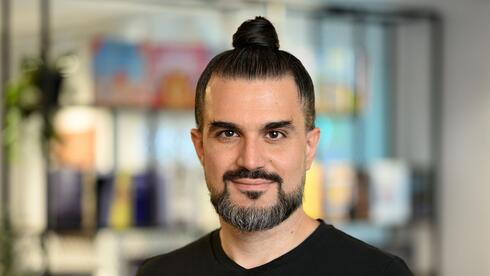
Miriam Horovicz, an AI engineer at Fiverr’s innovation lab, trained a small language model on 41,000 of the US president’s tweets and demonstrated that it is possible to quantify a public figure’s personal writing style and detect when they deviate from it, even relative to their own historical patterns.
The idea, published yesterday in a viral thread on X, is both simple and striking. Instead of asking, “Is this tweet unusual for a normal person?”, Horovicz asked a more precise question: “Is it unusual for Trump himself?”
To answer it, she built a digital “style profile” of the former president.
Horovicz collected a large dataset of Trump tweets published between 2009 and 2021 and fine-tuned a small GPT-2 model with 117 million parameters, an older model, but one well suited to stylistic analysis. The model learned Trump’s recurring patterns, preferred vocabulary, sentence structures, and even his characteristic spelling inventions.
The key metric was “perplexity,” a measure of how surprised the model is when encountering new text. The more “confused” the model became, the more unusual the tweet appeared relative to Trump’s established style. To make the results easier to interpret, Horovicz converted the scores into z-scores, measuring deviations from Trump’s personal average.
Tweets that remained within Trump’s familiar stylistic range generated low perplexity scores. By contrast, posts containing unusual wording or previously unseen constructions produced sharp spikes.
Examples included tweets such as “Dumacrats Love Sewage,” using Trump’s trademark altered spelling, or “BYE BYE Fast Boats. Bing, Bing, GONE!!!” Both pushed the model’s metrics sharply higher because the wording diverged significantly from patterns it had learned from Trump’s historical archive.
To verify that the model had genuinely learned Trump’s personal style rather than general English patterns, Horovicz tested it against thousands of additional Trump posts. A generic language model remained highly uncertain, while the specialized Trump-trained model predicted the text far more accurately, showing lower perplexity scores in 99.2% of cases.
“This is the DNA of style,” Horovicz explained. “The model allows us to map a personal ‘style space.’ We can examine politicians’ consistency over time, detect major shifts, or compare different public figures.”
The entire project was published as open source on GitHub under the name “twitter-persona-alm,” including the code, data, and methodology. Horovicz noted that the training process was performed on a standard home computer with 24GB of memory, without the need for expensive computing infrastructure.



