










VC Survey 2026
“If productivity and abundance reach sufficient scale, society will gradually redefine why we work, what work means, and how value is created”
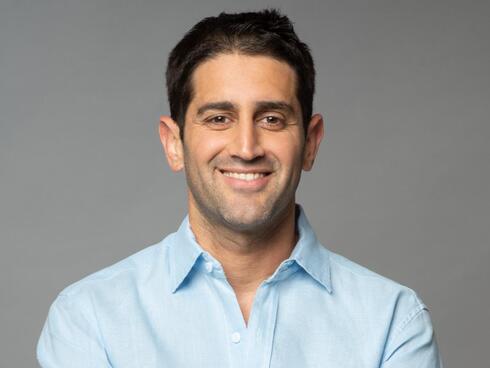
Lior Prosor, General Partner at Deep33, joined CTech for its 2026 VC Survey.
“AI breaks the simplistic equation between headcount and success, but not in a linear way. Today, companies are experimenting aggressively with automation and agents, and many of those experiments don’t work yet. That means organizational cost and headcount don’t immediately fall, even as tooling improves,” said Lior Prosor, General Partner at Deep33.
“Over the next 5–10 years, we should expect a sharp rise in productivity. Some displacement is inevitable, but history suggests ambition expands faster than efficiency, meaning demand for talent can still grow as output explodes,” he added.

“Beyond a 10-year horizon, we enter a different conversation altogether. If productivity and abundance reach sufficient scale, society will gradually redefine why we work, what work means, and how value is created. That shift, not layoffs but a different approach to whether humans even need to work the way we do today, may be the most profound change of the 21st century.”
Following the turbulence of recent years and the stabilization of 2025, the Israeli tech ecosystem is entering a new era: The Next Leap. Prosor joined CTech to share insights for its VC Survey 2026.
You can read the entire interview below.
Fund ID
Fund Name: Deep33
Total Assets Under Management: $150M
Partners/Managers: Lior Prosor, Michael Broukhim, Joab Rosenberg, Ori Amsalem, Yael Barsheshet, Yarden Golan, Elram Goren
Notable Portfolio Companies: Quamcore, CyberRidge, Particle
Notable Exits: N/A
The Global Leap: How is the 'Israeli Tech' asset class being rebranded to global LPs in 2026? Are we shifting the narrative from 'Innovation' to 'Extreme Resilience'?
The next chapter of Israeli tech has several reinforcing layers. First, value creation is moving decisively toward the physical world, energy, compute, autonomy, materials, and Israel has more physicists per capita than any Western country, driven in part by elite programs like Talpiot that historically prioritized physics over computer science.
Second, while much of the West frames Gen Z and Gen Alpha through the lens of privilege, Israel is producing a generation shaped by responsibility, stress, and necessity. That resilience is not philosophical, it shows up in how companies are built, decisions are made, and risk is absorbed.
Third, decades of defense-driven urgency have pushed Israel to the operational edge of AI, autonomy, and complex systems, technologies that must work in adversarial, real-world conditions. The last two years have compounded that capability.
Finally, as markets expand from purely digital software into massive physical end-markets, these forces combine into a perfect storm. Israel is emerging not just as an innovation hub, but as the natural deep-tech partner for the United States and the Western alliance in 21st-century innovation.
The Agentic Leap: As we transition from 'Copilots' to autonomous 'Agents,' which specific vertical will be the first to fully trust AI with independent decision-making?
The transition from copilots to agents won’t be a single leap, it will be a sequenced adoption curve.
First, back-office finance and operations: accounts payable, collections, procurement, revenue operations. These domains have clear rules, structured data, audit trails, and limited blast radius. Agents can prove themselves quickly.
Second, IT operations and cyber response, where agents can autonomously triage incidents, patch systems, and contain threats under human-defined guardrails. The feedback loops are fast, and success is measurable.
Third, real-world operational systems: logistics optimization, industrial automation, defense autonomy, where decisions interact with the physical world. Adoption here will follow once agent reliability is operationally undeniable and regulatory comfort matures.
The key insight is that trust grows with constraint. Agents earn autonomy by operating inside well-defined systems first.
The Sovereign Leap: Have the geopolitical lessons of recent years pushed Israeli startups to build independent, 'sovereign' tech stacks to reduce reliance on global platforms?
This shift starts at the macro level. The globalized economic system that emerged after World War II, and peaked after the Cold War and China’s entry into the WTO, is folding. Great-power competition, frontier-tech rivalry between the U.S. and China, the war in Ukraine, and Israel’s multi-front conflict have made one thing unmistakably clear: sovereigns must control their critical supply chains.
In the U.S., this is visible in critical industries coming home -uranium, rare earths, semiconductors, pharma, energy - with national-security budgets deployed directly as industrial policy. Elsewhere, from Israel to Germany to Japan and Eastern Europe, nations want domestic ownership of quantum computers, AI factories, munitions, energy systems, and strategic manufacturing.
For startups, “sovereign” is no longer ideological, it’s architectural. Technologies are being designed with supply-chain control, deployability, and national resilience in mind. Independence over critical systems will define not just the next decade, but the next quarter-century.
The Next Engine: Cybersecurity has been Israel's primary export engine for a decade. Which domain is best positioned to take the lead by 2030?
Cybersecurity isn’t going away, but it won’t be the sole engine. The next wave of generational companies will be built in deep tech, particularly where existing physical limits are being broken. I am obviously biased in my answer here, but this is EXACTLY why we built Deep33.
That includes advances in compute power and efficiency across AI and quantum, breakthroughs in materials science and chemistry, and above all energy abundance. In the 21st century, access to atoms, not bits, will become the new oil.
Israel has a rare structural advantage here. Outside the U.S., it is one of the only ecosystems where elite academic research, defense R&D, semiconductors, optics, RF, lasers, and systems engineering coexist in a single, compact geography. That density is why we believe deep tech across compute and energy will be the next true engine of the Israeli ecosystem.



