










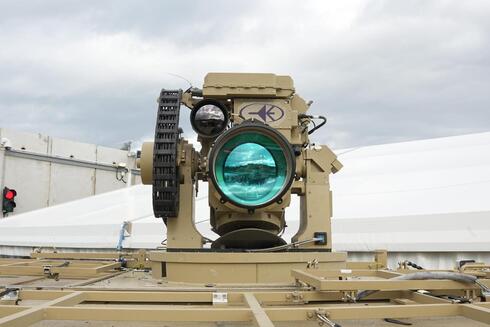
Israel deploys Iron Beam laser system as new layer of air defense
Rafael-developed technology promises low-cost interceptions alongside Iron Dome.
The IDF on Sunday placed its first high-power laser system for intercepting rockets, drones, and mortar bombs into operational service. The system, known as Iron Beam (Or Eitan) was developed by Rafael and delivered to the Air Force’s air defense command, where it will operate as a complementary layer to the Iron Dome system.
Iron Beam is considered a global technological breakthrough, enabling Israel to intercept aerial threats using powerful laser beams at a cost of only a few shekels per interception. Until now, Israel has relied primarily on expensive interceptor missiles to counter such threats, with a single Iron Dome interceptor estimated to cost about $50,000.
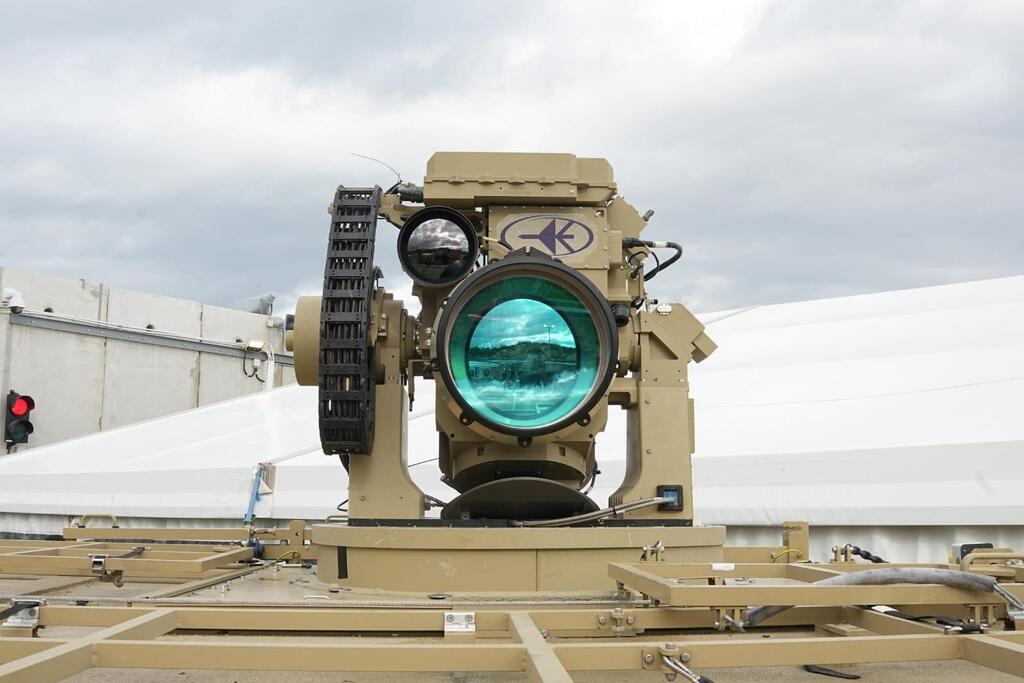
According to defense estimates, the laser system’s interception range is approximately 10 kilometers. It will be operated in coordination with Iron Dome, with each system used according to optimal interception conditions.
Senior officials from Israel’s defense establishment attended the delivery ceremony earlier on Sunday. Among them was Dov Oster, one of the system’s developers. The system is named after his son, Eitan, an IDF Captain Eitan Oster, who was killed in battle in southern Lebanon last year.
The Director General of the Ministry of Defense, Amir Baram, said the system delivered to the Air Force is the first of many currently in production. “Alongside production, we are already deep into the development of the next generations of defense systems, both on land and in the air,” Baram said. “Or Eitan is expected to significantly improve our ability to contend with complex threats and to reshape the economic equation, the cost of interception versus the price of the threat.”
Rafael Chairman Yuval Steinitz said Israel is the first country in the world to field an operational laser system capable of intercepting a range of aerial threats. Rafael CEO Yoav Turgeman pointed to real-time tests conducted during the war against Hezbollah in Lebanon. “We managed to develop an unprecedented technological solution,” he said. “Even during a complex period of intense fighting, we demonstrated impressive operational capabilities using a high-power laser.”
Elbit Systems is also a partner in the laser project and is working on the development of an airborne laser-based air defense system designed to intercept ballistic and hypersonic missiles above cloud cover. Development of that system is expected to continue for several more years.
In recent months, defense officials have said that a series of technological breakthroughs are expected to allow the laser interception system to operate effectively even in complex weather conditions, enabling availability of up to 90% of the time. This would mark a significant advance given the longstanding limitations of laser systems in haze, cloud cover, and rain.



