










More Than Two Years of Support: Donations to the Haifa Logistics Center Reach Soldiers Directly
A visit to the Soldiers’ Operations Room and the National Logistics Center of the Civilian War Room in Haifa reveals a system that was established on “Black Saturday” and has now been operating, evolving, and continuously improving for over two years - providing original and creative solutions to soldiers and military units.
Eyal Meirovitz, Director of the Soldiers’ Operations Room and the National Logistics Center of the Civilian War Room in Haifa, shares how it all began and explains the immense need for civilian support.
On “Black Saturday,” the entire nation mobilized, and many Israelis opened volunteer operations rooms to assist soldiers and evacuees. Meirovitz explains:
“I also wanted to help, and I identified a failure and a need to connect all these war rooms to coordinate efforts and save resources. After presenting the idea to the Civilian War Room that was established in those days, I was recruited by Doron Shahar, who led the northern operation, to coordinate activities that ultimately created cooperation among 80 war rooms in northern Israel. These war rooms needed creative solutions, and that’s how the Northern Assistance Initiatives Community was formed, along with a toolbox designed to support their work.”
From “Tarpaulin Dome” to a National Logistics Operation
The Haifa logistics center began as a small interactive volunteer initiative on “Black Saturday,” initially focused on evacuees.
“My focus on soldiers began with the first rainfall and the invention of the ‘Tarpaulin Dome’, a rain shelter solution made from metal sukkah frames and recycled advertising tarps,” Meirovitz recalls.
The first project exceeded expectations.
“During the first winter, we produced 1,800 units amid a shortage of tents in the army. The entire country mobilized. Thousands of household sukkah frames were donated, and the tarps came from advertising companies.”
2 View gallery
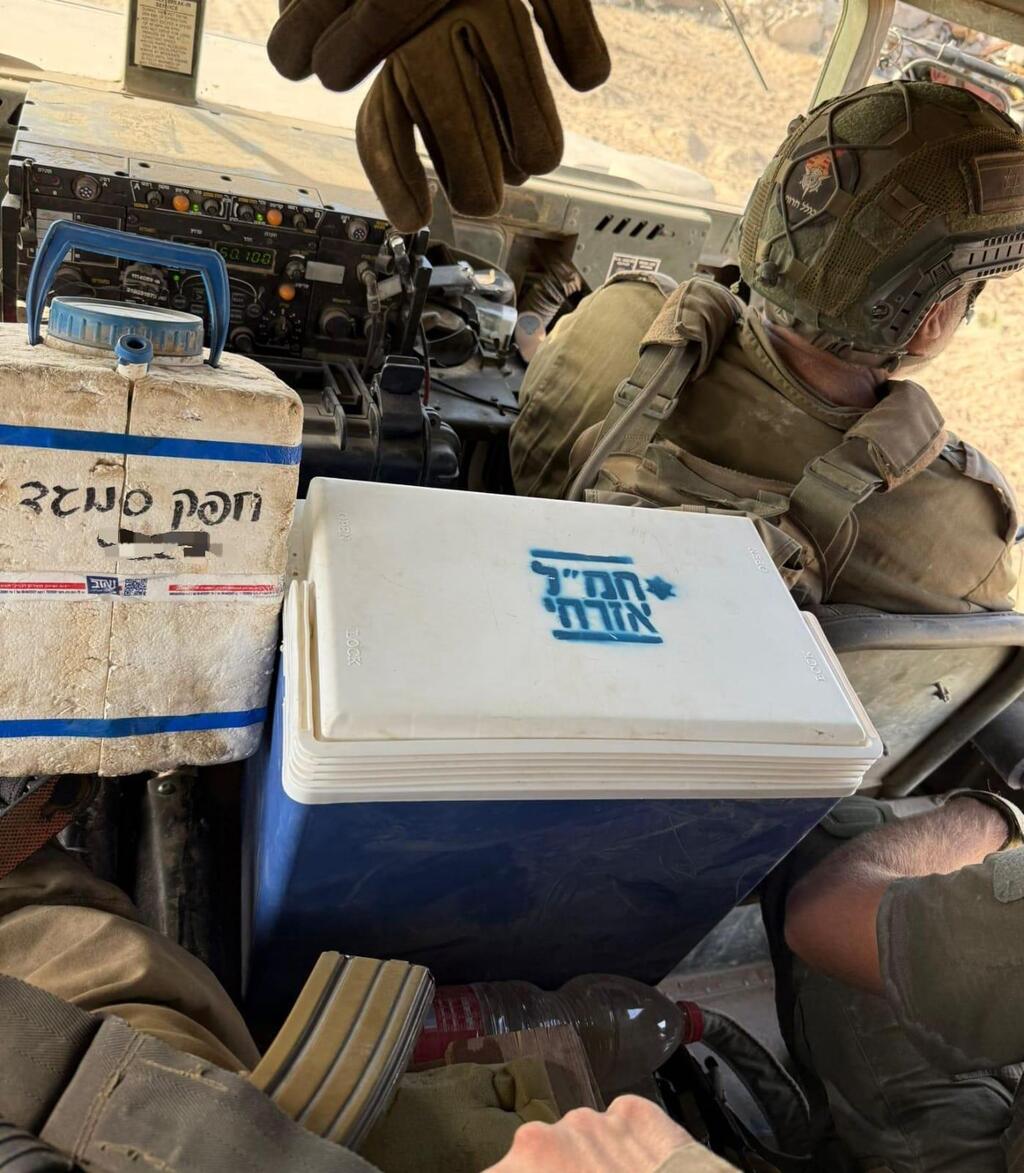
donations to the haifa logistics center reach soldiers directly
(Courtesy of: Civilian Operations Room)
Since then, the center has launched numerous additional projects: field classrooms, the “Women at the Front” initiative supporting female combat soldiers and combat-support personnel, the “Wind Dome” for wind protection, heating and cooling equipment, showers, gyms, food distribution, and more.
“We couldn’t meet every need, and everything was done at the company level to provide direct support to soldiers on the ground,” Meirovitz explains.
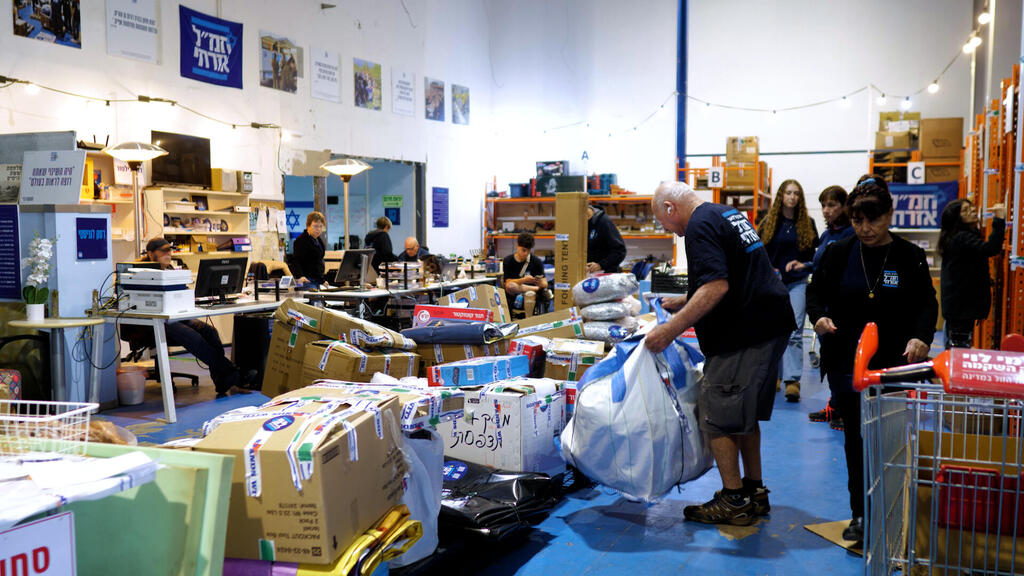
The center relocated four times before reaching its current site and operates thanks to dedicated volunteers, some in their 80s and 90s.
“We’re Still Supporting Soldiers - They Say It Gives Them Strength”
The Soldiers’ War Room operates under the organization “Brothers and Sisters in Israel - The Civilian War Room,” the largest civilian mobilization effort since the founding of the State of Israel.
“What began as an emergency response initiative has become a leading social organization aiming to drive social change through civic engagement, education, and partnership in rebuilding the western Negev and the Galilee,” says Meirovitz.
Unlike other volunteer war rooms that have scaled back operations, the Haifa center continues to grow.
“The feedback from the field is incredible. It creates synergy. The soldiers know how to say thank you and appreciate that we’ve been standing by them for more than two years. They tell us it gives them strength to return for another reserve tour and another one because they see that the people of Israel care. There’s nothing more valuable than that.”
A Changed Security Reality - And Growing Need
Despite the ceasefire, demand for the center has not decreased, it has grown.
“Many reservists are still being called up for extended periods. Our security doctrine has changed. Forces are continuously guarding all borders, defense systems have expanded, and the burden on reservists and regular soldiers remains heavy,” Meirovitz explains.
“Unfortunately, the wars don’t end here. To prevent another October 7, Israel has adopted a proactive security policy. We are here to stay and to continue providing targeted solutions to specific needs.”
How You Can Help
“Giving does good for the soul, and there’s also an incredible sense of community here,” Meirovitz says.
The center needs donations of equipment, raw materials, second-hand goods, and financial contributions.
“This year, we especially need financial donations due to the expansion of our activities and the expectation that we fundraise independently.”
There are multiple ways to get involved:
● Donation fundraising
● Human resource management
● Technical teams
● Logistics desk operations
● Transportation support
Companies and organizations are invited to participate in the “Logistics Tourism” project - a half-day experiential team-building activity. A fundraising evening featuring a special film screening will also be held soon.
From its base in Haifa Bay, the logistics center provides assistance across all regions of Israel.
“Our strength lies in our people. I invite you to join the Soldiers’ War Room and the Haifa Logistics Center family,” Meirovitz concludes.
“And of course, heartfelt thanks to all our volunteers, partners, and donors. We receive tremendous support from individuals, organizations, and companies who are part of this meaningful mission.”
For inquiries (corporate visits, financial donations, ideas, and more):



