










Israel faces a new push to shut it out of the EU’s flagship research program
A proposed amendment would allow countries accused of violating the Genocide Convention to be barred from Horizon, putting Israel’s participation at risk. The next program is due to begin in 2028, with a budget that could reach €200 billion.
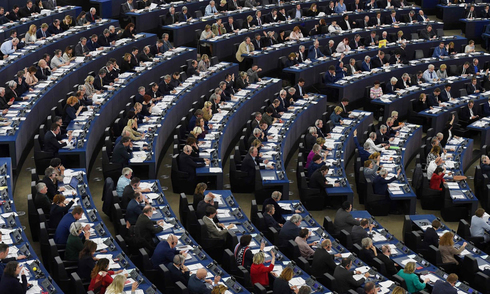
There is another attempt to exclude Israel from the European Union’s Horizon research grant program, the largest and most prestigious of its kind in the world. The EU is currently developing the next iteration of the program, which is scheduled to launch in 2028. On November 10, the proposed rules for participation will be put to a vote before the European Parliament’s Committee on Industry, Research and Energy, marking the first step in the Parliament’s approval process. The proposal was submitted by the European Commission, while German Member of the European Parliament (MEP) Christian Ehler prepared the Parliament’s response.
Left-wing factions within the European Parliament are pushing to include a provision, in the form of a formal amendment or reservation, that would bar countries from participating in the program if they have acted in violation of the Convention on the Prevention and Punishment of the Crime of Genocide. If adopted, the provision could put Israel’s participation at risk if the EU determines that the country has committed genocide. Even if the proposal is rejected, however, its inclusion in the debate could help legitimize calls to question Israel’s participation, potentially paving the way for a future attempt to exclude it.
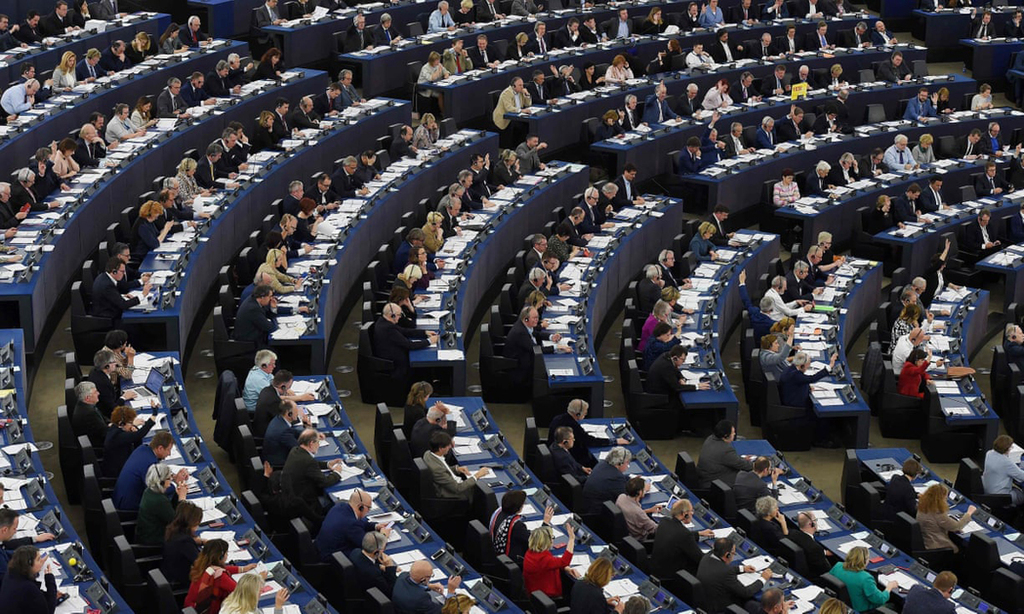
The discussions are still at a very preliminary stage. Following the committee vote, the proposal is scheduled to go before the full European Parliament on November 23. Negotiations will then begin between the Parliament, the Council of the European Union and the European Commission to finalize the rules. The final version is expected to be put to a vote in the Parliament’s plenary session next March. Israel’s objective is to prevent the provision from reaching a vote or, failing that, to ensure that it is rejected.
Israel has participated in European research and development programs, including Horizon Europe, for approximately 30 years, under cooperation agreements with the European Union known as Association Agreements. Horizon is the world’s largest and most prestigious program for scientific and industrial research collaboration. The current program has a total budget of approximately €95.5 billion over seven years.
Israel invests approximately NIS 1.3 billion annually in its participation in Horizon, an amount roughly equivalent to the funding it receives in return. But the benefits extend beyond the money. Securing a grant carries prestige comparable to winning an international award and gives researchers access to collaborations with leading scientists around the world. The Council for Higher Education (CHE) contributes only NIS 650 million of Israel’s annual investment, with the remainder provided by other government ministries.
The partnership allows Israeli researchers to compete on equal footing with their European counterparts. Israeli researchers were highly successful in securing grants in the past, but in recent years, as Calcalist has reported, their success rate has fallen sharply. The European Union attributes the decline to changes in the scoring criteria that disadvantaged Israel. However, an implicit boycott of Israel may also have played a role.
Preparations for the next Horizon program are now underway. It is due to take effect in early 2028 and run for seven years, through the end of 2034. Under a European Commission proposal published in July 2025, the program’s budget would reach approximately €175 billion, nearly double that of the current program. The European Parliament is seeking to raise the figure to €200 billion. While removing Israel from an existing program would have been extremely difficult, threatening its participation in a new one is a considerably easier proposition.
“If Israel were to be excluded from the European Union’s Horizon research and development program, it would be akin to removing Israeli sports from the Olympics,” a senior Council for Higher Education official warned previously. In other words, Israel would lose access to the main framework driving research activity on the global stage. The consequences could extend beyond lost funding and collaborations: Israel’s leading scientists might relocate to countries where they could continue competing for the program’s prestigious grants.