










Israel explores nuclear fusion as data centers drive demand for power
A new Energy Ministry proposal would fund research into a technology that could eventually transform electricity generation. The recommended plan calls for up to NIS 1 billion over five to seven years, although commercial fusion remains a distant and uncertain prospect.
Israel’s growing demand for electricity, driven in part by the expansion of data centers, is prompting the Ministry of Energy to explore a technology that could one day transform power generation. The ministry has proposed a long-term investment program in nuclear fusion, an emerging energy source that promises abundant electricity but remains far from commercial viability.
The proposal outlines three possible levels of investment in domestic research and development. The most modest would allocate NIS 50 million to NIS 100 million over five years. A more ambitious program would invest NIS 500 million to NIS 1 billion over five to seven years, while the most expansive option would commit up to NIS 2 billion over a decade and include the construction of an experimental reactor.
The ministry recommends the middle option. It would bring together public institutions, private companies and research organizations in joint consortia, with participation from Israeli defense contractors such as Rafael and Elbit. The plan also calls for a regulatory sandbox that would ease certain requirements during experimental work and greater involvement in international fusion research programs.
The proposal is intended to help Israeli companies and research institutions develop expertise and become part of a global industry attracting growing investment. However, it remains a policy recommendation rather than an approved government program, and no funding has yet been allocated. The incoming government will ultimately decide whether to prioritize the field and how much public money to commit.
Israel already has two startups working in the sector. nT-Tao is developing a compact fusion reactor, while FusionMantle is developing components for fusion systems. The ministry’s proposed program would seek to build on this base by bringing together companies, academic researchers and state-supported facilities.
Israel’s defense industry could contribute technologies developed for other demanding applications. Rafael and Elbit, for example, have expertise in high-power lasers, including technologies relevant to laser-based interception systems such as Iron Beam. Such capabilities could prove useful in some areas of fusion research, alongside expertise in vacuum systems and other complex engineering challenges.
Elbit and Israel Aerospace Industries also have experience in materials engineering and turning specialized materials into functional systems. The Soreq Nuclear Research Center, which houses a particle accelerator and other research infrastructure, could provide facilities to support development in the field.
The government’s proposal reflects an effort to identify where Israel can contribute to a global industry before fusion power becomes commercially established. The country would not need to develop an entire reactor independently to participate. Specialized components, materials, research capabilities and engineering technologies could offer routes into the international supply chain.
But the distance between laboratory research and a commercially viable power plant remains considerable. Fusion researchers must overcome difficult physical and engineering challenges before the technology can reliably deliver electricity at a competitive cost.
The approximately 417 nuclear reactors operating worldwide generate electricity through nuclear fission, in which heavy atomic nuclei, such as uranium, split and release energy. Fission is an established technology, but it carries challenges involving radioactive waste and the risk of accidents that can release radioactive material.
Nuclear fusion works in the opposite direction. Rather than splitting heavy nuclei, it combines light ones. In the most widely studied approach, nuclei of hydrogen isotopes, deuterium and tritium, fuse to form helium and release energy. Fusion powers the Sun and other stars, but reproducing the process in a controlled environment on Earth is exceptionally difficult.
Hydrogen nuclei carry a positive electrical charge and repel one another. To bring them close enough to fuse, researchers must create extreme conditions, typically heating fuel to temperatures exceeding 100 million degrees Celsius. At these temperatures, the fuel becomes plasma, an electrically charged state of matter.
Maintaining that plasma under the necessary conditions is a major challenge. Researchers must confine it long enough for fusion reactions to occur while managing the enormous heat and energy involved. Different approaches seek to achieve this through magnetic fields, lasers or other methods.
The energy balance is another critical hurdle. Fusion reactions can release substantial energy, but a practical power plant must generate more usable energy than the entire system consumes, while operating reliably and economically.
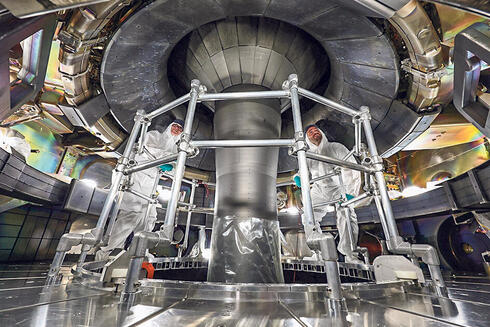
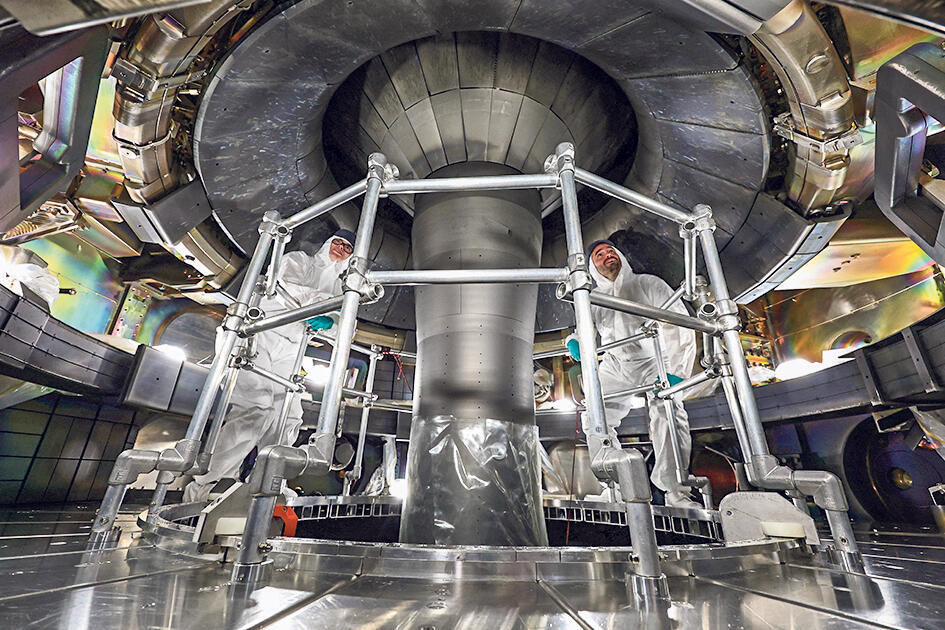
In 2022, researchers at the U.S. National Ignition Facility achieved a landmark result when the energy released by fusion reactions exceeded the laser energy delivered to the target. The experiment demonstrated an important scientific breakthrough, but it did not mean that a fusion power plant had achieved net electricity production. The energy required to run the facility and the broader system remained much greater than the energy delivered by the lasers to the target.
That distinction helps explain why fusion, despite decades of research, has yet to become a commercial source of electricity.
The prospect of a new source of abundant, low-carbon electricity has attracted growing investment, particularly as data centers and AI infrastructure increase demand for power.
According to the U.S. Department of Energy, more than $14 billion has been invested in fusion startups over the past five years, with approximately one-third of that amount flowing into the sector in the past year alone.
Major technology companies are also positioning themselves for a potential future fusion industry. Microsoft has signed an agreement to purchase electricity from a planned fusion power plant beginning in 2028. Google has invested in Commonwealth Fusion Systems (CFS), described in the supplied figures as the sector’s highest-valued fusion company. CFS has also submitted an application to connect a planned facility to the electricity grid in Virginia.
These commitments reflect the scale of future electricity needs, but they are not evidence that fusion power is already commercially available. The projects depend on developers overcoming technical challenges and delivering electricity on their proposed timelines.
Governments are investing heavily as well. China leads with an estimated $8.5 billion in investment, while the United States allocates approximately $1.5 billion annually from public research budgets, according to the figures cited in the ministry’s review. China, the United States and the European Union are among the partners in ITER, a major international fusion research project under construction in France, alongside India, Japan, Russia and other participants.
Whether the plan in Israel advances will depend on the next government’s willingness to fund a technology whose potential rewards remain distant and uncertain. The ministry has laid out options ranging from a relatively modest research program to a decade-long effort involving an experimental reactor. For now, the central question is whether Israel wants to invest early in an industry that could eventually reshape electricity generation, despite the considerable scientific and commercial risks.



