











State Street and First Trust prepare to enter Israel’s ETF market
The U.S. investment managers are pursuing regulatory steps to list funds tracking international indices on the Tel Aviv Stock Exchange. Their arrival could intensify competition with BlackRock and Invesco, which already manage tens of billions of shekels in locally traded ETFs.
Two major U.S. investment managers are preparing to enter Israel’s exchange-traded fund (ETF) market, potentially intensifying competition in a sector that has become an important source of growth for local investment houses.
Calcalist has learned that State Street and First Trust have been taking steps in recent months to list ETFs tracking international indices on the Tel Aviv Stock Exchange. State Street, which manages the SPDR brand in the United States, oversees $6.2 trillion in assets, making it the world’s fourth-largest asset manager, behind Fidelity, BlackRock and Vanguard. First Trust is considerably smaller, with $340 billion under management, and its prospects of entering Israel are considered less certain.
Both firms are pursuing the legal and regulatory procedures required to list foreign-domiciled funds on the local exchange. Their planned entry follows that of BlackRock and Invesco, which have established a presence in Israel in recent years. The arrival of additional international managers could broaden the range of investment products available to Israelis while putting further pressure on fees in a market where foreign providers already manage tens of billions of shekels.
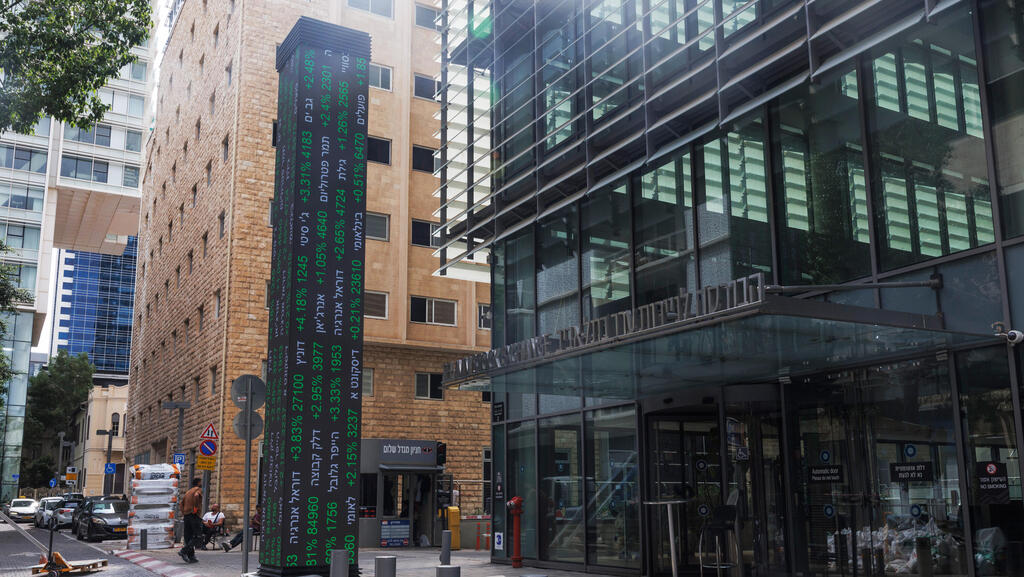
Neither company has publicly announced its plans. One consideration for international investment managers is the possibility that an announcement of expanded activity in Israel could draw protests from organizations in the United States and Europe that oppose Israel politically. Firms operating across multiple markets must weigh such pressure alongside the commercial opportunities of entering a new country.
Listing a foreign-domiciled ETF on the Tel Aviv Stock Exchange, a structure commonly associated with Irish-domiciled funds, requires regulatory compliance, coordination with the Israel Securities Authority and the establishment of local operational arrangements. For large international managers, the process can take years and cost millions of shekels before a fund begins trading.
The model has already gained traction. Around 40 foreign ETFs are listed in Tel Aviv, with combined assets exceeding NIS 30 billion.
BlackRock was the first major international manager to enter the market, listing funds under its iShares brand in August 2019. Those funds now manage approximately NIS 20 billion in Israel. BlackRock is the largest ETF manager in the United States, with $4.6 trillion in assets under management, according to the figures provided.
Invesco followed in February 2022, bringing Irish-domiciled ETFs to the Tel Aviv Stock Exchange. The funds also trade on European exchanges, including those in London and Frankfurt. Invesco manages nearly $1 trillion in assets through its U.S. ETF business and has accumulated approximately NIS 10 billion in ETFs listed in Israel. For both BlackRock and Invesco, their largest local ETF tracks the S&P 500, the benchmark of leading U.S. companies.
If State Street and First Trust establish a presence in Israel, they would enter a market that is increasingly important to domestic investment firms. Israel’s mutual fund industry manages NIS 857 billion, while ETFs account for NIS 222.4 billion of that total, serving investors seeking exposure to stocks and other assets over short and medium-term horizons.
Foreign managers cannot offer Israeli-domiciled funds through this model. Instead, they list foreign funds for local trading, giving Israeli investors access to products already available in international markets.
The competition could put further downward pressure on management fees. Irish-domiciled ETFs are known for their low costs, with annual management fees in some cases capped at 0.1%. That pricing can make them particularly attractive to investors seeking inexpensive exposure to broad market indices.
ETFs trade on stock exchanges throughout the trading day, allowing investors to buy and sell units much like individual shares. Many track indices such as the S&P 500 or Nasdaq 100, providing exposure to hundreds of companies through a single investment. Their appeal includes diversification, liquidity and relatively low fees, although returns remain subject to market movements and, for foreign assets, currency fluctuations. Funds may hold the underlying securities directly or use other financial instruments to track an index.
One of the main attractions of the Israeli market is the growth in individual investors trading through local investment accounts. According to data presented by Israel Securities Authority Chairman Seffy Singer, 400,000 new trading accounts have been opened in recent years.
Retail investors are also a key audience for the foreign funds already listed in Tel Aviv. Invesco has said that private investors account for as much as 75% of activity in its locally traded funds. Institutional investors can often buy ETFs directly on overseas exchanges, making local listings particularly relevant to individuals who want international exposure through their domestic investment accounts.
For international managers, listing existing funds in Israel offers a way to reach this expanding investor base without having to develop products specifically for the local market. The combination of more individual investors and demand for exposure to global indices is making Israel an increasingly attractive destination for foreign ETF providers.
State Street already has investment-related activity in Israel through a partnership with Clal Insurance. In 2024, the two companies launched a joint savings policy offering exposure to international markets through three investment tracks: general, equities and bonds.
Its planned ETF activity would represent a further step into the local market. Initially, State Street is expected to focus on index-tracking funds, following a model similar to the one established by BlackRock and Invesco.
State Street Investment Management said in response to a query: “We are constantly evaluating opportunities to offer our funds in the various regions where we operate, including Israel.”
First Trust did not provide a response.



