











40% of goods exports no longer pass through Israel. That’s no coincidence
European trade restrictions are adding to the economic pressures already pushing Israeli companies to move production abroad, raising a broader question about the future cost of manufacturing in Israel.
The ban on trade in settlement products that took effect in the Netherlands on Tuesday looks, at first glance, like another largely symbolic step against Israel. The volume of goods produced beyond the Green Line and exported to the Netherlands is too small to materially affect Israel’s overall export figures. But the numbers point to a more troubling development: as of today, the Netherlands is Israel’s largest goods-export destination in Europe, which itself is Israel’s largest trading partner.
Yesterday, the Central Bureau of Statistics published goods-export data by country showing the Netherlands in first place in Europe, both including and excluding diamonds, with $1.8 billion in Israeli exports during January-August, overtaking Germany.
2 View gallery

A protest against Israel. A buyer in Europe would rather forgo a product from Israel than get entangled with bans and restrictions.
(Photo: Reuters)
The Netherlands, along with countries such as Slovenia, Spain and Britain, may signal a shift that could prove far more significant than the value of the goods directly affected by the restrictions. The issue is whether the origin of an Israeli product becomes not merely a technical customs question, but a business consideration for European companies and consumers.
Unlike previous practice, the Dutch measure goes beyond labeling requirements for settlement products. It prohibits the import, purchase and sale of goods originating in Israeli settlements, as well as brokerage services related to those goods and attempts to circumvent the restrictions. The rules also cover goods that were wholly or partly produced in a settlement.
This is not a blanket Dutch ban on Israeli products. The measure explicitly distinguishes goods originating in the settlements from those originating within Israel’s internationally recognized borders. But that distinction is precisely where a broader economic problem could begin.
A buyer in the Netherlands, France or Britain is not necessarily an expert in Israeli geography. A company may not want to determine whether a particular product was manufactured in Ra’anana or Ariel, where its raw materials came from, or which subcontractor produced a component. As restrictions and documentation requirements multiply, so does the cost of compliance. That can create an incentive to choose a supplier whose origin does not require additional scrutiny in the first place.
This is the “chilling effect” worth watching. It is not the direct boycott of a factory in a settlement, but the possibility of de-risking: customers distancing themselves from Israeli products more broadly in order to reduce the legal, regulatory or reputational risks associated with their origin.
2 View gallery
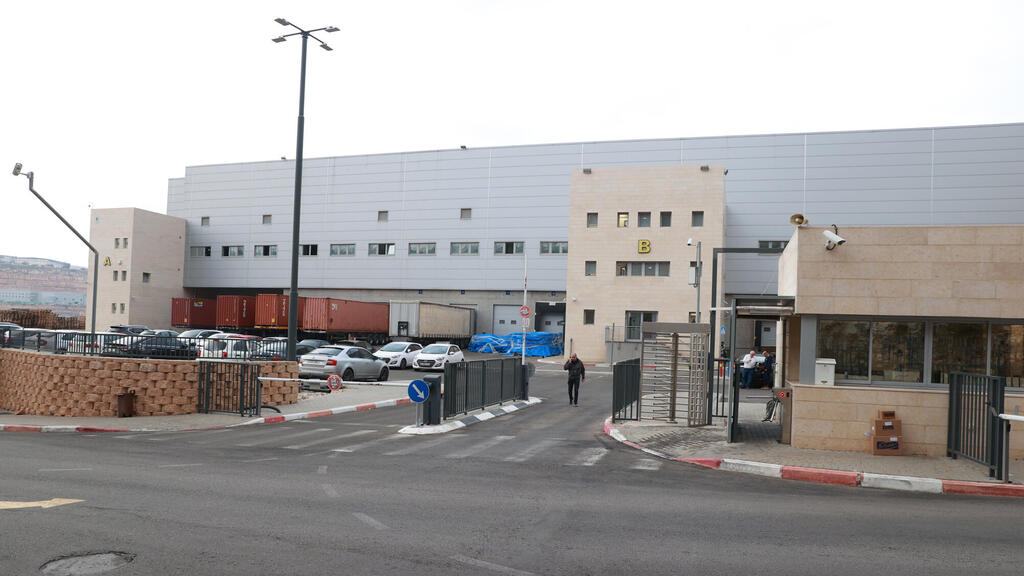
A factory in the Barkan industrial zone. More and more companies are moving production abroad.
(Photo: Shaul Golan)
The most straightforward response for some Israeli companies may not be to leave Israel altogether, but to move production outside the country. An Israeli company can keep its management, research and development operations, intellectual property and profits in Israel while manufacturing a product or sourcing a raw material in China and selling it directly from China to the Netherlands. The company remains Israeli; the goods themselves are no longer Israeli-origin products.
There is precedent for companies moving production from the settlements. SodaStream, for example, moved its factory from Mishor Adumim to the Negev, partly against the backdrop of international pressure over its operations beyond the Green Line.
Today, there is already a broader movement of production out of Israel. Water-meter maker Arad, for example, has transferred production to Spain, Italy and Mexico.
It would be wrong to attribute these moves to boycotts alone. There are already powerful economic incentives pushing Israeli manufacturing abroad: the strong shekel, high wages and production costs, relatively low labor productivity, taxation, regulation and the desire to locate production closer to target markets.
But alongside these familiar pressures, another variable has entered the equation: reputational risk, or what might be called the cost of “Israeliness.”
The numbers are too large to ignore. In the second quarter of 2026, some $11.2 billion in exports of goods sold abroad without crossing Israel’s borders had already been recorded. In these transactions, an Israeli-resident company sells goods to a foreign customer and ownership passes from an Israeli resident to a foreign resident, but the goods themselves never enter or leave Israel and therefore do not appear in customs records.
That represented nearly 40% of goods exports during the quarter.
This is a relatively new phenomenon. Until 2023, the share was in the single digits, at around 9%. The major increase began in the third quarter of 2023, between July and September.
Since then, the volume of goods exports has increased by $10.5 billion, but only $1.7 billion, or 16.5%, of that increase originated in Israel.
This dramatic shift cannot be attributed to boycotts alone. Much of it can be explained by structural changes, macroeconomic conditions, geopolitical and political upheaval, and the emergence of new international production chains.
But it also demonstrates how much easier it has become for an Israeli company to separate the location where profits are generated from the location where products are manufactured.
That has potentially significant macroeconomic consequences. If a company remains Israeli while moving its factory to Mexico or China, some of the profits can still accrue to Israel. The jobs, however, do not. That matters particularly when the production being moved abroad is in traditional industries, where employment is concentrated among workers with fewer alternatives.
The trend may now be accelerating. Just two weeks ago, Britain, France and Canada announced plans to advance trade restrictions, while a total of 12 countries have announced an intention to impose restrictions on trade with the settlements, support European measures or examine similar steps.
The question, therefore, is no longer simply how many millions of dollars’ worth of settlement products will be stopped at customs in Rotterdam.
It is what happens if more Israeli companies conclude that it is simpler, cheaper and safer to manufacture outside Israel.
The restrictions may be aimed at products originating beyond the Green Line. Their potential economic effects, however, could extend well beyond it.



