









Cyera has already raised more than Wiz. Where does its road lead?
The Israeli cybersecurity company has raised $1.4 billion this year alone and is already preparing for an IPO option, as its founders set their sights on building a company larger than Wiz.
Cyera has now raised more money than Wiz had accumulated before its historic sale to Google. It is valued at more than $12 billion, has raised $1.4 billion in 2026 alone and is expanding from data security into the protection of AI agents and non-human identities.
That puts the Israeli cybersecurity company at an interesting crossroads.
There are two obvious roads ahead. Cyera could continue along the path taken by Wiz, eventually selling to a technology giant for a multibillion-dollar sum. Or it could follow the route its founders are already preparing for and take the company public.
The choice is not necessarily imminent. But unlike most private technology companies, Cyera has reached a scale where both possibilities are increasingly credible.
The latest evidence of its momentum came on Tuesday, when Cyera raised another $400 million from Goldman Sachs Alternatives. The investment extends its Series G, which was led by Evolution Equity Partners, and comes just three months after Cyera raised $600 million at a $12 billion valuation.
The latest financing brings Cyera's total capital raised to more than $2 billion and its funding in 2026 alone to $1.4 billion. The new investment does not establish another valuation, with the company currently valued at more than $12 billion.
That means Cyera has now raised more than Wiz did before Google acquired it.
Wiz raised approximately $1.9 billion before Google completed its $32 billion acquisition in March. Its final financing, a $1 billion round in May 2024, valued the company at $12 billion.
But the more revealing comparison is what Wiz was planning to do with that position.
Before Google ultimately returned with a larger offer, Wiz had been pursuing an IPO. The company had rejected Google's initial $23 billion offer in 2024 and chose to remain independent. It eventually agreed to the $32 billion deal after Google returned to the negotiating table.
Cyera is now approaching the same fork in the road from a remarkably similar position: a private cybersecurity company valued at more than $12 billion, with more than $2 billion in funding and a rapidly expanding business.
In February, Cyera appointed Brandon Sweeney as president. Sweeney has more than three decades of experience leading technology companies through IPO processes and international expansion. Cyera also appointed Shira Azran to lead its global legal department. Azran has 25 years of experience advising technology companies on IPOs, fundraising and mergers and acquisitions.
“We want to have an IPO option open to us in terms of legal infrastructure and the company’s foundations,” they told CTech.
That is not the same as announcing an IPO. It does, however, suggest that Cyera does not want to find itself unprepared if it decides that the public markets are the right destination.
There is another clue in the way the founders describe the company itself.
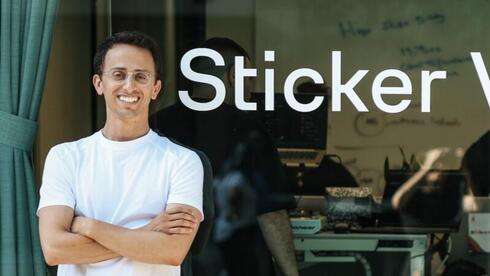
Asked whether they wanted Cyera to become the Wiz of data security, CTO Tamar Bar-Ilan responded: “No. We are already the Wiz of data security.”
CEO Yotam Segev then described a considerably larger ambition.
“We want to be the CrowdStrike or Palo Alto Networks of data security. Four times bigger.”
If Cyera's ambition were simply to build a highly valuable cybersecurity company and sell it, Wiz provides an obvious precedent. A $32 billion acquisition demonstrates the extraordinary strategic value that a fast-growing Israeli security company can command when it reaches global scale.
But building a company four times larger than Wiz is a different proposition. It implies a much longer time horizon and potentially a different endgame.
Cyera was founded in 2021 by Segev and Bar-Ilan. Its original focus was data security: helping large organizations identify sensitive information, understand where it is stored and control access to it.
The company's early history was considerably less predictable than its current valuation suggests. The founders told CTech that the company had struggled to find product-market fit and reached a point where it closed no sales in an entire quarter.
The business eventually found traction, and the rise of generative AI transformed the importance of the problem Cyera was addressing.
As companies began connecting AI systems to corporate data, they needed to understand not only what sensitive information they held, but what AI systems could see and do with it. Cyera expanded accordingly, adding capabilities across data security posture management, privacy, identity, data loss prevention and agentic security.
That expansion is central to the IPO-versus-acquisition question because Cyera is no longer pitching itself simply as a data security company.
It is trying to become an infrastructure layer for enterprises adopting AI.
Its Agent Guardian and Cyera Endpoint products are designed to monitor AI agents, including their tool calls and database queries. The acquisition of Oasis Security, in a deal valued at approximately $1 billion, added non-human identity management to the platform.
The underlying argument is that AI agents are creating a new security problem. Unlike conventional software, autonomous agents can use corporate identities, call tools, query databases and access sensitive information without a person approving every individual action.
Cyera wants to sit between those agents and the data they are allowed to access.
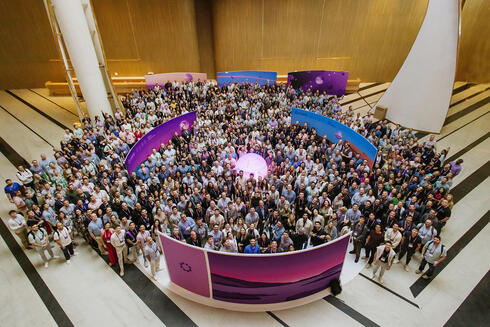
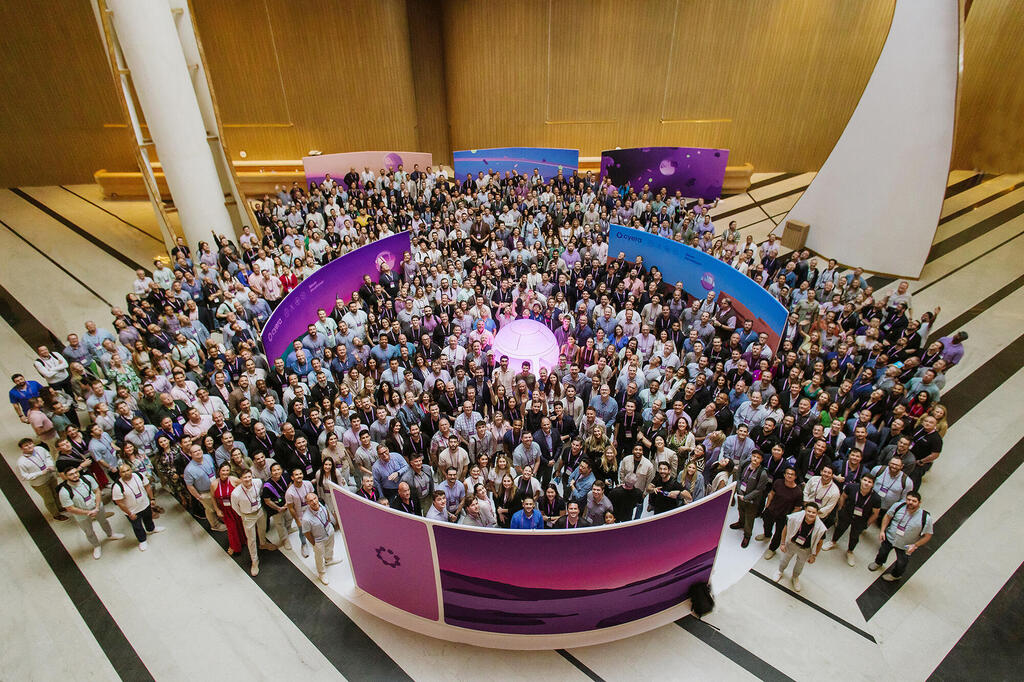
That is also why the company has been able to attract such large amounts of capital. Cyera's valuation rose from $3 billion in 2024 to $6 billion in 2025, $9 billion in January 2026 and $12 billion in June. The company now employs more than 1,500 people across 18 countries.
The IPO route would allow Cyera to continue pursuing that ambition as an independent company.
Going public would give it access to the public markets, a liquid currency for acquisitions and the ability to build a company whose value is ultimately determined by public investors rather than successive private funding rounds.
But an IPO also brings a different set of pressures. A company that has raised billions privately and reached a $12 billion-plus valuation would enter the public markets with expectations already built into its price. Growth, profitability and the ability to sustain its expansion would be scrutinized quarter by quarter.
The alternative is the route Wiz ultimately took.
A technology giant could decide that Cyera's position at the intersection of data security, identity and AI makes it strategically valuable enough to acquire. The more Cyera expands its platform, the more potentially attractive that combination could become to a large cloud, software or security company.
Wiz's experience shows that even an IPO-bound company can change course when an acquisition offer becomes sufficiently large.
“We want to build an Israeli company that will be one of the world’s technology giants,” Bar-Ilan told CTech. He described the AI revolution as a “once-in-a-lifetime opportunity” to build a company on that scale.
That ambition makes an eventual IPO easier to understand.
A sale would provide a spectacular outcome for founders, employees and investors. However, an IPO would leave Cyera independent and give its founders the opportunity to pursue the much larger company they say they want to build.



