










VC Survey 2026
“Israeli tech today represents the ability to build foundational companies that matter at global scale”
Danny Akerman, co-founder and managing partner at Key1 Capital, joined CTech for its 2026 VC Survey.
“Israel has a deep and very successful heritage in semiconductors, from Galileo to Mobileye, but the stakes have changed. If you are building a 'hardcore' chip company today to compete with NVIDIA or AMD, you don’t need a seed round; you need a billion dollars, massive talent density, and locked-in fabrication relationships from Day One. Most standard VC funds cannot support that capital intensity alone,” said Danny Akerman, co-founder and managing partner at Key1 Capital.
“However, sectors like Aerospace and Defense are different. You can reach a working prototype and significant commercial traction with much leaner capital efficiency compared to chip fabrication," he said.
1 View gallery
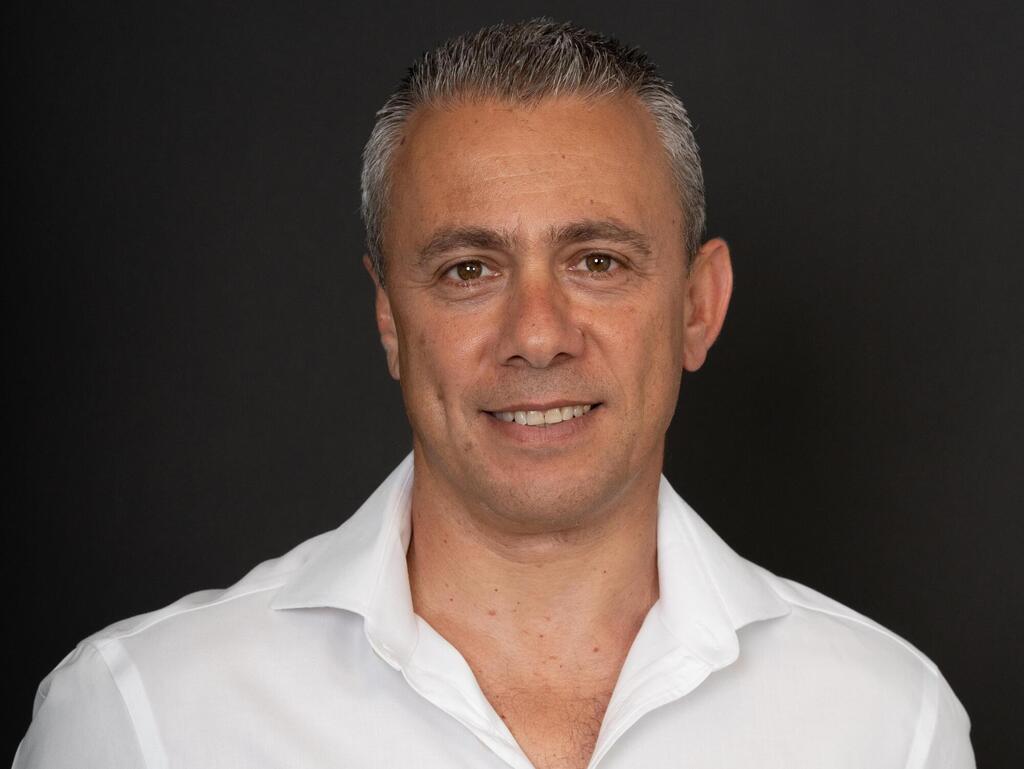
Danny Akerman, co-founder and managing partner at Key1 Capital.
(Photo: Key1 Capital)
“The Israeli VC model can support high-CAPEX ventures, but only when matched with exceptional teams, clear differentiation, and access to significant follow-on capital.”
Following the turbulence of recent years and the stabilization of 2025, the Israeli tech ecosystem is entering a new era: The Next Leap. Akerman joined CTech to share insights for its VC Survey 2026.
You can read the entire interview below.
Fund ID
Fund Name: Key1 Capital
Total Assets Under Management: $300M
Partners/Managers: Amit Pilowsky, Sarel Eldor, Danny Akerman
Notable Portfolio Companies: WEKA, FundGuard, Holidu, Helthee, Lyte
Notable Exits: SuperPlay
The Liquidity Leap: After a period defined by cash preservation, will 2026 see the reopening of the IPO window for Israeli tech, or will M&A remain the sole viable liquidity event?
The IPO window isn't closed. It is just that the bar is much higher, requiring far larger scale than ever before, and at least a line of sight to (if not actual) profitability.
Ten years ago, a company could list with $100 million in revenue. Five years ago, with $300 million. Today, the threshold has increased to $500 million - $1 billion. The asset managers who buy these IPOs, the Fidelitys and BlackRocks of the world, have grown significantly larger, requiring bigger “tickets” to move the needle and are looking for more liquid stocks in line with larger market-cap companies. Additionally, the overall market tolerance for quarterly misses is at all-times lows, requiring increased size to better manage predictability.
On top of this, for many Israeli (and non-Israeli) companies, the math of going public doesn't work yet. Public market valuations often yield an outcome that is lower than that of the last private round dating back to 2021. Many founders and boards don't want to go through a “down-round IPO” to fix that and/or lose their preferred position in the stack after going public. This leads to them choosing to either remain private longer or pursue the M&A exit route.
As a result, M&A will likely continue to dominate liquidity events in 2026, not because IPOs aren't feasible, but because for many companies, selling earlier or staying private is simply the more rational choice given their size, growth profile, and available strategic demand.
The Global Leap: How is the 'Israeli Tech' asset class being rebranded to global LPs in 2026? Are we shifting the narrative from 'Innovation' to 'Extreme Resilience'?
The focus on “resilience” is already outdated.
Of course, Israeli companies are resilient, that has been proven time and again. But the narrative has shifted to Dominance. In the last 12 months alone, we saw $65 billion in M&A transactions just between CyberArk, Wiz, and Armis. That isn’t a story of "surviving difficulty"; it is a story of producing global category leaders that are of great interest to the largest global tech consolidators.
We are no longer just building companies that get bought for $300m or $500 million. We are building infrastructure-grade companies valued in the tens of billions, with a clear line of sight to $50 billion or $100 billion outcomes and beyond.
When a single Israeli-born technology can represent a meaningful share of the earnings of the world’s largest companies, the story is no longer about resilience. It’s about strategic importance and leadership. This is the case for Mellanox which was acquired by Nvidia.
For LPs, Israeli tech today represents the ability to build foundational companies that matter at global scale, and that story is only getting stronger.
The Efficiency Leap: In the era of AI-driven hyper-productivity, is the traditional correlation between 'Headcount Growth' and 'Company Success' permanently broken?
Efficiency is rising across the board, but its impact is not uniform.
AI enables companies to do more with fewer people, particularly in software-heavy, mundane task-oriented functions. That said, not every business can or should run a ten-person company at scale. Hardware, defense, and operationally complex businesses still require meaningful teams.
What is breaking is the assumption that growth must automatically translate into linear headcount expansion. Strong companies will increasingly differentiate themselves by allocating talent more precisely, not by hiring indiscriminately.
The right question isn’t “How small can the team be?” but “Where does headcount actually create leverage for this specific business?” The answer will differ widely depending on sector and strategy.
The Next Engine: Cybersecurity has been Israel's primary export engine for a decade. Which domain is best positioned to take the lead by 2030?
Cybersecurity will remain a massive pillar, but aerospace and defense is emerging as the next major engine of growth.
Israel has unparalleled operational expertise in this domain, and fortunately (or unfortunately), that expertise continues to deepen given regional realities. At the same time, defense budgets are rising sharply across the US, Europe, and Asia as countries rush to close decades-long capability gaps.
The fastest way for governments to modernize is by adopting innovation developed elsewhere and Israel is uniquely positioned at that intersection of technology, operational experience, and urgency.
This isn’t about replacing cyber. It’s about adding a second, equally powerful export leg, one with long-term demand, strategic importance, and global capital flowing into the category.
Related articles:
Finally, what are 2-3 startups that, in your opinion, are likely to make a leap forward in 2026?
Weka (portfolio company) - As the industry shifts from model training to inference, WEKA is solving the critical bottleneck of power efficiency and GPU utilization. By preventing high-performance hardware from sitting idle, they are establishing themselves as the essential infrastructure layer for the next wave of production-grade enterprise AI.
FundGuard (portfolio company) - Large asset managers and fund administrators are increasingly looking to replace decades-old, brittle accounting systems with modern platforms capable of real-time processing and reporting. The company’s positioning as a full fund management accounting system, combined with growing adoption by sophisticated incumbents, puts it at the center of a long-overdue infrastructure modernization cycle in asset management.
IVIX is positioned for growth in 2026 as governments and regulators place greater emphasis on uncovering sophisticated financial crime that spans multiple platforms and jurisdictions. By turning fragmented public information into usable investigations, IVIX addresses an acutely growing need for faster, more effective enforcement without expanding manual workloads.



