










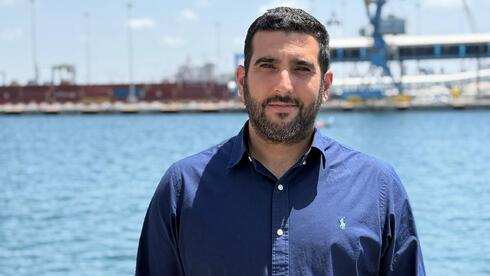
“The sea is the weakest point in national security”
Founded by former Israeli Navy officers, Azimut.ai is plugging pervasive gaps in maritime intelligence and threat detection. Following a successful proof of concept at Ashdod Port, the company has raised $1 million to further expand its AI-driven technology.
“The sea is the weakest point in national security. Countries pay hundreds of billions of dollars to close this gap, but it's very, very difficult,” says former Israeli Navy captain Matan Saat. “All over the world, we found the same problem in every country. There is a blind spot.”
“It’s not only the close range,” he elaborates, which in itself facilitates the smuggling of people, drugs, weapons, and terrorists, but he argues there is a missing visual layer that prevents operators from fully understanding what’s happening at sea.
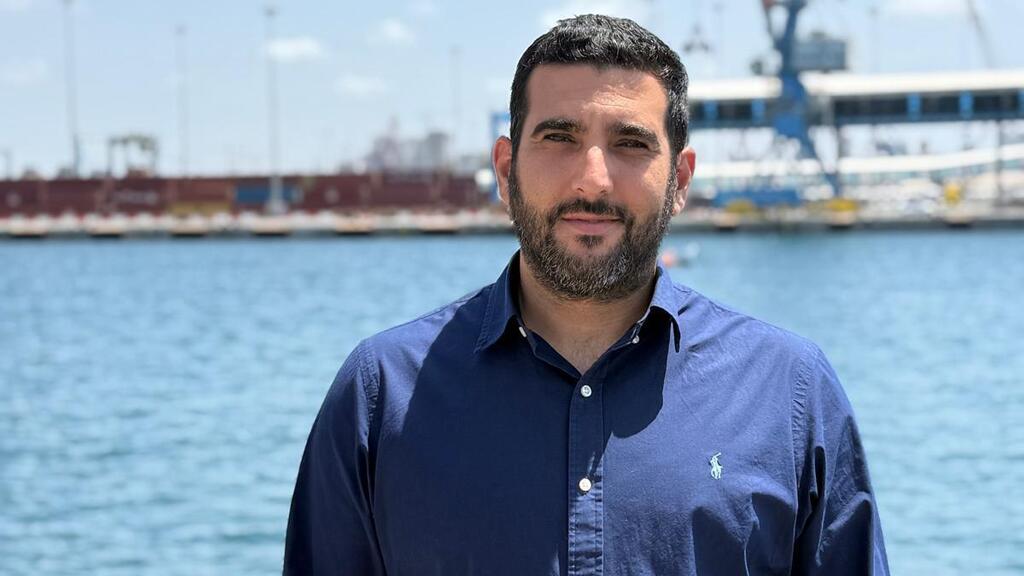
In 2020, Saat, together with fellow former naval officers Shay Lavi and Tomer Marom, established Azimut.ai to solve the shortcomings in maritime monitoring they had repeatedly encountered during their years in the Navy.
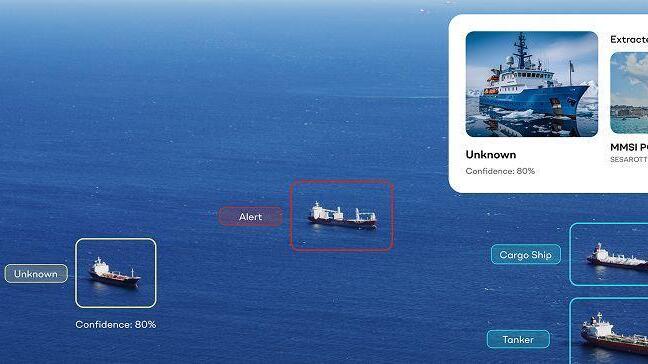
Saat explains that Albatros, the AI-powered system the team developed to close this gap, can “recognize and track any object over the sea, from the head of a swimmer to the biggest vessel.”
After years of bootstrapping through global maritime training contracts, the company recently raised its first funding round of $1 million, led by a $650,000 investment from Ashdod Port following a successful proof of concept at the Port’s Maritime Technology Hub (Blue Ocean CVC).
Albatros was built to function as an overlay that can piggyback off existing port cameras. Saat likens the vessel recognition capabilities they developed to Face ID of a smartphone, “that can recognize from the video, the same vessel in other places.”
Chief Product Officer Lavi explains how the system “learns the site, and after that, you can tell if something looks unusual, it's not behaving as it should be. This is different from how military and naval anomalies are generated.” In environments like ports, he describes, the system must first learn what constitutes normal activity before it can flag deviations as suspicious anomalies.
Saat adds: “We can recognize which vessels come without communication to the security. We can make a list of which vessel, and how many times, and give that knowledge to the port to be better prepared.”
“We're not selling hardware,” Saat continues. “Just the software that, I always like to say, ‘unlocks’ the power of your cameras, because they have a lot of power.”
Inside the company’s Petah Tikva headquarters, a team of 12 engineers and former naval officers is now preparing for international expansion, having already completed successful POC pilots across Israel. Azimut.ai plans to raise an additional $2 million to support global pilots and establish its first clients abroad. “By 2028, we hope to be in several million in ARR and to go into Round A, a big round, and to get out all over the world,” says Saat.
Beyond ports and obvious naval use cases, Azimut.ai is also exploring the wider potential of its technology with offshore oil facilities, environmental agencies, and coastal authorities to detect illegal fishing and safeguard coral zones. Saat gives the example of “the environmental authorities in Eilat,” with whom the company is now working.
Five years ago, when the Azimut.ai team first set out to develop Albatros, the founders envisioned it primarily for naval defense, such as detecting terrorist threats. “We came from the Navy and we did maritime patrol, so we didn't think about the ports,” says Saat. But their pilot with Ashdod Port sparked the realization of new ways to leverage the technology. “Ashdod asked us to check for swimmers… without us, it's very difficult for them to see. I didn’t think about that from the beginning.”
Saat describes the Ashdod collaboration as a defining moment for the company, one that opened the floodgates to its current momentum. “It was a game changer for us,” he says of the first POC. He recalls the early setbacks: “No one wanted to be the first one. Ashdod was the first that opened the doors… They gave us the base, and they gave us the opportunity to prove our system.”
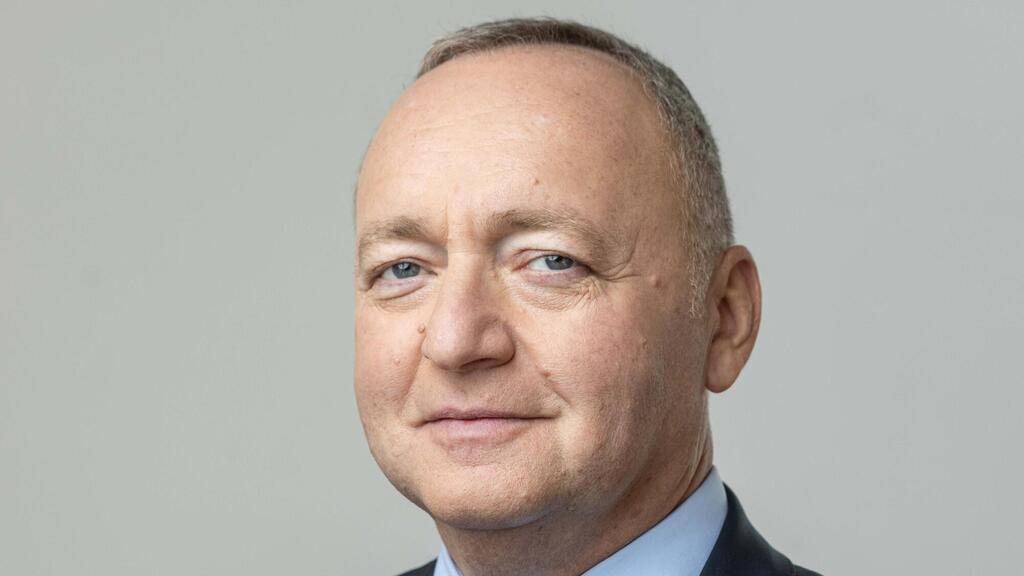
According to Shaul Schneider, Chairman of Ashdod Port, the Port’s decision to invest in Azimut.ai rather than remain a technology partner reflected “a strategic shift in how we view innovation, not as an external add-on, but as an integral part of the port’s evolution.”
He adds: “The pilot proved technological excellence and a real operational edge: the ability to see beyond traditional systems, anticipate risks, and act faster. This move positions us to address one of the greatest challenges in modern port management — maintaining full situational awareness — while shaping a smarter, safer maritime ecosystem for the future.”



