









Boarding Pass
Israeli startup receives FDA Breakthrough status for urine test targeting treatable dementia
Founded in 2025 and addressing a $4.6 billion market driven by an aging population, healthcare startup BioStream was recently granted FDA Breakthrough Device Designation for its urine test designed to help diagnose a treatable form of dementia.
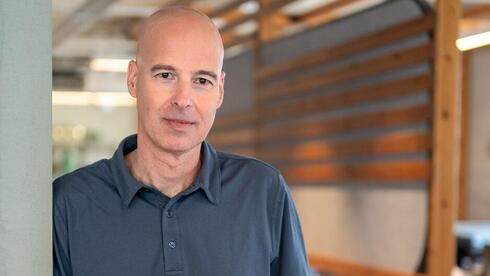
"Too many people with normal pressure hydrocephalus are told their symptoms are Alzheimer's or simply old age, when a treatable condition is behind them," said Dr. Meital Segev-Bar, co-founder and CEO of BioStream. The company recently announced it has received FDA Breakthrough Device Designation for its urine test to aid the diagnosis of Idiopathic Normal Pressure Hydrocephalus (iNPH), one of the only reversible causes of dementia.
After her father became ill, Segev-Bar found herself asking why there was no easy home test that could give patients and doctors reliable answers. That question led to the founding of BioStream, which is currently backed by $1.5 million in pre-seed funding to develop the test. "Breakthrough Device Designation recognizes this unmet need and the potential of a simple urine test to change how these patients are identified," added Segev-Bar.
Clinical studies of the technology are underway with University Medicine Rostock in Germany and Rambam Health Care Campus in Haifa, with a soft launch planned for late 2027, followed by broad insurance reimbursement.
You can learn more about the company below.
Company Name: BioStream
Sector: Healthcare
Product/Service description:
Biostream is developing a simple urine test for one of the few treatable causes of dementia. Idiopathic Normal Pressure Hydrocephalus (iNPH) affects up to 3.7% of adults over 65 and is often mistaken for Alzheimer's or Parkinson's. The difference matters enormously: iNPH is treatable.
A routine shunt operation improves symptoms in 70-90% of patients, restoring walking, memory and independence. Yet an estimated 80% of cases are never treated, because reaching a diagnosis means imaging, specialist referrals and an invasive spinal tap that frail, elderly patients frequently refuse.
Biostream replaces that first barrier with a simple urine sample. Collected during a routine visit to a memory clinic or neurologist, the sample is analyzed at a certified laboratory, where Biostream's AI model reads a proprietary signature of brain-derived proteins and returns a clear result to the physician, flagging which patients should be referred for further testing and which should not.
Founder Bios:
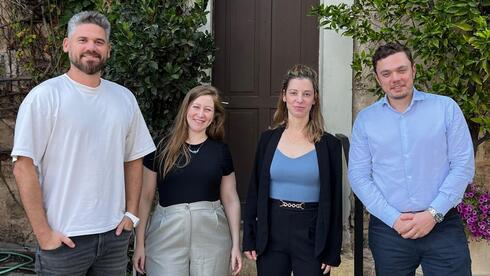
Dr. Meital Segev-Bar (Co-Founder and CEO) holds a Technion PhD in nanotechnology and is a second-time founder. She previously co-founded Feelit Technologies as CTO, which raised over 20 million euros, turning nanosensor research into a venture-backed company.
Alex Dehtar (Co-Founder and CBO) is a product and commercial leader with over 15 years of experience taking devices from development to global markets at Feelit, Maytronics, and Camtek.
Dr. Daniel Dubinski (Medical Director) is a senior neurosurgeon at University Medicine Rostock (PD Dr. med., M.Sc. Neurosciences) and a key opinion leader in hydrocephalus management. He leads BioStream's clinical study at Rostock.
Year of Founding: 2025
Last Investment Round: $1,500,000
Last Investment Stage: Pre-Seed
Date of Last Investment: 10/30/2025
Total investment to date: $1,500,000
Investors: ICI Fund, HiCenter Ventures, US-based angels
Current number of employees: 3
Open positions: Sr. Data Scientist, Laboratory Director
Website: https://biostream.health/
Social Media: LinkedIn
How was the idea born?
Meital Segev-Bar and Alex Dehtar worked together at Feelit Technologies, Meital's previous startup. When her father became ill with cancer, she kept returning to a simple question: why is there no easy home test (urine, saliva, stool) that gives patients and doctors real answers? She also wanted her next company to have more direct human impact.
The founders deliberately did not start from a technology and look for a problem. They started from the problem. They met with gynaecologists, neurologists, neurosurgeons and other specialists and mapped the unsolved diagnostic needs in each field – where patients fall through the cracks, and why. Normal Pressure Hydrocephalus stood out immediately. It is a treatable, reversible cause of dementia that is overwhelmingly missed, and every stakeholder in the chain gains when it is caught early: the patient regains independence, the clinician gets an objective answer, the hospital avoids years of unnecessary care, and the insurer avoids the cost of managing a patient who could have been treated.
To turn that insight into a product, the founders needed a clinician who treats these patients. They found that in Dr. Daniel Dubinski, a neurosurgeon at Rostock University Medical Center who specializes in hydrocephalus. He joined as the third co-founder and Medical Director, bringing the perspective of the surgeon who performs the shunt treatment, and Rostock became BioStream’s clinical development partner.
What is the need for the product?
Idiopathic Normal Pressure Hydrocephalus is one of the only reversible causes of dementia. The standard treatment is a shunt – a thin tube surgically implanted to drain excess cerebrospinal fluid from the brain. This routine operation improves symptoms in 70-90% of patients, restoring walking, memory and independence. It affects an estimated 1.5-3.7% of adults over 65, yet roughly 80% of cases are never treated.
The reason is the diagnostic pathway. iNPH looks almost identical to Alzheimer’s and Parkinson’s, so patients are routinely misdiagnosed and sent down the wrong clinical track. Confirming iNPH requires brain imaging, specialist referral and an invasive spinal tap – a procedure frail, elderly, cognitively impaired patients frequently refuse. Most of the attrition happens before any confirmatory test is reached. There is currently no simple, objective test to tell a physician which patients are worth sending down that pathway.
How is it changing the market?
Today, whether a patient is ever tested for iNPH comes down to a judgment call. A doctor has to spot a pattern of symptoms that closely resembles far more common diseases, and most non-specialists aren’t looking for it. Even then, the only objective test available is an invasive one.
Cereon flips that sequence. Instead of starting with an invasive procedure, the pathway begins with a simple urine test that answers one question: should this patient be referred? The sample is collected during a routine memory-clinic visit and analyzed by a certified laboratory, and BioStream’s machine-learning model sends the physician a clear result, graded by level of confidence.
The bigger shift may be the sample itself. Tests for neurological disease have traditionally relied on spinal fluid and, more recently, blood. Urine needs no needle and no trained staff to collect, and it can be gathered as often as needed – opening the door to uses that invasive tests can’t support, such as tracking patients after surgery.
How big is the market for the product and who are its main customers?
The total addressable market is approximately $4.6 billion, with a serviceable addressable market of roughly $850 million.
The opportunity starts with America’s aging population. Millions of older Americans already live with a diagnosis of dementia or mild cognitive impairment, and more join them every year. Behind any one of those diagnoses, a treatable case of iNPH could be hiding, which makes every one of these patients a candidate for a simple test. As the population ages, that pool only grows.
The serviceable market is the part BioStream can realistically reach: patients whose symptoms fit what the test is designed to detect, and who are seen at the specialist clinics the company is targeting – starting in Florida, then expanding across the US.
The customers are the clinicians who see these patients first and currently have no objective way to identify them: memory clinics, neurology, geriatric medicine, and increasingly geriatric emergency departments. Behind them sit the neurosurgical centers that perform the shunt procedure, and the payers (Medicare and Medicare Advantage in the US) who carry the cost of every missed diagnosis. The US commercial launch begins in Florida, which has the second-highest concentration of residents aged over 65 in the country.
Does the product exist already?
The technology is validated in a clinical study and not yet commercially available.
BioStream has collected over 150 clinical samples across three active sites, including University Medicine Rostock in Germany and Rambam Health Care Campus in Haifa, profiling the urinary proteome of iNPH patients against patients with the neurodegenerative conditions it is most often confused with. The classifier reached a cross-validated AUC of 0.87, and the findings are being prepared for peer-reviewed publication. Two patents have been filed.
Soft launch is planned for late 2027, and broad insurance reimbursement in the years that follow. A second-generation point-of-care version is in development on a separate regulatory track.
Who are the main competitors in this sector and how big are they?
There is no commercial molecular diagnostic for iNPH anywhere on the market. BioStream’s real competition is the status quo: imaging plus the invasive tap test, the pathway that 80% of patients never complete.
Adjacent to that sit the Alzheimer’s biomarker companies - C2N Diagnostics, Quanterix, Fujirebio, Roche - which have built substantial businesses on blood and CSF tests for neurodegeneration. They are far larger and better capitalized, but they answer a different question: whether a patient has Alzheimer’s pathology. None identifies iNPH, and in practice their results are complementary to ours rather than competitive.
Academic groups in Europe and the US are publishing CSF biomarker research in iNPH, but that work remains pre-commercial and depends on the lumbar puncture BioStream is designed to avoid.
What is the added value that the founders bring to the company and the product?
Three complementary founders, each leading the domain they know.
Segev-Bar is a second-time deep-tech founder. She was previously the CTO and co-founder of Feelit Technologies, where she scaled nanoparticle sensors from lab to global factory floors and helped raise over 20 million euros with Henkel and Continental as strategic investors. Segev-Bar brings the science, the IP strategy and the experience of taking a technology from research to market scale.
Dr. Dubinski is a board-certified neurosurgeon and Privatdozent, Senior Physician in Neurosurgery at Rostock University Medical Center, and BioStream’s clinical development partner. He specializes in hydrocephalus and cerebrospinal-fluid disorders, with a published record on shunt outcomes. Because he treats these patients himself, he brings the clinic into the lab. He helped shape the clinical study around the patients doctors actually struggle to diagnose, and defined exactly who the test is for, so the product answers a real question doctors face.
Dehtar has over a decade of product leadership across Camtek, Feelit, Maytronics and UCT. He owns product-market fit, commercial strategy, reimbursement and partnerships, translating the technology into value for clinicians, hospitals and payers.
The team is majority women (four of six), and both clinical sites came through direct founder relationships rather than business development.
What will the money coming in from the round be used for?
BioStream is raising a $3.2 million seed round, alongside a grant from the Israel Innovation Authority, giving the company about two years of runway toward a Series A.
The money goes toward two goals. The first is validation, building on research that is already done. BioStream has analyzed more than 150 urine samples from patients at three clinical sites, and its algorithm has shown it can tell iNPH apart from the conditions it is most often mistaken for. Those results are being prepared for peer-reviewed publication, and two patents have been filed. The round funds the next step: a larger analytical validation study with few leading US clinical sites.
The second is bringing it to market: expanding the Florida pilot to more clinics, securing a billing code, laying the groundwork for insurance coverage and advancing the FDA process.
In the "Startup Boarding Pass" section, CTech will cover the (relatively) small investments made in companies during the early stages of their existence - and the entrepreneurs and startups who have not yet had the opportunity to reveal their stories to the world. Please use the linked form and fill it out according to the guidelines. This form is intended for startups raising between $500,000 and $3 million from venture capital funds, angels, or official grants from Israeli and foreign institutions. If relevant, someone at CTech will be in touch for follow-up questions.



