










Israel’s AI humanitarian push extends aid without borders
Earthquake-hit Venezuela underscores a broader shift toward remote assistance powered by data and machine learning.
The recent earthquake in Venezuela has done more than deepen a humanitarian crisis in a country already marked by political isolation. For a growing number of Israeli aid organizations and technology companies, it has also served as a demonstration of a quieter shift underway in global relief work: the increasing use of artificial intelligence to deliver expertise and services to places where human access is limited or impossible.
Israel and Venezuela have no diplomatic relations. Yet four Israeli humanitarian organizations have already begun responding to the disaster through remote guidance, coordination with local partners, and the use of teams and individuals operating across borders, including professionals with dual citizenship. In parallel, a broader ecosystem of Israeli nonprofits and startups is developing AI-based tools designed to replicate parts of fieldwork that traditionally required physical presence.
The premise, according to practitioners, is not to replace on-the-ground operations, but to extend them, by allowing knowledge, analysis, and decision-support to travel where people cannot.
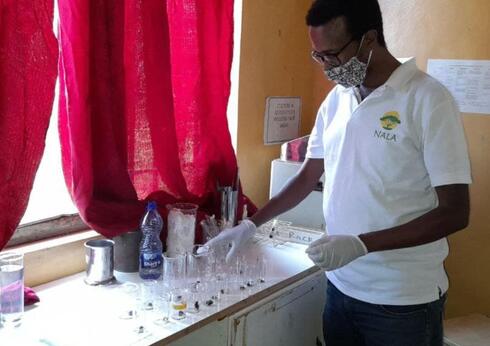
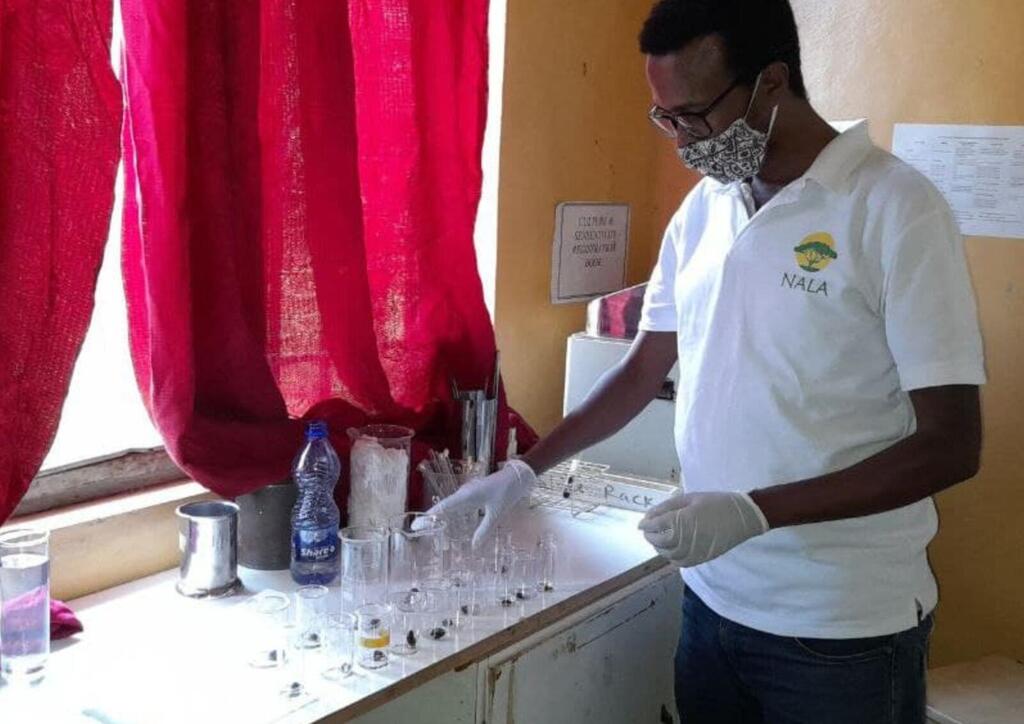
One of the clearest applications is in disease prevention. NALA, an organization focused on neglected tropical diseases in Africa, is developing an AI system in collaboration with the University of Haifa and the Lemonade Foundation that combines satellite imagery, environmental indicators, climate data and terrain mapping to identify potential disease outbreak zones before they emerge.
In parallel, the organization is testing an AI-powered microscope, developed with support from Seed Israel and in partnership with Jimma University in Ethiopia, that can assist in diagnosing intestinal parasites in locations without access to laboratories or trained medical specialists.
The model reflects a broader ambition: shifting parts of diagnosis and prevention from hospitals and laboratories to remote, data-driven systems that can operate in resource-limited environments.
In healthcare delivery itself, the Israeli company CervInsight has developed an artificial intelligence system that enables nurses and health workers to screen for early signs of cervical cancer using only a smartphone. The system removes the need for laboratory infrastructure or specialist physicians, and is already being used in Kenya, Malawi, Nigeria, Ethiopia and El Salvador. According to figures cited by the company, more than 350,000 women die annually from the disease worldwide.
Other organizations are focusing on the psychological toll of crises. Early Starters International, which works with young children in Israel and abroad, has developed “Tiki,” an AI-based assistant designed to help educators working with children affected by trauma. The tool provides access to trauma-informed guidance in environments where specialists are scarce. A new version currently in development will operate through WhatsApp, removing the need for registration or dedicated software access.
Artificial intelligence is also being used to interpret communities that aid groups cannot physically visit. Rural Senses, which operates in more than 18 countries, has built a system capable of transcribing, translating and analyzing thousands of interviews across more than 80 languages and dialects. The system identifies patterns, themes and emotional signals in open-ended responses.
In Kenya, the company analyzed more than 13,000 responses in four languages in just 34 days, a process that, according to those involved, helped a local organization refine its programs and raise additional funding.
Infrastructure planning is another emerging frontier. AnyWay Solutions is using AI, machine learning and geospatial analysis to design transportation systems in developing countries. By processing satellite imagery and aerial photographs, the system can identify settlements missing from official maps, evaluate road route options and support the design of infrastructure resilient to climate pressures.
In Papua New Guinea, the company’s tools have been used to help connect isolated communities to healthcare, education and employment services, while reducing costs and environmental impact.
The common thread across these efforts is the attempt to compress distance, geographic, political and logistical, through computation.
“Humanitarian aid organizations are increasingly dealing with situations in which it is not always possible to be physically on the ground,” said Ayelet Levin-Karp, CEO of SID Israel, an umbrella organization for Israeli humanitarian aid and international development groups. She pointed to wars, natural disasters, political restrictions and access constraints as key drivers of change.
“In many cases, new technologies, primarily artificial intelligence, allow aid organizations to continue to provide knowledge, expertise and tools even remotely,” she said. “Artificial intelligence does not replace field work, but it allows us to expand it and reach places that were previously out of reach.”
First published: 09:30, 03.07.26



