










“Investors are practically chasing us”: Israel’s defense-tech funding reversal
Airis Labs co-founder Rotem Abeles says raising capital was once a major challenge. The shift reflects a broader change in investor attitudes as Israeli startups develop technology in response to needs emerging from the battlefield.
“During our seed round, we were barely given a second look, and raising capital for defense tech was a major challenge. Today, however, investors are practically chasing us,” said Rotem Abeles, co-founder of Airis Labs, during a panel on the future of Israel’s defense-tech industry at the TECH1 conference.
The discussion, moderated by Major General (Res.) Avi Gil, examined how the war has transformed the industry and whether the current momentum can be sustained. Opening the panel, Gil recalled a time when defense tech attracted little interest from investors and entrepreneurs. Israel’s experience during the war, he argued, has effectively turned the country into a living laboratory for the sector. The question now is whether the surge in interest will continue and whether new companies can still find room to enter the market.
1 View gallery
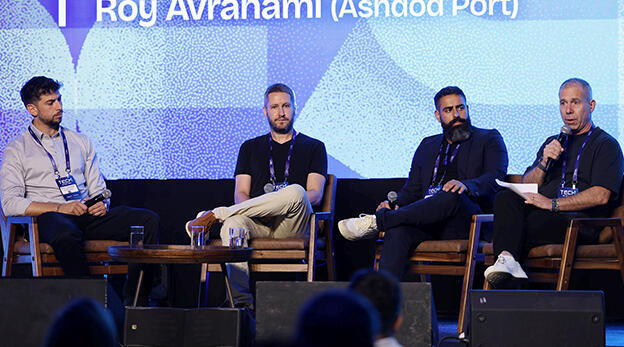
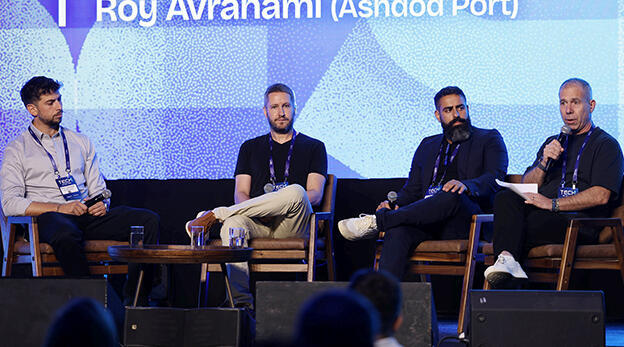
TECH1 2026 Conference - From right: Avi Gil (Givon Defense), Roy Avrahami (Ashdod Port), Rotem Abeles (Airis Labs), Amir Leibowitz (Orca Innovation)
(Orel Cohen)
Airis Labs illustrates the shift. The company develops artificial intelligence technology that analyzes visual information and generates intelligence insights in real time. It was publicly unveiled last May after raising $60 million, having previously operated under the radar. Abeles said the company’s secrecy was not part of a deliberate strategy but a consequence of circumstances and timing.
“Our seed round was in 2023, and immediately afterward, the war broke out. We went straight into the field and implemented the system. Meanwhile, many things happened in the world, and we were afraid of being exposed at the wrong time,” Abeles said.
Even after the company was established, confidentiality restrictions made it difficult to discuss its work publicly. “In the end, we revealed the recruitment because, in our world, there aren't many things that can be talked about because of the secrecy, and that was about the only news we could share,” he said.
Public exposure has also become important for attracting employees, Abeles added, as defense-tech companies compete fiercely for qualified personnel.
Amir Leibowitz, who held command positions in the military and served in the Defense Ministry before founding Orca Innovation, described how operational challenges led to the development of new technologies. He said the company emerged in response to two problems: the difficulty of interpreting suspicious activity in the field in real time, and the mismatch between the speed at which battlefield conditions change and the pace of traditional technology development.
“We observed a great deal of suspicious activity in the field, yet lacked any real ability to decipher it in real time,” Leibowitz said. “We encountered numerous challenges on the ground. When we attempted to address them using traditional methods, we realized that the situation was constantly shifting, rendering slow-paced development obsolete.”
The central challenge, he said, is identifying operational needs accurately and developing solutions that can adapt to them.
Abeles likewise emphasized the importance of developing technology in close collaboration with those using it in the field. “We are introducing technology that is new to everyone, including our own clients. Given our limited resources, our only path to success is maintaining close, daily contact with our customers. They want us by their side. In this context, immediate, hands-on interaction and a tight-knit relationship with them provide us with a competitive advantage.”
The demand for advanced security technology extends beyond military operations. Roy Avrahami, head of innovation at the Port of Ashdod, said the changing security environment has blurred the distinction between the battlefield and civilian infrastructure.
“In the past, there was a clear distinction between the front and the home front. Today, critical infrastructure, such as ports, gas facilities and fuel depots, has become an integral part of the front line,” he said.
The challenge is not simply protecting sensitive sites, Avrahami added, but ensuring that they continue operating during an attack.
He argued that critical infrastructure operators should participate in developing the technologies intended to protect them, rather than simply buying off-the-shelf products. At the Port of Ashdod, the innovation program includes a corporate investment fund, investment in companies and opportunities to test technologies in a real-world environment.
“We serve as the platform for the development and testing of their technology,” Avrahami said.
Such arrangements can help startups refine their products under operational conditions and potentially open doors to other infrastructure operators around the world.
The panel also examined the next stage of autonomous warfare and the challenge of balancing operational capabilities with deployment costs.
Leibowitz said the impact of drones on the battlefield has shifted attention toward systems capable of coordinating large numbers of unmanned aircraft, including those made by different manufacturers.
“In the first generation, we proved that drones transform the battlefield. Now, in the next phase, the market demands a unified platform capable of managing a multitude of drones from various industries and manufacturers. We are creating a single platform that can bridge these different manufacturers,” he said.
That transition will also change the role of human operators. Rather than manually controlling every aspect of an operation, people could increasingly supervise systems that perform more tasks autonomously.
“The question is whether a human ‘in the loop’ is necessary. Currently, we integrate numerous autonomous elements alongside human control capabilities. In the future, humans will remain involved, but they will not need to manually control every single detail,” Leibowitz said.
Looking five years ahead, the panelists expected artificial intelligence and autonomous systems to play a greater role across the defense industry.
Abeles identified two areas in intelligence where he believes significant potential remains untapped: AI agents capable of carrying out tasks independently, and systems for managing enormous volumes of data. As threats multiply, he argued, intelligence operations will increasingly require technology that can analyze information and perform tasks at a scale beyond human capacity.
“In a world often characterized by a strong sense of pride and a desire for human control, the introduction of processors and intelligent agents that surpass human capabilities would completely change the rules of the game,” he said.
Avrahami said critical infrastructure would also need autonomous systems capable of repairing faults, operating facilities and carrying out tasks in real time, including during attacks.
Leibowitz, however, stressed that technological advances would not eliminate the need for human judgment. “Ultimately, the key lies in the right synergy between human and machine. On the future battlefield, this combination will be the deciding factor.”
In his closing remarks, Gil returned to the broader transformation of Israel’s defense-tech sector. Whereas entrepreneurs once gravitated toward other industries, he said, veterans of special forces, intelligence and technology units are increasingly choosing to establish companies focused on defense applications.
“A great many veterans from special forces, intelligence and technology units are choosing to join our industry to develop products that can truly save lives,” Gil said.
Abeles said the change extends to the investment community. Raising money for defense-tech startups was once difficult, particularly at the seed stage. Now, he said, investors are actively seeking out companies in the sector.
The shift in investor sentiment is one of the clearest signs of how dramatically the industry’s standing has changed. Whether that enthusiasm endures will depend on the ability of startups to turn urgent operational needs into technologies that can be deployed, adapted and sustained beyond the immediate demands of wartime.



