








The race to stay young is over. The real goal is to stay healthy until we die
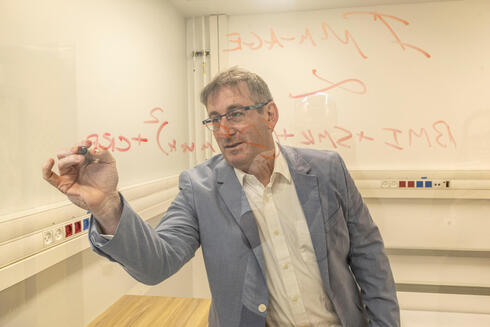
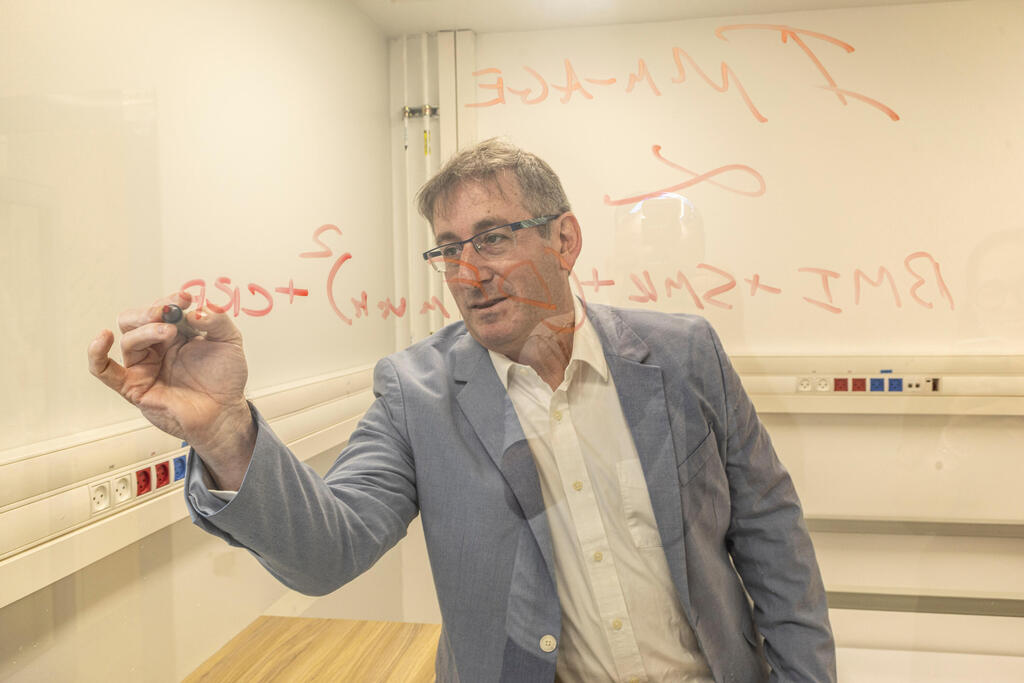
The Technion's Prof. Shai Shen-Orr argues that extending life expectancy is no longer enough. His new research center is bringing together scientists from medicine, engineering, architecture and other fields to help people remain healthy and independent for longer.
[1] You’ve aged
We are all aging, and we feel it in countless ways: our eyesight, memory, muscles and sleep. Age takes its toll, while our environment also plays a role. Perhaps in recent years, people in Israel have been aging faster than, say, those in Switzerland. Prof. Shai Shen-Orr illustrates the process with a different example.
"Aging processes can be detected as early as a person's forties," he says. "That doesn't mean they aren't occurring earlier. Aging is a continuous process that unfolds at a different pace for each of us. Even factors that come into play at very early stages of life can have a long-term impact."
Does our childhood affect how we age?
"Yes. This is evident in what we call 'immunological age,' a concept related to the immune system, which is what I study. We measure this age across different populations in Israel and the United States, and have even studied three-year-olds in Bangladesh. We found that their immunological age was comparable to that of 30-year-olds in California. In other words, within their first three years of life, children in Bangladesh may be exposed to more pathogens than a person in Palo Alto encounters over the course of 30 years.
"Even within Israel, a child living in a Bedouin village and a child growing up in a city are not necessarily exposed to the same conditions. Environments can differ even between neighborhoods in the same city. All these exposures play a role in shaping the immune system."
What impact do the stress we live under, and the lack of sleep it can cause, have on the aging process?
"We don't know yet. Stress is extremely difficult to measure, although it clearly manifests itself in the immune system. I also expect a lack of sleep to have consequences. There is already some preliminary data on this, as well as research from the past year on the relationship between sleep and the response to biological cancer treatments.
"So while we certainly anticipate consequences, I don't necessarily have robust studies that quantify them. To put it this way: if you're asking whether sleep might improve a person's response to a vaccine, my opinion is yes. But do I have data to prove it? The answer is no."
[2] A ticking time bomb
Aging is not just a personal challenge. It is becoming one of the world's major problems. "The demographic crisis and its consequences for humanity are as great as the climate crisis," Shen-Orr says. "The numbers are clear. You can't argue with them. Today, one in nine people is over 65, and in 20 years it will be one in six. In Japan and Italy, it is already one in four. We are approaching a situation in which there will be more people aged 65 and over in the world than children under the age of 10. That is a completely different world. This process has enormous consequences. It is a ticking time bomb."
Are older people a ticking time bomb?
"No, but aging is. The social systems we have built, from health insurance to social security, rely on a population structure with many young people and relatively few older adults. They depend on younger workers to fund the benefits of those who are no longer in the workforce. When fewer people are contributing and more people require support, this model faces a problem. And if people live longer but suffer from illnesses that require long-term, costly care, someone has to pay for that, too.
"We want people to remain healthy until the end of their lives. And even if their health improves, they might still find it difficult to drive, making better public transportation necessary. We also need to make sure they don't suffer from loneliness. There are many dimensions to this challenge."
[3] Let us help you
This is where Shen-Orr comes in. No, he isn't devising a plan to save Israel's National Insurance Institute. That isn't his field. But when it comes to what old age will look like, how it will affect individuals and, to some extent, society as a whole, he has a role to play.
We have grown accustomed to a world in which new technologies and developments constantly make life more comfortable and convenient. Now we are beginning to expect the same for our later years. Shen-Orr is among those working to make that possible.
He holds a bachelor's degree in information systems, a master's degree in bioinformatics and a PhD in biochemistry from Harvard. He heads the Laboratory for Systems Immunology and Personalized Medicine at the Technion's Faculty of Medicine. Most importantly, he directs the Nancy and Stephen Grand Center for Healthy Aging, an interdisciplinary research institute he established about two years ago. Last month, the Grand family from the United States donated $25 million to the center to help launch its activities.
What is the objective of the multidisciplinary research on aging?
"The concept of multidisciplinary research originated with Technion President Prof. Uri Sivan. The idea was that, rather than relying solely on the traditional division into faculties, we should concentrate our efforts on addressing major global challenges. After all, real-world problems don't fit neatly into academic disciplines. It was therefore decided to establish multidisciplinary research centers focused on human health, sustainability and industry, and artificial intelligence and robotics."
And within the field of health, did you choose to focus on aging?
"We went through a process that lasted several months and involved about 50 Technion faculty members. They examined our needs, our capabilities and the areas in which the institution has a comparative advantage. We narrowed our focus to a few key fields, including healthy aging, and got underway."
What will the center actually do?
"Our research will address questions related to independence in later life. For example, how does cognitive decline affect a person's ability to perform everyday activities? How can we detect diseases, or even subtle changes, at an earlier stage? And what technologies can help older adults with daily tasks, rehabilitation and mobility, ultimately improving their quality of life?"
What does 'healthy aging' really mean?
"There is a school of thought that seeks to extend life expectancy. I don't believe that is the right approach. The tremendous success of modern medicine has allowed us to extend people's lives, but not necessarily with a sufficiently high quality of life. Our primary goal, therefore, is to narrow the gap between 'lifespan,' the total number of years a person lives, and 'healthspan,' the number of years lived in good health.
"A colleague once told me that, for the top decile, this gap is eight years. That means eight years spent alive but with a significantly compromised quality of life. For the bottom decile, the gap exceeds 20 years. And this carries enormous economic costs.
"When I think about healthy old age, I want to prevent this problem and understand how to keep people healthy until close to the end of their lives. That is the right challenge. If older adults remain healthy, perhaps the problem of declining birth rates will become easier to manage, because people will be able to work into old age rather than requiring others to care for them. They will continue contributing to society.
"This also matters for people's happiness. I was recently at a conference in Montreal, where I heard an anthropologist who studies tribes in the jungles of Bolivia. He described how, when people are no longer able to hunt or perform other tasks, they fall into depression and stop functioning because they feel they are no longer useful. It doesn't matter whether you live in Bolivia or Israel. The goal is to reach a point where people feel good and enjoy a high quality of life.
"And this isn't just about health. Even if you improve someone's health, they might still struggle to drive, which means public transportation needs to improve. Perhaps their spouse has passed away, and steps need to be taken to ensure they aren't left alone. There are many aspects to this."
[4] The research collective
To help older adults, the center first aims to help researchers. Its approach is to provide researchers from different disciplines with shared infrastructure, including funding, equipment and databases, to facilitate their work.
"A multidisciplinary group has an advantage both when it comes to publishing papers and when applying for funding," Shen-Orr explains. "Furthermore, connecting people from different fields fosters significant collaborations and attracts new researchers to the field."
Can you give an example?
"We have a computer science professor who developed a facial-recognition algorithm that could also be applied to the study of body tissues," Shen-Orr says. "To use this algorithm in clinical research, the researcher would suddenly need to recruit study participants, a process they might know nothing about. But if the center connects them with the appropriate clinician and handles the necessary ethics approval applications, a leading researcher can enter a field they hadn't previously explored.
"This is part of the center's role: to reduce the burden on faculty members who may not specialize in aging but whose research could be valuable to the field. We lay the groundwork, often in partnership with organizations outside the Technion, so researchers can engage in this area without having to navigate the entire process on their own."
What areas does the research center cover?
"We work on cell biology and protein folding, a process that is significant to aging. We also study stem cells, the heart, iron accumulation and the aging of the immune system. Some faculty members are developing diagnostic technologies, such as methods for identifying proteins.
"Others focus on food engineering, designing products tailored to older adults. These could include breakfast cereals or ice cream formulated for people who need higher levels of fiber and protein. Just as food is specifically designed for infants, we must recognize that older adults also digest food differently. When my father eats a steak, for example, he doesn't derive the same nutritional benefit from it that I do.
"Other researchers work in robotics, developing technologies to assist older adults, such as mobility aids and tools for use at home. There are also researchers from architecture, urban planning and civil engineering who focus on designing public spaces that are easier for older adults to navigate. This can include creating non-symmetrical structures that are more accessible and comfortable for people with limited mobility or cognitive impairments, such as memory loss.
"Here's another example: Prof. Meirav Aharon-Gutman, an urban sociologist, investigates the relationship between the physical environment and the social lives of city residents. She works with the Haifa Municipality and tracks people who live alone. By combining her research with the center's capabilities, we will be able to examine how loneliness relates to the state of the immune system, and whether interventions such as tailored nutrition or walking aids affect mental well-being and social connections."
[5] The human collective
The relationship between loneliness and health has occupied researchers for years. It also interests Shen-Orr in the context of the immune system, the focus of his own research.
"There are studies around the world showing that loneliness has a physiological impact," he says. "There is a strong connection between the brain, the mind and the body, and we are investigating this as well. If we combine complementary interventions, such as nutrition with efforts to build social connections and community, I suspect there will be an effect."
Will we be able to observe this in immune-system markers?
"I believe so, but that is a question we have yet to test."
The term "Blue Zones" refers to regions where life expectancy is exceptionally high. Netflix even dedicated a series, Live to 100: Secrets of the Blue Zones, to the subject. One of the most prominent features shared by these regions is a strong sense of community and close social ties.
Shen-Orr says researchers have observed a similar phenomenon in mice. "In 2016, we conducted a joint study with Prof. Asya Rolls, a psychoneuroimmunologist at Tel Aviv University who researches the connections between the mind, the nervous system and the immune system. We activated the brain region associated with positive reward in mice and demonstrated that a single activation of this area was enough to prime the immune system for action, enabling it to kill bacteria more efficiently and 'remember' them better in future encounters.
"In other words, even in mice, when they feel better, their physiological state improves. Whether we're talking about a 'happy' mouse, a cancer patient with a positive mindset or an older person experiencing loneliness, I believe that changing a person's state of mind and improving their mental well-being can also improve their physiological state."
[6] What is my real age?
Shen-Orr, 54, turned to research on the immune system after his father developed cancer that affects its cells.
"At the same time, I was researching worms and studying developmental biology through computational biology. About 20 years ago, when my father became ill, I looked at what we knew about worms compared with what we knew about the human immune system, and the gap seemed absurd to me.
"I told myself that I could research worms and find it interesting, but when I wrote in a grant application that the research would help cancer patients, I felt I was lying to myself a little. On the other hand, when I research the immune system and use humans as my model, as we do today in my laboratory, and write that the work could help cancer patients, there is a real chance that it will. That was a motivation for me: to conduct interesting basic research that also has the potential to be applied."
And how did you end up in the field of aging?
"During my postdoctoral work at Stanford. My supervisor told me he wanted to study the aging of the human immune system. At the time, that was considered too complex, but technology has since enabled significant progress in the field."
What exactly are you researching today?
"I'm looking at how the immune system changes over the course of a lifetime and what accounts for the differences between individuals' immune systems. We are trying to measure the aging of the immune system. We've developed a method that allows us to take a blood sample and count different cell populations at very high resolution. Based on this data, we can assign a person a score representing what we call their 'immunological age.'
"We published a paper on this, which is great. But the question is: what can actually be done with this knowledge?"
And what can be done with it?
"We continued our research and demonstrated that immunological age influences the degree of response to vaccines and other immunotherapeutic treatments. These treatments act on the immune system to achieve a specific goal. Some suppress it, while others activate it, and each works differently.
"Because the response varies from person to person, immunological age is significant. I might encounter a 40-year-old with an immunological age of 20 and another 40-year-old with an immunological age of 70. Their responses will differ accordingly.
"This applies not only to vaccines. Recovery from surgery, for instance, also varies. The state of the immune system can help predict the level of pain a person might experience and how long recovery will take, although it is naturally not the only factor.
"The same is evident in cardiovascular health. Immunological age can help predict the risk of cardiovascular events, as well as the likelihood of a successful outcome from valve-replacement surgery. Here, too, other factors come into play, such as smoking and body mass, because the immune system is an incredibly complex entity.
"Until now, we lacked a tool for assessing its state in a way that could provide valuable information. There are existing metrics, but they are quite noisy. We have introduced a new metric that describes a person's immunological age by measuring 18 different types of blood cells. Cross-referencing these measurements makes it possible to identify biological processes more clearly than with metrics based on just one or two proteins, for example."
And where does the multidisciplinary approach come into play?
"The index we developed can now be linked to research in other fields, allowing us to examine the relationship between the state of the immune system and factors such as cognition, loneliness and nutrition. This is where the center's multidisciplinary approach comes to the fore: measurements taken from the same individual can serve as a foundation for collaboration among researchers from different disciplines.
"When the infrastructure and connections between researchers are established effectively, they foster a cross-pollination of ideas that allows us to derive far greater value from every study."



