









“A 20% annual return is good”: The investor behind Phoenix's transformation launches a new fund
Stella Cohen, who helped oversee Phoenix under Centerbridge and Gallatin, has raised $120 million from U.S. investors and is now seeking hundreds of millions of shekels from Israeli institutions.
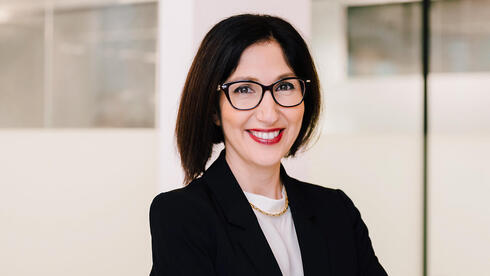
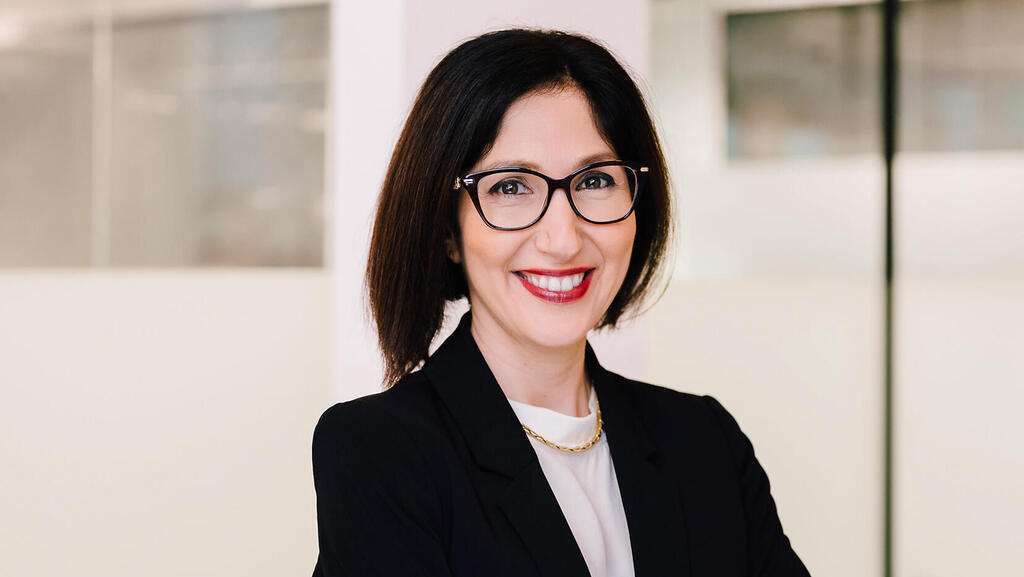
"A 20% annual return is good. I don't take excessive risks, nor do I chase crazy returns. My nature is steady and secure," says Stella Cohen, who is currently establishing a new investment fund after more than two decades of investing and managing investments for international institutions.
Cohen, a native of Nantes in western France, has held senior positions in the investment world throughout her career. She was a senior M&A attorney at New York law firm Wachtell, Lipton, Rosen & Katz, moved to the direct investment team at Canadian pension fund CDPQ, and later served as co-chair of private equity for the EMEA region at J. Safra Group.
She is less well-known in Israel, despite having been an influential figure behind the scenes at The Phoenix for several years. After Centerbridge and Gallatin acquired a controlling stake in the company in 2019, they appointed Cohen as a director of both Phoenix Holdings and its insurance arm. She served as their representative and liaison to Chairman Benny Gabbay and CEO Eyal Ben Simon, playing a key role in formulating and executing the strategy that propelled The Phoenix to new heights under the funds' ownership and ultimately generated a threefold return on their investment.
Now, Cohen is moving to the other side of the table to launch her own fund alongside Raanan Agus, who will serve as chairman following a 32-year career at Goldman Sachs, 24 of which were spent as a partner. The fund's advisory board includes Matthew Botein, co-founder and managing partner at Gallatin; Eli Groner, former Director General of the Prime Minister's Office; Eugene Kandel, chairman of the Tel Aviv Stock Exchange; Cindy Levy, a senior partner at McKinsey; Michael Olshan, founding partner of New York-based O-Corp; and Yossi Weiss, former CEO of Israel Aerospace Industries.
Cohen has already raised approximately $120 million from American investors, is preparing to raise hundreds of millions of shekels more from Israeli institutional investors, and is in talks about investments in Israeli companies.
"We've raised enough to look at several companies," she says. "I'm talking about large companies with an EBITDA of $10 million to $20 million. We are already in discussions with them."
Why are there hardly any joint investments by multiple funds in Israel? Will that happen in your case?
"I don't have a good answer. If an opportunity arises and it's the best course of action for my investors, then certainly, even alongside an Israeli fund. My obligation is to the investors and their returns."
What roles did you hold at The Phoenix?
"I served on the boards of the holding company and the insurance arm, as well as on committees for risk, investments, strategy, balance sheet management and IT. I was involved in day-to-day operations and also represented the controlling shareholders. I worked very closely with Eyal Ben Simon and Benny Gabbay."
The two funds acquired control jointly. How was the strategy determined?
"They shared a common vision and aligned interests, but management also played a significant role in the strategy. I've served on many boards throughout my career, and The Phoenix's team is exceptional."
The funds appointed Benny Gabbay as chairman rather than someone from their own ranks.
"Benny was the most suitable person for the job. When you have a strong management team, you look for people who can empower them, people with the ability to take a long-term view and execute effectively."
Phoenix transformed from the third-largest insurance company into the market leader. What drove this?
"It was the combination of a value-creation strategy and the funds' experience with similar companies globally. The market viewed Phoenix merely as an insurance company, but we also saw strong asset management capabilities and the potential of its agencies. It was like finding a needle in a haystack. We structured the deal effectively with Itzik Oz and Oren Cohen, the owners of the major agencies Phoenix acquired. We also saw unique potential in Gamma. We took it from a private to a public company and grew it. When you combine that with strong management, you can achieve in one year what you originally planned to do in three. There was a sound strategy and solid execution, and the market was on our side, too. For instance, the IFRS 17 standard boosted the valuation of insurance companies."
Do the funds regret exiting too early? Jared Kushner, who bought shares in Phoenix from them, generated a similar return in just a year and a half.
"They're happy. They achieved a good return on their investment. That's what I love about the international approach. We did well, and now we move on."
You left at the same time as the funds. Was that planned?
"When the sale took place, Benny and Eyal asked me to stay on independently, but I was already thinking about my next move. When I left Safra and joined The Phoenix in 2022, it was known that my dream was to launch a fund in Israel. In 2023, I discovered my mother was ill and put things on hold, and then came October 7. Now, the plan is coming to fruition. I've been working on the fund for a year. That was exactly when Raanan Agus decided to leave Goldman and move to Israel, so we teamed up."
Is the fund similar in size to SKY and Kedma?
"A bit larger. Our advantage is that we're based here and understand the local market, yet we also possess international experience and connections."
But you didn't execute any deals in Israel prior to The Phoenix.
"Wasn't The Phoenix a good deal? We did execute several transactions while at The Phoenix. At Safra, we also looked at Psagot and wanted to acquire it from Zehavit Cohen, but the price wasn't right. Asset management in Israel is a very interesting sector. The population is young and growing, the regulatory environment is sound, and if you know how to invest internationally, you can generate attractive returns for the members."
Which sectors will you invest in?
"Four: business services, including human resources, payroll, information, software and insurance services; financial services, including insurance, non-bank credit, insurance agencies and wealth management; defense companies; and industry. We will not make acquisitions in other sectors."
What is your advantage over other funds?
"Our experience in valuation, negotiation, partnership building, management incentives and determining the right debt-to-equity mix. In the industrial and defense sectors, we look for well-performing companies that already derive some of their revenue from abroad. The question is how to write their next chapter. Sometimes, such companies lack the capacity to advance to the next stage and end up being sold to international conglomerates. We can serve as the bridge. We know how to execute acquisitions abroad, negotiate there and handle the logistics. That is where we offer a distinct value proposition."
Regarding her investors, Cohen notes, "Until a few weeks ago, they were exclusively American. I had an agreement with Eyal and Benny that I wouldn't approach the Israeli market until it was clear we were no longer working together. Now, I am reaching out to Israel as well. There is a new generation of professional management teams here that want to work with investment funds. I sense a genuine desire to work with us among the companies I meet."
How do companies find their way to you?
"Through word of mouth and our network of connections, as well as through inquiries we initiate ourselves. The Israeli economy is very strong. Compared with Europe, the fundamentals here are solid, the demographics are favorable, and there is an abundance of educated, skilled talent. I believe the companies we invest in have the potential to become excellent global players."
Are distressed companies an option?
"No. I prefer strong companies with growth potential and capable management teams. We have a pipeline of 72 companies we've evaluated or met with. We are currently in active discussions with four of them, two in financial services and two in the defense sector. We are at the due diligence stage."
Have you signed any memoranda of understanding?
"No. I do things my way. No MOUs. We move straight to the deal after due diligence. Why put a figure on the table only to negotiate it later? When I put a number forward, they realize I'm serious."
Is now a good time to start investing?
"It's complicated. On one hand, the market is high, and expectations are very high. On the other hand, I'm not sure the budgets companies have built for 2026 will align with reality. There was a war, and we don't know if there will be another one. Oil and raw material prices are high, and the strong shekel doesn't help global companies. People want high valuations that don't match reality, so the process takes time. I want to understand a plan for the next three to four years, not just engage in empty talk."
Are you aiming for a controlling stake?
"That is what I'm seeking. But sometimes, you can secure control even with 40%."
You're starting to raise capital from institutional investors now. From The Phoenix as well?
"I'm not allowed to accept funds from The Phoenix right now due to a mandatory cooling-off period of at least a year. I'm in discussions with major institutional investors, and the reception has been positive. They are interested in the companies we're examining.
"Our logo features King David's lyre. When people think of King David, the lyre isn't the first thing that comes to mind. Similarly, the companies we look at aren't the ones that immediately spring to mind. I love the lyre. It represents creativity, harmony and stability."
The fund is named after your father. You lost both your parents within a year of each other. How did that affect you?
"I was very close to them, and it was difficult for me. But against the backdrop of everything the country has been through, I decided to be grateful. The country has lost so many young people and soldiers, and I am deeply thankful that my parents lived to a ripe old age.”



