











After years in development, Elbit's airborne laser weapons move closer to production
CEO Butzi Machlis says the company is targeting an earlier readiness milestone for its helicopter-mounted Sting system than for its pod-based XCalibur. The technology is also beginning to contribute to sales, as Elbit's ISTAR and EW division grows 32%.
Elbit Systems is moving its high-power laser technology closer to commercial production, with the Israeli defense company expecting the systems to become an increasingly important contributor to growth as it develops weapons designed to intercept drones and other aerial threats from helicopters and fighter aircraft.
The technology, which has been under development for years, is now beginning to make the transition from research and development into production programs, according to CFO Kobi Kagan. Speaking on the company's third-quarter earnings call, Kagan identified high-power lasers as one of the main drivers expected to support Elbit's growth in 2027, alongside its PULS rocket artillery systems and other defense technologies.
"Many R&D efforts which now translated into programs of record, like again, the high-power laser, which was an R&D project for many years, was consuming R&D money, and now became program of record with very nice profitability," Kagan said.
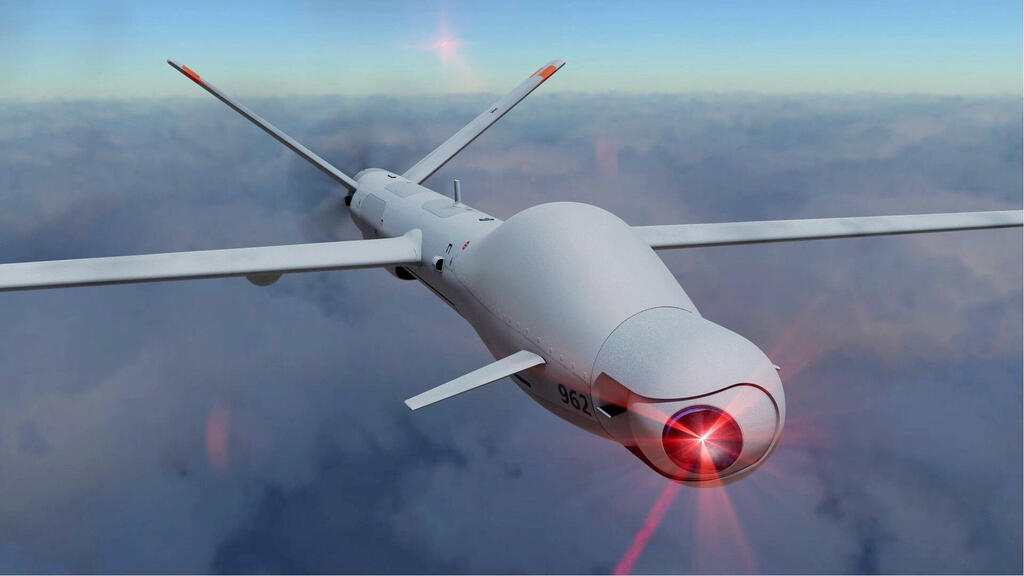
The company is developing two airborne versions of the technology. Sting is designed for helicopters, while XCalibur is a pod-based system intended for fixed-wing aircraft. CEO Bezhalel Machlis said on the call that Elbit is targeting readiness of the helicopter-mounted Sting prototype ahead of XCalibur, although he did not provide a timetable for either system to enter operational service.
The latest comments offer a clearer picture of the commercial ambitions behind a technology that Elbit has been developing for years. In 2021, the company and Israel's Defense Ministry announced successful tests of an airborne high-power laser system that intercepted and destroyed several unmanned aerial vehicles at different ranges and altitudes. The program has since evolved, with Elbit presenting its newer helicopter and fighter-jet configurations as it seeks to bring laser weapons into operational use.
The challenge is not simply generating enough energy to destroy a target. Mounting a high-power laser on an aircraft requires miniaturizing its components and addressing cooling and stabilization, while enabling the system to track and engage targets accurately from a moving platform. Elbit has said it has made progress on those engineering challenges, but has not publicly disclosed detailed performance specifications for Sting or XCalibur.
Elbit's airborne systems are intended to extend the company's directed-energy capabilities beyond ground-based applications. The company has also been involved in Israel's broader high-power laser effort, including the laser technology used in the Iron Beam air-defense system developed with Rafael. Airborne systems offer a different set of potential advantages, including the ability to operate above some of the dust, humidity and other atmospheric conditions that can affect ground-based lasers, as well as the possibility of engaging threats farther from the territory being defended.
The technology is already showing up in Elbit's financial performance, although the company does not break out laser-related sales separately. Revenue in its ISTAR and EW division, which includes intelligence, surveillance, target acquisition, reconnaissance and electronic warfare activities, increased 32% in the third quarter compared with the same period last year. Elbit attributed the increase partly to higher sales of airborne and land-based high-power laser systems, alongside electronic warfare and maritime systems in Asia-Pacific and electronic-optical systems in Israel.
Kagan expects the division to continue expanding next year, with high-power lasers moving from backlog into revenue. He also pointed to continued growth in Land and Armaments, driven in part by PULS and EuroPULS, and in C4I and Cyber.
Elbit's overall third-quarter revenue rose 17.2% to $2.25 billion, while operating profit increased 35.6% to $232.5 million. Its order backlog reached a record $33 billion at the end of September, providing the company with visibility into future demand. Management expects revenue growth in the high teens in 2027, accompanied by further margin expansion.



