










Israel Aerospace Industries in advanced talks to sell LORA missiles to Morocco
Exclusive: Defense sources say negotiations are "serious and at a very advanced stage," as Morocco and Algeria continue to expand their military capabilities.
Israel Aerospace Industries (IAI) is nearing an initial deal to sell LORA missiles to Morocco, a country currently engaged in an arms race with neighboring Algeria, Calcalist has learned. According to defense sources, "the negotiations between the parties are serious and at a very advanced stage." The value of the potential deal is not yet known.
Morocco's acquisition of the Israeli missiles would expand its long-range precision-strike capabilities. The move comes against the backdrop of Algeria's military buildup, fueled by Russian and Chinese weaponry, and its support for the Polisario Front, which opposes Morocco in the ongoing dispute over sovereignty in Western Sahara.
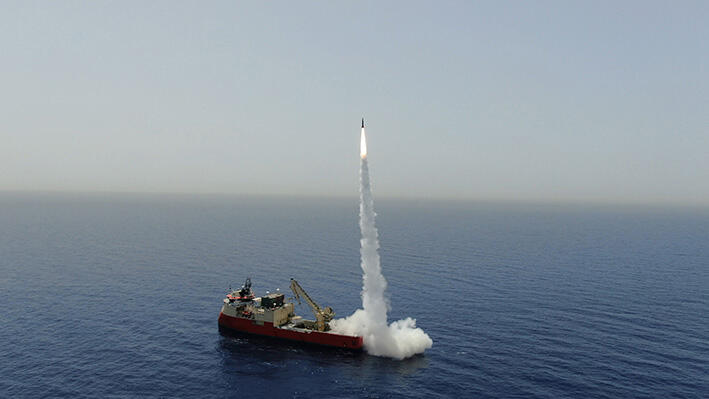
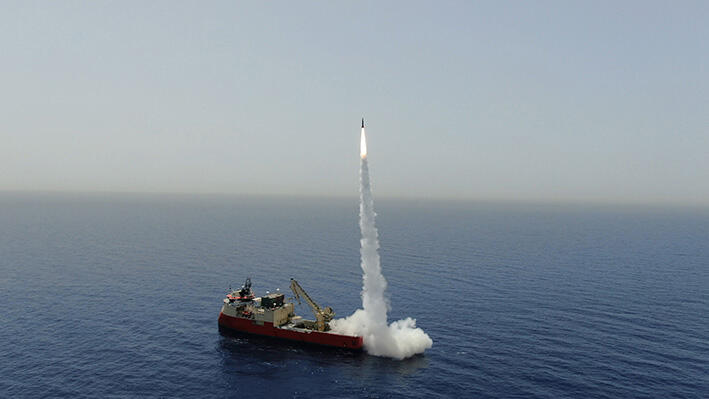
LORA missiles are designed for precision strikes at a range of approximately 500 kilometers and can be launched from land, warships, or aircraft. About five weeks ago, IAI launched two LORA missiles over the Pacific Ocean as part of a capability demonstration for the German Navy, which is interested in acquiring the system to enhance its medium- and long-range strike capabilities.
IAI's LORA missiles are being showcased at the Marrakech Air Show 2026, which opened yesterday at the Royal Air Force base in Marrakech and features eight Israeli defense companies exhibiting at the event for the first time. Among the systems displayed in the Israeli pavilions are the LORA missiles, which are at the center of the ongoing negotiations between Israel and Morocco.
Defense officials told Calcalist that "the very fact that Israeli companies are openly participating in the exhibition in Morocco testifies to the quality of relations between the countries."
Estimates suggest that the total volume of Israeli defense exports to Morocco since the beginning of the decade has exceeded $2 billion. According to data from the Stockholm International Peace Research Institute (SIPRI), Israel has become Morocco's third-largest defense supplier, accounting for more than 10% of its arms imports, behind France and the United States.
Morocco has already acquired precision rockets and PULS launchers from Elbit Systems, as well as IAI's Barak MX air defense system. According to foreign reports, it has also purchased a spy satellite from IAI in a deal valued at approximately $1 billion. Earlier this year, Moroccan reports indicated that Rafael's SPYDER air defense system had also been deployed in the country.
These acquisitions come alongside the establishment of facilities across Morocco for the manufacture and assembly of drones and UAVs developed by Israeli companies.
Alongside the LORA missiles, IAI is showcasing its most advanced UAV, the Heron MK-2, at the Marrakech exhibition. The company is also displaying the Barak MX air defense system, which Morocco has already purchased, as well as communication satellites, maintenance capabilities for various types of aircraft, and passenger-to-freighter aircraft conversion services.
IAI's focus on passenger aircraft conversion and upgrades is aimed, among other things, at the anticipated expansion of Moroccan airline Royal Air Maroc. The carrier plans to triple its fleet from approximately 70 aircraft today to more than 200 within a decade. Morocco's hosting of matches during the 2030 World Cup is also expected to contribute to demand for expanded air travel capacity.
Alongside IAI, Elbit Systems and Rafael are showcasing their systems at the exhibition. Among the notable systems on display is Rafael's Iron Beam high-power laser air defense system, designed to enable the rapid and cost-effective interception of UAVs and drones.
The Defense Ministry's Defense Exports Control Agency has also established a pavilion at the exhibition to promote products from additional Israeli companies, including Asio Technologies, Orbit, UVision, and XTEND.



