













Top 50 Most Promising Startups
Independence is the path. Innovation is the engine.
CyberArk founder Udi Mokady’s perspective on growth, resilience, and the future of Israeli high-tech.
In an entrepreneurial journey, there are many moments that become etched in memory. Sometimes they are difficult and complex, but here and there there are also moments of real satisfaction. At CyberArk, we had quite a few of those. One of them, for example, was when the company appeared on Calcalist's list of 50 promising startups. We sent the article to employees, family, and customers, and felt genuine pride, a recognition of the path we had taken and the future ahead. At the time, we were a small team with a big dream. We knew there was still a long road ahead, but we believed deeply that we could build something truly great.
Since then, we have reached many milestones and scaled many peaks: from the early days as a young startup, through an IPO on Nasdaq, successful acquisitions, most of them of Israeli companies, an accelerated scale-up process, 10,000 customers, crossing the billion-dollar mark in revenue, and becoming the largest Israeli cybersecurity company on Nasdaq. Ultimately, we reached the second-largest exit in the history of Israeli high-tech. We did not plan to sell, but that is a story for another article.
At each stage, we set new technological and business benchmarks for ourselves and continued to climb. This path was neither linear nor easy. Over the years, we faced crises that repeatedly reshaped the rules of the game: the dot-com crash of 2000, the global financial crisis of 2008, the coronavirus pandemic, and, in recent years, the harsh reality of war, both on the front lines and at home. Each required us to pause, reassess, and demonstrate resilience, not only as a business, but as people. Above all, I am proud of the organizational culture built at CyberArk and the dedicated team of more than a thousand employees in Israel, united by a sense of mission and solidarity, who drive technological innovation while setting a personal example for colleagues and customers worldwide.
Israeli high-tech as a whole has recently found itself in one of the most challenging periods in its history. On one hand, there is a tremendous effort to show the world that we are here, working, delivering, and moving forward. On the other hand, the challenges are real and unprecedented: flight restrictions that make it difficult for investors and customers to reach Israel and for companies to travel abroad, working under fire, large-scale reserve duty, economic volatility, and above all, a heavy mental burden on employees, managers, and families.
A new generation of innovation
I do not remember a period as complex as this. And yet, and perhaps precisely because of it, the resilience of Israeli high-tech continues to surprise. There is something extraordinary in the ability of people here to keep creating, building, and advancing even under the most difficult conditions. Israeli human capital is not just an asset; it is an irreplaceable engine of growth.
Amid all this, it is important to lift our heads and look ahead, to plan for the coming years. Israeli cybersecurity is a remarkable success story: stable, mature, and highly regarded worldwide. I see this repeatedly, both at international conferences and in conversations with clients around the world. Regardless of background or political views, anyone seeking effective protection and proven expertise turns to Israel. Investors, too, continue to flow into Israeli cybersecurity.
Precisely because of this success, an important question arises: can an entire country build its future primarily on one sector? In my view, the answer is clear. Israeli high-tech must diversify, not as a slogan or abstract ideal, but as a strategic, economic, and social necessity. Alongside Israel’s clear advantage in cybersecurity, which must continue to be cultivated, especially in the era of artificial intelligence and the new security challenges it brings, we must also enable the next generation of innovation to flourish. And that generation is already here.
The world is facing immense challenges - medical, environmental, security, agricultural, and energy-related - and it is precisely in these areas that extraordinary innovation is emerging in Israel. Biotech companies are developing breakthrough treatments for medical conditions once considered insurmountable, opening new horizons for extending life expectancy and quality of life. Climate startups are creating solutions to better manage and preserve resources. Agriculture and food technologies are redefining how the world is fed, addressing issues such as hunger, drought, and disease. The revolutions in artificial intelligence and quantum computing can also be leveraged to drive breakthroughs across these fields and create new applications in both enterprise and consumer markets.
Young entrepreneurs in these sectors, some even before raising their first round of funding, are seeking guidance, direction, or simply confirmation that their vision is achievable. Each time, I am struck anew by their creativity, their courage to think differently, and their willingness to challenge convention. There is enormous potential here, beyond the familiar boundaries of cybersecurity, and we must provide the conditions for it to grow.
This is an existential issue
Above all, the future of Israeli high-tech depends on technological education. Here, I want to emphasize the importance of youth from the periphery, an issue that has only become more acute since the war. In June 2025, we at CyberArk decided to take a long-term step: with an investment of 4 million shekels, we are establishing a technological education center in the Galilee, together with the Nahariya Municipality, to train the next generation of cybersecurity and artificial intelligence professionals in northern Israel. CyberArk’s development center in Beersheba also works with students and young people from Ben-Gurion University and the surrounding region. I hope to see many more initiatives like this across Israel, alongside government investment, because this is the true engine of growth for all of us. And when we talk about education, core studies are the foundation of high-tech and of the Israeli economy as a whole. All Israeli children deserve access to them. The present and future of Israel’s economy depend on it, this is an existential issue.
Independence, for companies and entrepreneurs, is the foundation of innovation. From day one, we built CyberArk with the vision of a company for the long term, a global Israeli company capable of sustained investment in innovation. Over time, I have come to understand that as an independent company, the sky is the limit, and that the responsibility to maintain independence and leadership lies entirely with us. This understanding pushed us to keep innovating, to stay one step ahead. More than once, we chose to invest in areas that did not yet exist, to lead initiatives that required educating the market and exercising patience, and to build entirely new categories from scratch. It was not always the easiest path, but it was the right one.
I look back with pride on the journey we have taken, and forward with hope for entrepreneurs across Israel: build independent companies. Aim high. Do not be afraid to think big, and to act accordingly. If and when you reach an exit, you will do so from a position of strength: with a company grounded in true innovation, built over time, and with the freedom to choose your own path.
Because in the end, independence and innovation are not just values - they are the path.
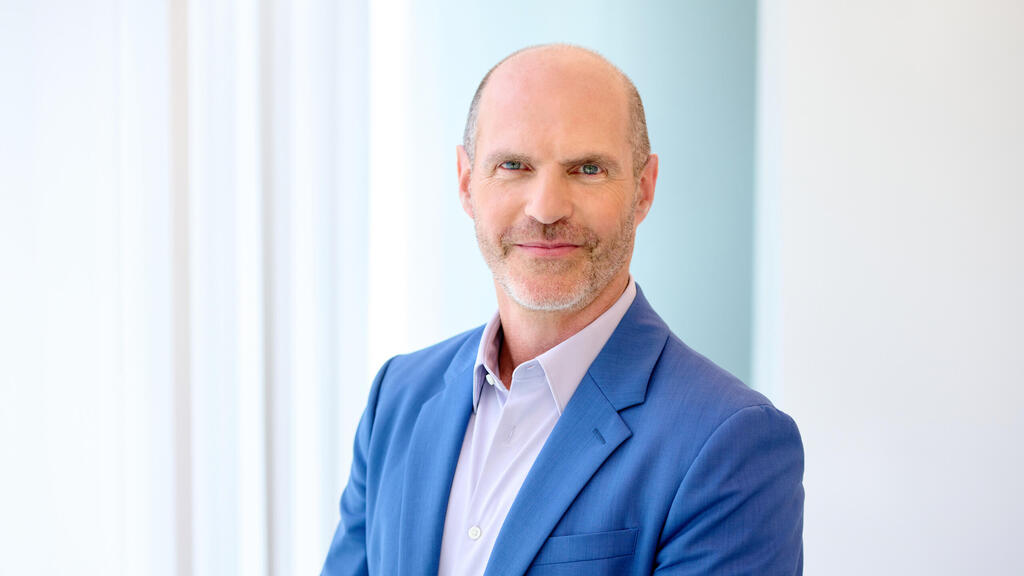
Udi Mokady is CyberArk's Founder, Executive Chairman and former CEO.



