









Palo Alto Networks CEO: “We’re happy Wiz is now part of Google, it gives us more room to operate”
Speaking during a visit to Israel, Nikesh Arora downplayed competition with Wiz and outlined Palo Alto’s expansion plans following the $25 billion CyberArk deal.
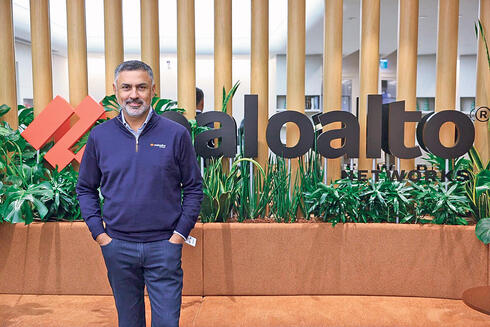
“I firmly believe that the most amount of innovation in cybersecurity comes out of Israel. It’s not for debate; it’s a fact. To the extent that people are building, solving hard problems as it relates to cybersecurity, we are constantly scanning the market, and even during my visit, I will see a few companies,” said Nikesh Arora, CEO of cybersecurity giant Palo Alto Networks, the world’s largest cyber company by market value ($131 billion), during his first visit to Israel in three years.
Arora met with local media ahead of the completion of Palo Alto’s $25 billion acquisition of CyberArk, which is expected to close between February and May 2026.
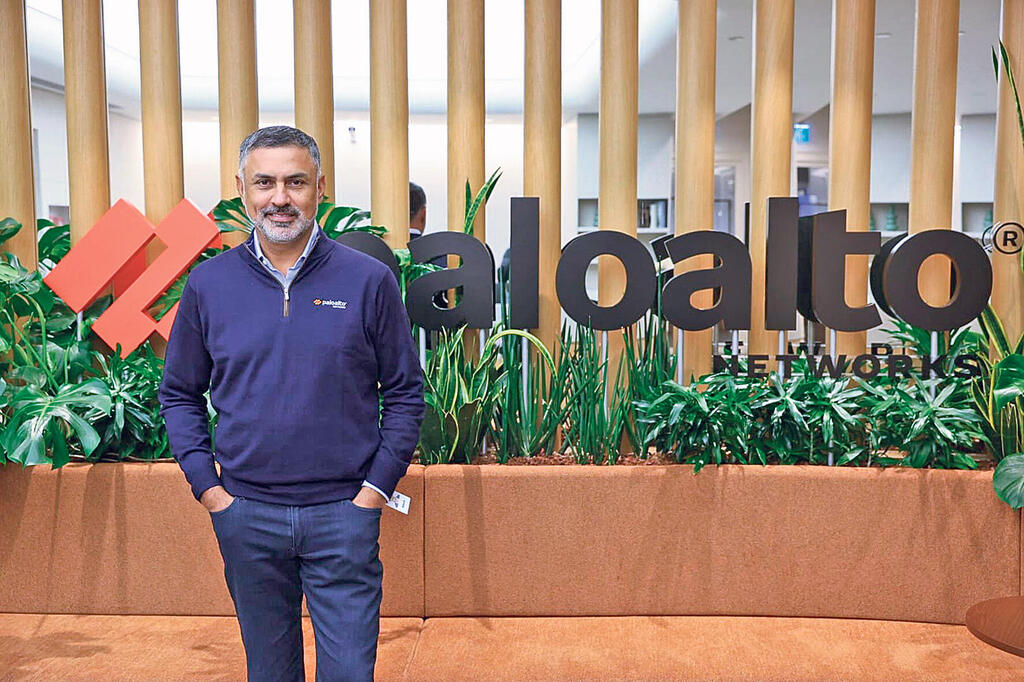
According to Arora, the deal will double Palo Alto’s workforce in Israel, where the company currently employs about 1,600 people. He noted that even during the war, Palo Alto hired roughly 700 employees locally.
Arora was brought in as an external CEO after founder Nir Zuk chose to remain in his role as chief technology officer and not take on the company’s top management position. Before joining Palo Alto, Arora held senior roles at Google and later ran SoftBank, the investment group founded by Masayoshi Son.
Soon after taking office, Arora launched an aggressive acquisition-led growth strategy that transformed Palo Alto into the cybersecurity industry’s largest company, with an annual revenue run rate of about $10 billion. Over the past seven years, Palo Alto has completed a double-digit number of startup acquisitions totaling billions of dollars, many of them in Israel.
At the height of the war in late 2023, for example, Palo Alto acquired the Israeli startups Talon Cyber Security and Dig for a combined $1 billion.
The acquisition of CyberArk, announced in July, is the largest in Palo Alto’s history and marks a departure from its previous strategy: it is the company’s first acquisition of a large publicly traded company and its first all-stock deal. Following years of acquisitions, Palo Alto’s Israeli R&D center has expanded rapidly and now occupies 22 floors of Tel Aviv’s Alon Tower, more than half of the building.
Asked whether layoffs were expected after the merger with CyberArk is completed, Arora sought to reassure employees.
“Things inevitably change when two companies merge, but it shouldn’t affect most of the organization,” he said. “Some senior executives may make different choices, but this is not about 10% or 20% cuts. We have no such intention. The goal is to sit down with management and understand which roles are shifting and which remain. The good news is that we currently have no products in identity management, the area CyberArk specializes in, so there’s no reason to cut there. On the contrary, we plan to invest more. Our intention is to invest in both teams and continue to be the largest cyber employer in Israel.”
Beyond its role as an employer, Palo Alto has become a preferred exit destination for many Israeli cybersecurity startups. Arora addressed this dynamic directly.
“We often get calls from companies that are about to close a deal elsewhere and ask whether we want to make an offer,” he said. “They tell us, ‘We’d rather you buy us.’ That happens because founders believe we’re the right home. We give them significant responsibility and real influence, that’s our philosophy.”
Asked whether Palo Alto’s commitment to Israel could weaken following Zuk’s departure from day-to-day leadership, Arora dismissed the notion.
“One of the things I’ve learned in life is that you can’t separate the company from its founder. Our commitment to Israel has not changed despite the fact that Nir is not actively at Palo Alto. Nir still lives in Palo Alto, in the culture, the products, the spirit. He’s still a major shareholder, still available, and still has an office here. He wanted to come back and build something new. Would I invest in his next startup? With 100% certainty, any day.
“I’m the one signing the checks, and if that weren’t the case, we wouldn’t have hired 750 people here in recent years. Some of our most successful products are born, designed, developed, and delivered by teams in Israel. Israel is not the simplest country to operate, and not the easiest people. But it has some of the most passionate people, who can handle adversity better than most people in the world, and despite the adversity, bring their best to work every day and try to do a great job.
“I have never found the team from Israel not willing to accept feedback and desire to build the best product in the world, that trumps everything.”
Related articles:
On competition with Israeli startup Wiz, which was sold to Google for $32 billion, Arora suggested the rivalry may actually ease.
“Since I joined Palo Alto in 2018, we’ve crossed the 10% market share threshold, making us the first cybersecurity company to reach double-digit market share,” he said. “That means that in nine out of ten cases, someone else is still in the deal. As for Wiz, we’re happy they’re now part of Google, it gives us more room to operate.”
Asked whether Israel’s military background remains an advantage for cybersecurity in the AI era, Arora answered unequivocally.
“Yes, because this is still a security problem,” he said. “No one studied AI in university the way it exists today. Anyone who knows how to secure systems can learn how to secure AI.”
As a result, Palo Alto has also changed its hiring approach. “We no longer look only at formal education,” Arora said. “We run hackathons and projects to test real capabilities. That said, it’s far too early to dismiss higher education. Universities still teach critical skills beyond the profession, how to work in teams, how to deal with people who are different from you, and how to navigate complex human environments.”



