











European basketball is chasing the NBA with money
Wealthy owners are pouring millions into EuroLeague rosters as the competition prepares for a potentially transformative expansion.
While fans tally three-pointers and dunks, the real story of the new EuroLeague season is unfolding in banks, boardrooms and accounting offices. European basketball is undergoing one of the most significant economic transformations in its history, as clubs with deep-pocketed owners pour increasingly large sums into player salaries, while the league itself prepares for a potential expansion and faces the threat of a rival NBA-backed competition.
To understand the scale of the shift, it is worth looking at the financial mechanism that governed the league in recent years, particularly the luxury tax. Originally designed as a regulatory tool to prevent an unbridgeable gap between the continent's wealthiest clubs and smaller teams, the system imposed financial penalties on clubs that exceeded the maximum salary budget set by EuroLeague management. The proceeds were redistributed among smaller clubs or allocated to the league for infrastructure and other purposes.
The aim was to preserve a degree of competitive balance between capital-rich powerhouses and teams with more limited resources.
But the decision to eliminate the highest luxury-tax bracket, alongside changes to the league's financial fair-play rules, has removed some of those restraints. EuroLeague management has recognized that competing with the financial power of the NBA and attracting international investors and major funds requires giving wealthy owners greater freedom to invest.
The result has been a European basketball arms race, with leading clubs spending unprecedented sums to attract NBA-caliber players and lure stars back to Europe.
At the forefront is Panathinaikos, which has set a record net player budget of approximately €26.5 million, with its total budget surpassing €40 million for the first time.
The biggest move in Athens came with the return of Željko Obradović, the most decorated coach in European basketball, who signed a contract worth €4 million per season. Club owner Dimitris Giannakopoulos promised Obradović virtually unlimited financial backing and increased the team's budget by at least €10 million within months.
Panathinaikos also signed forward Guerschon Yabusele to a contract worth €4 million per season, while paying approximately €650,000 to Real Madrid for his European rights. At the last minute, the club added French center Sylvain Francisco on a deal worth €3.5 million per season, plus a buyout of approximately €1 million.
They were joined by German world champion Isaac Bonga, on €2.2 million per season, center Moustapha Fall on €1.6 million and Brancou Badio on €1.7 million.
Giannakopoulos further stunned the European basketball world when he revealed that he had made an official offer to the Denver Nuggets for Nikola Jokić's contract and openly stated his intention to bring the Serbian MVP to Athens in 2027.
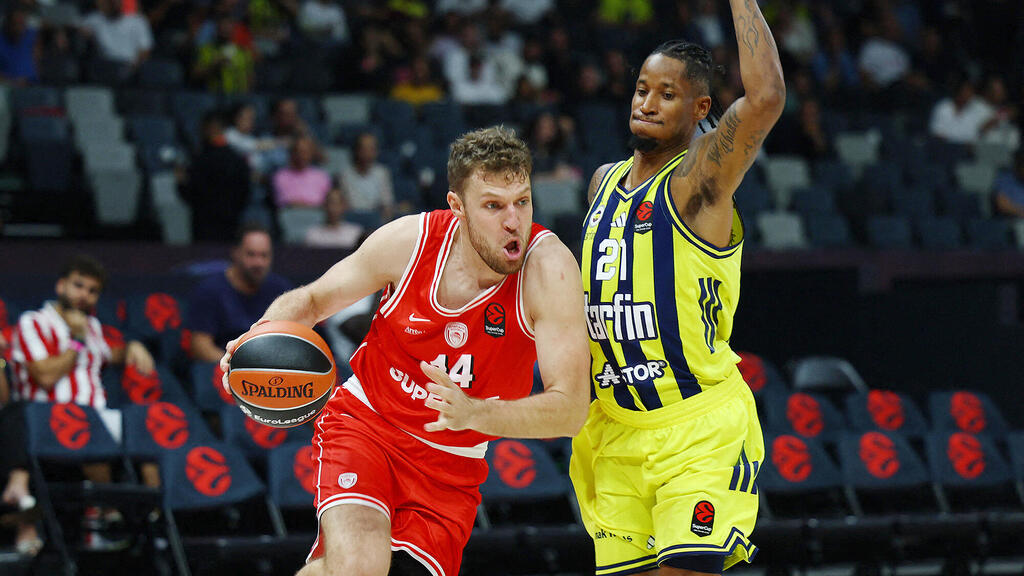
Panathinaikos' city rival Olympiacos is not holding back. The Piraeus club has assembled a player budget of approximately €22 million and continues to rely on the expensive core built in 2024, led by Sasha Vezenkov, who earns $4.1 million net, and Evan Fournier, who earns $3.2 million.
To counter Panathinaikos, Olympiacos significantly strengthened its backcourt this summer, signing point guard Codi Miller-McIntyre from Red Star Belgrade for approximately €1.6 million per season and bringing in rising Dominican talent Jean Montero from Valencia. The club paid a buyout of approximately €800,000 and gave Montero a contract worth €1.3 million per season.
In Istanbul, one of the summer's biggest financial moves came when Fenerbahçe signed Shane Larkin from city rival Anadolu Efes on a contract worth approximately €2.6 million per season.
Dubai has also entered the contest as a major new financial force, with a budget of approximately €20 million and a distinct tax advantage that made Džanan Musa's $3.5 million net contract particularly lucrative for the player.
The financial escalation is not universal.
Monaco, the 2025 finalist and one of the wealthier rising forces in European basketball, suffered a dramatic financial collapse and was removed from the EuroLeague before being relegated to France's third division.
ASVEL also underwent a major restructuring. Former San Antonio Spurs star Tony Parker reduced his stake in the club and appointed himself head coach for the 2026/27 season. Although Parker managed to sign and retain NBA veteran Patty Mills and center Joel Bolomboy, the lack of bank guarantees for the club's large budget forced ASVEL into a fire sale.
That triggered a wave of transfers across the EuroLeague. Francisco moved to Panathinaikos, Daniel Theis joined Maccabi Tel Aviv, Armoni Brooks was loaned to Valencia and Nick Weiler-Babb transferred to Red Star Belgrade.
The upheaval is taking place against a backdrop of unprecedented institutional growth for the EuroLeague.
The 2025/26 season produced record figures across key commercial and operational metrics. Total television viewership, including live broadcasts, delayed viewing and highlights, reached 508.17 million, an 8% increase. During the first 25 rounds alone, 122.8 million viewers watched either live or delayed broadcasts.
Growth extended beyond the league's traditional European markets, with rising demand for broadcasting rights across Asia and Australia emerging as a new international growth engine.
Digital consumption has surged even more dramatically. EuroLeague content generated 1.49 billion video views, a 1,067% increase from the 2021/22 season, while digital impressions exceeded 3 billion, up 478%. Attendance also remained strong, with 3,251,706 fans attending regular-season games.
Now the league faces a potentially decisive institutional moment.
In early October, EuroLeague club owners are expected to meet in Milan to vote on whether to formally transition toward a closed franchise model or prepare for a direct confrontation with the NBA Europe project.
The league's expansion tender has already triggered an unprecedented financial scramble. More than 20 clubs and investor groups submitted initial bids, with 11 candidates approved to advance to the final stage. Those candidates are now submitting binding offers totaling nearly $817 million in franchise fees.
Up to eight teams will be selected from that group to join the 13 existing shareholders as part of a plan to expand the competition to 24 teams, with 20 or 21 holding permanent franchises depending on the status of CSKA Moscow's suspension.
Meanwhile, the NBA and FIBA are promoting a rival competition featuring 16 teams across 12 major European cities. The project has already attracted franchise bids exceeding $1 billion in key markets.
EuroLeague officials have warned that a split European basketball market could be destructive. Behind closed doors, another debate is also taking place over the competition's format, including whether to retain the traditional Final Four or adopt a playoff and championship series similar to the American model proposed by NBA Europe.
The financial transformation is particularly visible in Israel.
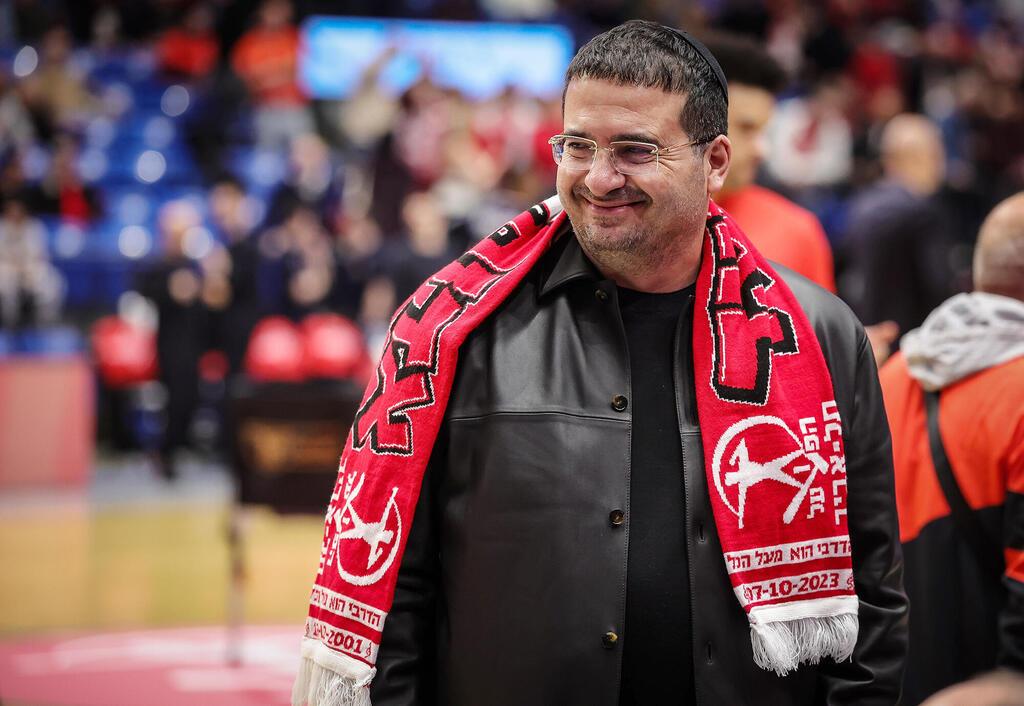
Under coach Dimitris Itoudis and owner Ofer Yannay, Hapoel Tel Aviv is entering its second EuroLeague season as one of the competition's financial powerhouses. The club has assembled a total budget estimated at approximately €20 million, placing it among the wealthiest teams in Europe.
The team's biggest financial commitment remains Vasilije Micić, who arrived last year on a record European contract worth $5.6 million net per season.
Hapoel continued its spending spree this summer. Zach LeDay arrived from Olimpia Milano on a contract worth approximately $3 million per season, while Khadeen Carrington joined from Hapoel Jerusalem for approximately $1.7 million per season. Tomáš Satoranský arrived from Barcelona on a deal worth around $1.5 million.
The club also added NBA players Jacob Toppin from the Atlanta Hawks for approximately $1.5 million per season and Amir Coffey from the Phoenix Suns for more than $1 million.
The spending has also come with a regulatory price. Last season, Hapoel was one of only four teams in Europe to exceed the salary cap, incurring a luxury-tax penalty of nearly €1 million.
Maccabi Tel Aviv, meanwhile, is trying to preserve its historic position amid the escalating arms race.
Despite lost revenue from hosting games outside Israel and management uncertainty caused by power struggles and legal disputes among its owners, Maccabi increased its player salary budget by $7 million. The club has assembled an expensive roster that includes 10 players earning seven-figure salaries in dollars.
The highest-paid newcomer is Daniel Theis, who arrived from ASVEL on a $2.2 million-per-season contract. Israeli signing Yam Madar follows on a $2 million deal, with Jaylen Hoard and Iffe Lundberg also among the club's major earners.
Although Maccabi remains second in Israel in terms of budget, the sharp increase in spending demonstrates the pressure facing even the continent's established powers. Without a significant financial step up, traditional EuroLeague clubs increasingly risk falling behind in the race for playoff places.
Hapoel Jerusalem, backed by owner Matan Adelson, is also increasing its spending and applying pressure from outside the EuroLeague. The club is seeking a wild-card invitation or a permanent franchise license as the competition expands for the 2027/28 season.
The Israeli story is a microcosm of the broader transformation taking place across European basketball. The EuroLeague is moving away from a model in which sporting ambition was constrained by financial limits toward one in which access to capital is increasingly becoming a prerequisite for competing at the highest level.
For clubs with wealthy owners, the new rules offer an opportunity to spend their way into contention. For those without them, the message is increasingly clear: keep up financially, or risk being left behind.



