










Families of October 7 victims file $1 billion lawsuit against Meta over role in Hamas atrocity videos
Lawsuit claims Facebook and Instagram served as “infrastructure” for Hamas terror; videos of killings and kidnappings allegedly left online for weeks.
On the morning of October 7, 2023, as air raid sirens wailed across Israel, Mor Baider was unable to reach her grandmother, Bracha Levinson, a resident of Kibbutz Nir Oz. Turning to social media for answers, she found the unthinkable: a video posted to her grandmother’s own Facebook profile, uploaded by Hamas terrorists, documenting Levinson’s brutal murder in real time.
“Grandma was murdered on Facebook,” Baider later said in a retrospective interview marking the first anniversary of the attack.
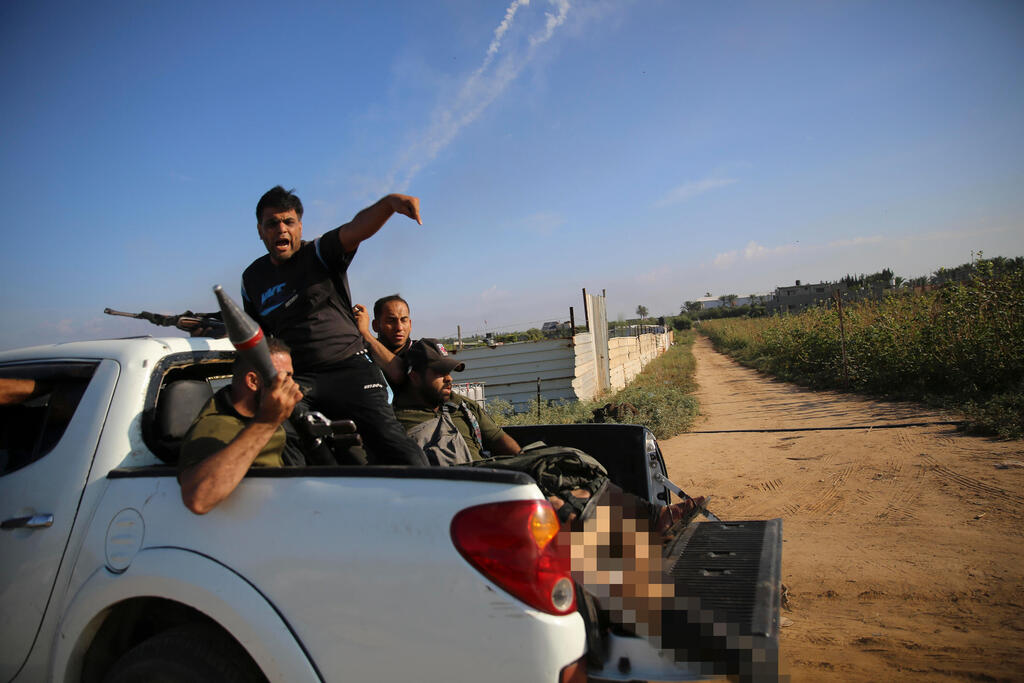
Now, Baider and a group of bereaved families have filed a class-action lawsuit against Meta, Facebook’s parent company, alleging the platform played an active role in the massacre. The lawsuit, filed in a Tel Aviv court, seeks NIS 4 billion (approximately $1.1 billion) in damages. It claims Meta knowingly enabled the distribution of live and recorded footage of murders, abductions, and other atrocities committed by Hamas on October 7, 2023, transforming Facebook and Instagram into what plaintiffs describe as “an integral part of the terrorist attack on Israel.”
“For many hours, in real time and long after the terrorist attack, horrific documentation from the attack (to put it mildly) was disseminated, showing innocent civilians – children, elderly, women, and men – subjected to atrocities that even paper cannot bear to describe,” the plaintiffs’ attorneys wrote in the motion. “Documentation included murder, extreme violence, hostage-taking, family members minutes after the murder of their loved ones before their eyes, and documentation of civilians and soldiers in their final moments. In addition, violent and severe abductions, abduction of civilians and soldiers, both living and dead, and their captivity in Gaza were documented and disseminated.”
The legal team, including attorneys Galit Karner, Asaf Shovinsky, Chen Shomeret, Karin Buaron, and Inbar Hasson from the law firms G. Karner and Matri, Meiri, Wacht, argue that the videos were not only published in real time, but in many cases remained online for weeks, despite Meta’s stated policies and technological capabilities.
“We watched it unfold on Facebook”
The plaintiffs include survivors and relatives of murdered or kidnapped Israelis. Among them are five members of the Idan family. According to the lawsuit, terrorists entered the family’s home on October 7, murdered 22-year-old Maayan Idan in front of her parents, and abducted her father, Tsachi, to Gaza, where he was later killed in captivity. The events, the family claims, were streamed live on Facebook.
Another plaintiff, Stav Arava, watched footage posted from his mother’s Facebook account, allegedly showing terrorists storming their home, holding his mother and step-siblings hostage, and later coercing his younger brother, Tomer, at gunpoint to knock on neighbors' doors and lure them out.
Mor Baider, who discovered her grandmother’s death via a Facebook post by the attackers, is also a lead plaintiff.
In addition to victims’ families, the lawsuit includes ordinary users who were exposed to the disturbing content. Plaintiff Dana Sara Shahar Yanai claims she was repeatedly and involuntarily exposed to recordings and live footage of atrocities through Meta’s platforms, despite the company’s promises to maintain a safe environment.
A platform turned into a weapon, say plaintiffs
The plaintiffs argue that Meta failed to act on multiple levels: it allegedly did not activate its live content monitoring systems, did not deploy its rapid response team, and did not remove the content in a timely manner, if at all.
“The Respondent failed miserably in implementing its policy and commitment to provide its users with a safe space,” the motion read. “The Respondent acted contrary to its policy, its commitments, and its obligations, allowing its social networks to serve as a weapon, as an inseparable part of the terrorist attack on the State of Israel; to disseminate to the entire public extremely severe content as part of the terrorist attack on the state; and allowed terrorist organizations to systematically use its social networks as an inseparable part of the terrorist attack. Additionally, the Respondent did not immediately remove the horrific content, neither in real time nor long thereafter (and in fact – to this very day).”
The suit seeks compensation of NIS 200,000 for each October 7 victim whose suffering was documented and shared online, as well as to their immediate family members and close friends who viewed the content. Additionally, it demands NIS 20,000 for each Israeli exposed to the footage. The total damages sought from Meta amount to NIS 4 billion (approximately $1.1 billion).
“We have not found a similar case, where a single business entity caused such severe harm to such a large public. The severe and widespread harm could have been prevented "at the push of a button" (literally) in real time. However, the Respondents were silent and allowed the vile terrorists to turn their social networks into an inseparable infrastructure of the October 7 attack,” the motion read.
Meta responded: "Our hearts go out to the families affected by Hamas terrorism. Our policy designates Hamas as a proscribed organization, and we remove content that supports or glorifies Hamas or the October 7 terrorist attack. Following the attacks, we established dedicated teams that work around the clock to remove content that violates our policy, while ensuring our platforms remain available for condemning Hamas and raising awareness for the victims, including the hostages held in Gaza."



