









Opinion
Why your personal style is the secret weapon in the “AI era”
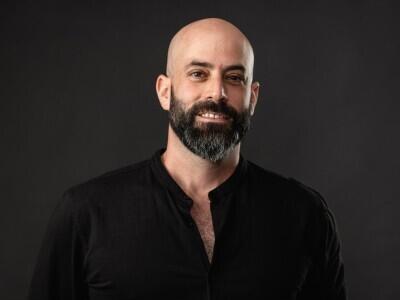
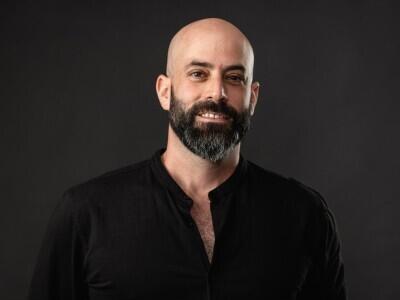
"The next stage in AI evolution will not be about building larger models, but about each of us taking these models and domesticating them, embedding them with our knowledge, experience, and style," writes Ron Oren, co-founder of Imagen.
The buzz surrounding Generative AI often feels like a party where everyone is invited. Yet, after the initial excitement of generating an image, text, or code with the click of a button fades, creative professionals are left grappling with a fundamental question: "How does this help me work better, rather than just producing content that looks like everyone else's?"
This is the heart of the tension I call 'AI Anarchism': the justified fear of a generic future where technology dictates the tone, versus the immense potential of these tools to serve as force multipliers for individual creativity. The answer, and the key to genuine mass adoption of AI, lies in one word: Personalization.
A McKinsey survey found that only about 35% of employees in organizations that have implemented AI tools use them regularly. The reason? Most tools deliver results that fail to match the user's unique style or context. This gap isn’t just technological; it is cultural and psychological. For AI to become part of a creator's daily flow, it must speak their personal language. Therefore, the Personalization approach is not a cosmetic add-on; it is a business and technological necessity.
Over the past two years, we have witnessed the meteoric rise of Large Language and Image Models. Tools like Midjourney, DALL-E, and ChatGPT have become household names, demonstrating the raw power of AI. The results are impressive, but for professional photographers, designers, and marketers, the generic outputs of these models are merely a starting point, and often, a stumbling block. These models were trained on vast datasets from the internet, meaning their outputs represent a stylistic average of what they found. They can generate beautiful images or persuasive marketing copy, but they do not recognize the creator's unique fingerprint. They push us toward uniform mediocrity. They do not understand the nuanced editing style that makes a photographer sought-after, the precise DNA of a client’s brand, or the coding conventions specific to a development team.
This is where personalization comes into play, transforming AI from a technological gimmick into an essential work tool. Instead of relying on a single supermodel designed to serve everyone, the future lies in small, focused models trained on each user's data. It is a shift from Public AI to Private AI.
Consider an event photographer. Over the years, they have developed a unique editing signature, using a specific color palette, contrast, and exposure that their clients recognize and love. A generic AI tool might offer a vintage or dramatic filter, but it cannot replicate that personal touch. In contrast, an AI model trained on thousands of the photographer's previously edited images can apply their exact style to thousands of new photos in minutes. Such a system does not replace their creativity; it acts as a force multiplier. It liberates them from technical, Sisyphean tasks and dramatically streamlines workflows, allowing the photographer to focus on what matters: personal and professional development, deepening creativity, and nurturing client relationships.
This principle applies to every creative field. Marketing agencies can train AI on past campaigns to generate copy and creative assets that strictly adhere to a client's brand voice. Music studios can leverage AI trained on a lead producer's unique mixing style to streamline processes, and developers can use a Co-Pilot trained on their specific project's code architecture.
The data support this shift. BCG found that integrating Personalized AI into sales management systems increased usage rates by 47% compared to uniform systems, with organizations reporting a 20%-30% rise in productivity. In the creative sector, Adobe noted that 68% of creators using personalized tools reported a reduction of over 50% in editing time, alongside increased satisfaction with the final product. Professionals do not want a tool that is good for everyone. They want a tool that is tailored to their needs.
The next stage in AI evolution will not be about building larger models, but about each of us taking these models and domesticating them, embedding them with our knowledge, experience, and style. This is the practical solution to that 'AI Anarchism': instead of technology forcing uniformity upon us, we infuse it with our personality and artistry. The goal is for AI to cease being an external entity we command via prompts and instead become a true creative partner that deeply understands us. This is the necessary bridge between a thrilling technological promise and the sustainable, widespread adoption that will redefine how we work and create.
Ron Oren is the Co-founder of Imagen, an AI-powered platform that automates photo editing.



