










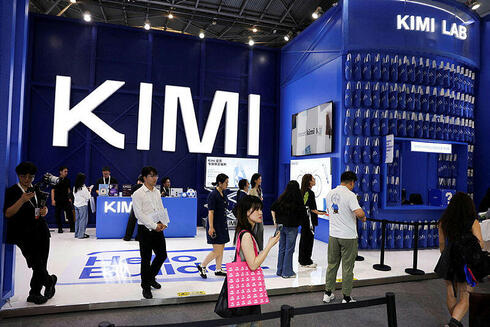
The AI cold war escalates as China and U.S. clash over Moonshot’s Kimi model
Washington accuses the Chinese startup of copying U.S. technology, while Beijing says the allegations are an attempt to contain China’s AI ambitions.
China’s Commerce Ministry on Monday accused the United States of “AI hegemonism” and threatened retaliatory measures after senior U.S. officials said Chinese artificial intelligence companies could face investigations, sanctions and trade restrictions over alleged theft of U.S. technology.
The ministry said Washington was threatening Chinese companies based on allegations that they used “distillation” techniques to copy advanced U.S. AI models, despite what Beijing described as a lack of factual or legal grounds.
“For any action that causes substantive harm to Chinese interests, China will take all necessary measures to firmly safeguard its legitimate rights and interests,” a ministry spokesperson said in a statement.
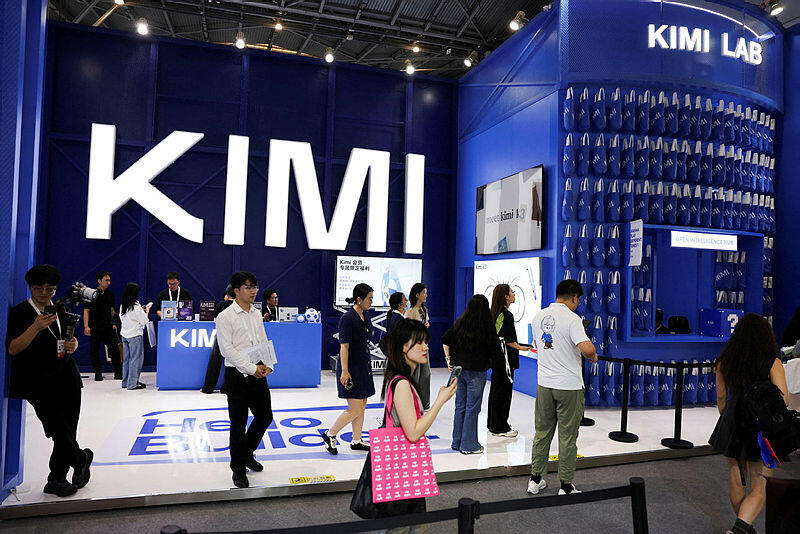
The comments mark an escalation in a growing dispute centered on Beijing-based AI startup Moonshot AI, whose recently released Kimi K3 model has attracted attention for its coding capabilities and intensified debate in Washington over whether Chinese developers are copying U.S. AI systems or rapidly narrowing the technology gap through their own research.
The controversy echoes the reaction in the U.S. following the rise of Chinese AI startup DeepSeek last year, which sparked concerns over China’s ability to develop advanced AI models with fewer resources.
Model distillation is a widely used AI training technique in which developers use the outputs of a more powerful model to train or improve another system. U.S. officials say they distinguish between legitimate distillation and large-scale extraction of model capabilities that amounts to intellectual property theft.
Michael Kratsios, director of the White House Office of Science and Technology Policy, said last week that the U.S. government had information indicating Moonshot used Anthropic’s Claude Fable 5 model to develop Kimi K3 through distillation.
Kratsios alleged that Moonshot had built a sophisticated internal platform to conduct large-scale distillation of U.S. AI models and had switched between multiple access methods to avoid detection.
He also alleged that the company acquired servers equipped with Nvidia’s GB300 chips and accessed similar systems in Thailand, potentially to train its models.
U.S. Treasury Secretary Scott Bessent later warned that Chinese companies could face financial sanctions or placement on the Commerce Department’s Entity List, which restricts access to U.S. technologies.
“We support open-source AI and the innovation it unlocks. But open source is not open season on American IP,” Bessent wrote on X.
“When PRC firms conduct covert, industrial-scale distillation attacks that cross the line into IP theft, sanctions and Entity List designations will be on the table,” he added.
Moonshot has rejected allegations that Kimi K3’s performance was achieved through distillation.
The company told China’s National Business Daily last week that the model’s improvements came from original changes to its underlying architecture.
Placement on the Entity List could significantly restrict Moonshot’s access to U.S. semiconductors, software and cloud services. Washington previously used the trade blacklist as a central element of its campaign against Chinese telecommunications equipment maker Huawei beginning in 2019.
Anthropic said in February that it had identified more than 3.4 million interactions with its Claude models linked to Moonshot. The company said hundreds of fraudulent accounts were used to target capabilities including reasoning, coding, data analysis, tool use, computer vision and computer operation.
The dispute highlights a broader struggle between Washington and Beijing over control of advanced artificial intelligence technology, with access to models, chips and computing infrastructure increasingly becoming a central point of competition.



