










After selling to Fiverr, founders raise $10 million Seed for new AI testing venture Arato
Company simulates user interactions to identify risks in AI-driven products.
Arato, a company developing a platform for testing AI systems through user simulations, has completed a $10 million Seed round. The round was led by TLV Partners, with participation from Jibe Ventures, Raghu Raghuram, partner at Andreessen Horowitz and former CEO of VMware, and Marianna Tessel, former CTO of Intuit.
Arato has built a platform for testing AI systems. The platform learns how an organization’s AI implementation behaves and generates tens of thousands of scenarios that simulate real human behavior. These simulations run through the product’s existing interface, including interactions via text, voice, images, or business data, without requiring code access or complex integration.
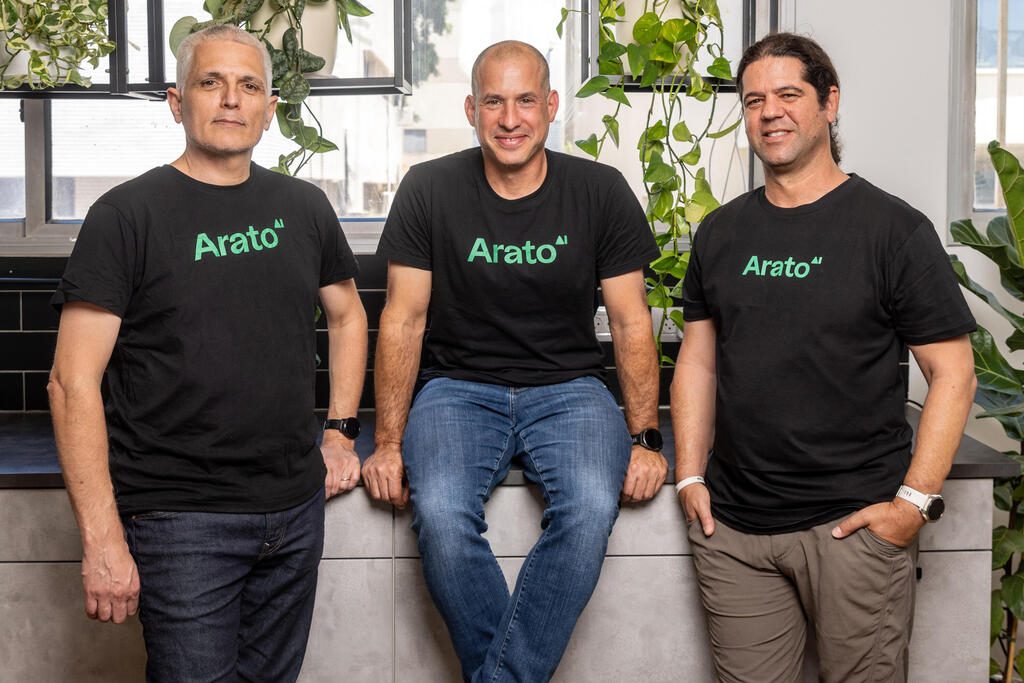
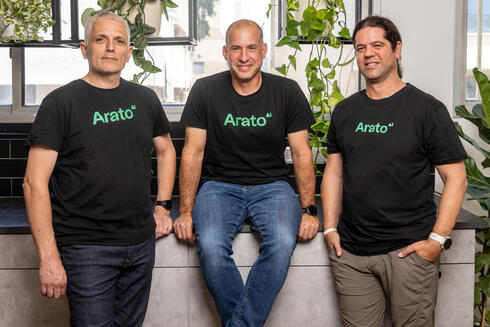
Arato was founded in 2024 by Shahar Erez, CEO, Hilik Paz, CTO, and Tal Salmona, VP of R&D. The three founders have worked together for more than two decades. Over the years, they collaborated at Mercury Interactive and VMware, gaining experience in software testing, application monitoring, and cloud infrastructure management. Erez and Paz founded Stoke in 2019, a platform for managing and engaging freelancers and other non-payroll workers worldwide, which was acquired by Fiverr in 2021 for $95 million. Arato currently employs 23 people, all based in Israel.
The platform analyzes simulation results to show how AI applications actually behave: what patterns repeat, where problems emerge, what risks may arise, and in which situations fixes are required. The analysis first presents a broad view of recurring trends and behaviors, and then allows teams to drill down into individual conversations or responses to understand what went wrong and how severe the issue is.
The platform serves as an AI assurance layer both before deployment and continuously after production, providing product and engineering teams with data-driven visibility into the strengths and weaknesses of AI implementations, their impact on user experience, and compliance with regulatory and security requirements, as well as the steps required to bring systems to production readiness.
“For many years, the software industry focused on whether a system works or not. In the AI era, the more important question is whether it is ready for business use in the real world,” said Shahar Erez, CEO and Co-Founder of Arato. “There is still a long way to go before AI-based systems meet customer expectations, especially when we are not talking about general-purpose tools such as ChatGPT, but about business-critical applications. Every organization adopting AI knows the system will not meet expectations 100% of the time. The question is how often it will fail, in which situations, and what the potential damage could be to users and to the business. Many organizations are launching AI today simply so they can say they have AI, but that will not hold for long. The next stage is bringing these systems to a level of maturity where they solve a business problem and create value. Arato makes it possible to measure that systematically before customers discover the problems themselves.”



