










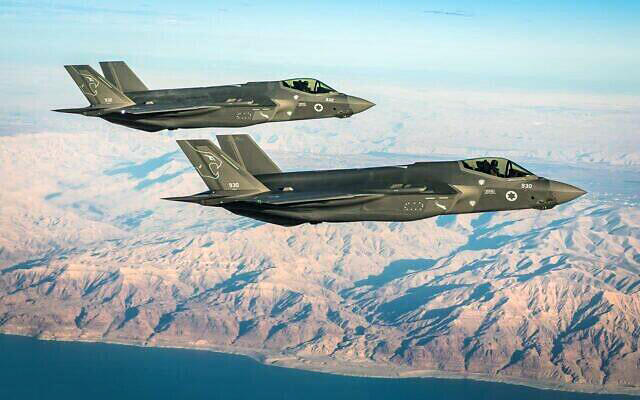
F-35 and F-15 deals signal unprecedented expansion of Israeli Air Force
Four new squadrons planned within a decade.
A decision taken in recent days by the Ministerial Committee for Acquisitions to approve a Defense Ministry and IDF plan to purchase two additional fighter squadrons, one of F-35 aircraft and one of F-15s, could place the Israeli Air Force on an unprecedented expansion trajectory, with the accelerated absorption of dozens of aircraft and the development of extensive supporting infrastructure.
Within less than a decade, the Air Force is expected to integrate four new fighter squadrons. This follows earlier decisions: in July 2023, the defense establishment approved the purchase of a third F-35 squadron, and in November 2024, it approved the acquisition of a first squadron of the latest F-15IA model. These procurements will proceed regardless of the latest committee decision, which itself amounts to tens of billions of shekels.
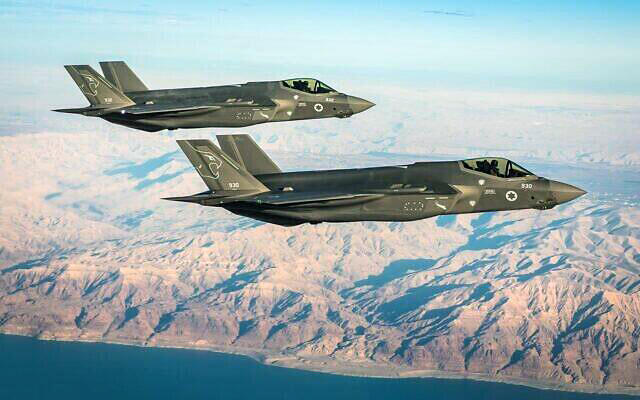
Lockheed Martin, the manufacturer of the F-35, has already supplied the Air Force with 48 aircraft under previous orders. Two additional jets are expected to arrive this summer, completing two full squadrons of 25 aircraft each, both stationed at Nevatim Air Base.
Deliveries of the third F-35 squadron, 25 aircraft ordered in 2023 at a cost of approximately $3 billion using US security assistance, are scheduled to begin in late 2027, at a rate of five to six aircraft per year. With the latest approval, Israel is now positioned to order a fourth squadron at similar pricing, bringing the Air Force’s total F-35 fleet to roughly 100 aircraft once deliveries are complete.
At the same time, the Defense Ministry is seeking to accelerate procurement of the next-generation F-15IA, manufactured by Boeing. The first squadron, approved in 2024, is expected to begin deliveries toward the end of the decade. The ministry aims to align the second squadron’s production schedule with the first. Each F-15 squadron is estimated to cost around $5 billion.
The latest decision was made just ahead of a critical deadline. Under agreements with Boeing and Lockheed Martin, Israel held options to expand previous orders at fixed pricing until early June. Exercising these options not only preserves favorable pricing but also secures production “slots” on heavily backlogged assembly lines, an increasingly scarce resource amid a global arms buildup. Missing the deadline could have delayed deliveries by years.
The Air Force has operated the F-15 “Baz” since the 1970s. The new F-15IA represents a significant technological leap, featuring advanced radar systems and the capacity to carry up to 17 tons of long-range munitions. While it lacks stealth capabilities, its twin-engine design allows it to carry substantially heavier payloads than the F-35.
As new aircraft enter service, the Air Force will gradually retire aging F-15 and F-16 “Barak” models. Future F-35 squadrons are expected to operate from Tel Nof Air Base, with at least one of the new F-15 squadrons potentially stationed there as well. The procurement packages also include major investments in infrastructure to support the new fleets.
The long-term financing of these acquisitions remains uncertain. The current US security assistance framework, which provides Israel with $3.8 billion annually, is set to expire in 2028. Negotiations over a new framework, expected to serve as an interim arrangement through 2038, when Israel is slated to fully transition away from US-funded procurement, are due to begin shortly, led by Defense Ministry Director General Amir Baram.
It is not yet clear whether the new squadrons will be financed through US aid or from Israel’s domestic defense budget. If the next aid framework excludes procurement funding, Israel will need to cover the costs independently.
The purchases also align with a broader military buildup plan announced by Prime Minister Benjamin Netanyahu, which envisions an additional NIS 350 billion in defense spending over the coming decade, equivalent to an annual increase of NIS 35 billion, to strengthen the IDF against evolving regional threats.
Defense officials view the acquisition of the new squadrons as a response to persistent strategic challenges. Despite prolonged conflict and multiple confrontations with Iran, Israel’s strategic environment remains largely unchanged: the Iranian regime remains in place, its nuclear and missile programs persist, and its support for regional proxies, including Hezbollah, the Houthis, and other militias, continues. Meanwhile, threats from Gaza and Lebanon have not been fully neutralized.
In parallel, Israel is set to significantly enhance its long-range operational capabilities. Next month, the first of six KC-46 aerial refueling aircraft ordered from Boeing is scheduled to arrive, with each aircraft costing approximately $250 million. A second is expected by the end of the year, with the remainder to follow over the coming years.
These aircraft will replace an aging refueling fleet that has been in service for more than five decades. Aerial refueling is a critical enabler for long-range strike missions, including operations against distant targets such as Iran and Yemen. During the recent conflict with Iran, the Air Force benefited from access to US refueling aircraft, which significantly increased operational tempo. In a future scenario without direct US involvement, the availability of Israel’s own refueling fleet would be a decisive factor in sustaining long-range strike capabilities.



