










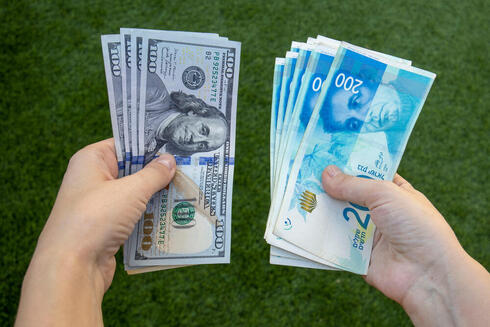
Mega-tech deals add momentum to a surging shekel
Psychological impact may outweigh direct forex inflows from Wiz and CyberArk transactions.
The shekel’s appreciation shows no signs of stopping. The recent closing of the Wiz-Google deal and the completion of the CyberArk-Palo Alto Networks transaction are expected to add further fuel to the trend unfolding in the foreign exchange market.
With all due respect to the global weakening of the dollar, the shekel’s story is different. According to the Bank of Israel’s review of the foreign exchange market published last week, in the fourth quarter of 2025 the dollar actually strengthened by about 0.1% on average against the 19 major global currencies. However, against the shekel it recorded its sharpest decline, 3.5%. In second place was the Thai baht, which strengthened 2.8% against the dollar.
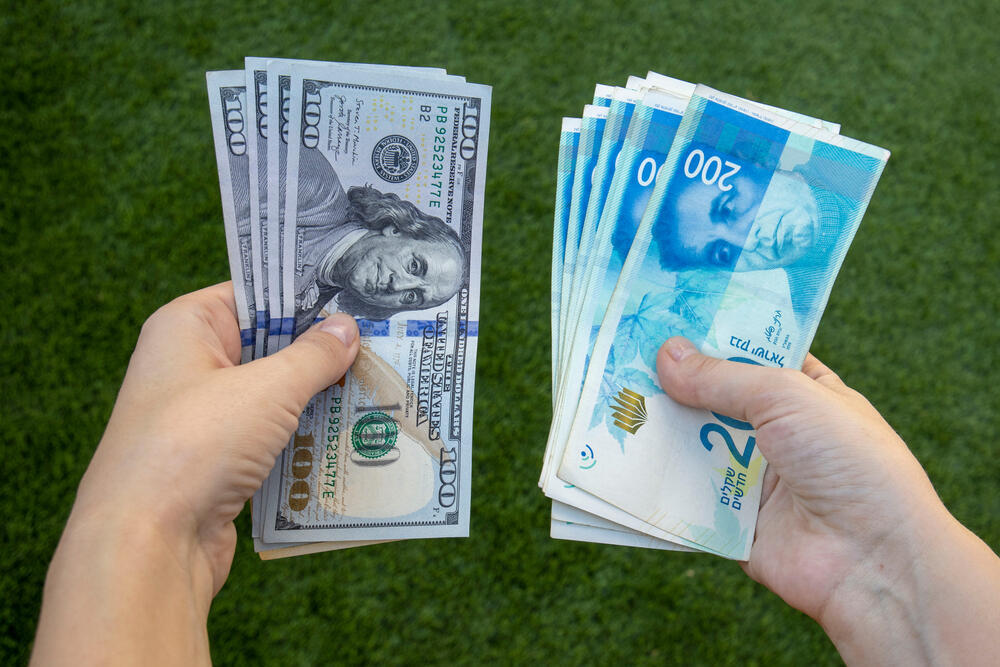
This means the shekel’s strength goes well beyond broad dollar weakness. As further evidence, during the same quarter the nominal effective exchange rate, which measures the shekel against the currencies of Israel’s main trading partners, appreciated by 3.6%, nearly identical to its rise against the dollar. Since then, it has strengthened by an additional 2.4%. And this occurred even before the closing of the recent multibillion-dollar high-tech deals.
The impact of those deals will likely be primarily psychological. They reinforce positive sentiment toward the Israeli economy, particularly the high-tech sector, its main growth engine. However, it is doubtful they will constitute a decisive event in the foreign exchange market, as the sums involved are still small relative to overall trading volumes.
The foreign exchange market is the largest and deepest financial market in the world. Bank of Israel data show that in the fourth quarter of 2025, conversion transactions totaled approximately $3.9 billion per day. In addition, swap and other exchange transactions amounted to another $10 billion daily, roughly three-quarters of total foreign exchange activity.
In other words, even the founders’ expected tax payments from the Wiz deal are smaller than a single day’s trading volume in the shekel market, assuming the state does not require part of the tax payment in dollars. A large individual foreign exchange transaction could move the dollar temporarily, but it would not alter the long-term trend. The main effect of the mega-deals, therefore, is psychological, strengthening confidence in Israel’s economy. That effect should not be underestimated.
An interesting figure in the Bank of Israel review shows that 77% of shekel-dollar conversion transactions are conducted between foreign entities. In other words, for every $4 traded, $3 change hands between non-Israeli institutions. This suggests that part of the activity is speculative, and that many global financial players are active in the shekel market. It is well known that speculative capital operates in Israel’s currency market, major foreign banks regularly publish analyses of the shekel.
The key question is the weight of these foreign players and whether they operate predominantly in one direction. The answer is less clear. Market assumptions hold that speculators both buy and sell, meaning that while they dominate transaction volume, they do not necessarily dictate the exchange rate. Moreover, not all foreign-to-foreign transactions are speculative. For example, when Google purchases shekels from Bank of America to pay Israeli salaries or fund local investments, the transaction is recorded as foreign-to-foreign, but it is not speculative in nature.
Bank of Israel data also highlight another factor: foreign investment in Israeli securities. The latest available data, through November 2025, show that after selling nearly $1.6 billion in Israeli stocks and bonds between July and September, foreign investors reversed course. In September they made net purchases of about $345 million; in October, $1.1 billion; and in November, nearly $1.4 billion. In total, foreigners purchased just under $2.5 billion in Israeli securities in the final months of 2025, even before December, when the Tel Aviv-125 index rose more than 5%.
The mirror trend, Israeli purchases of foreign securities, shows a sharp decline. Israeli investors bought $5.4 billion in foreign securities in September, $2.1 billion in October, and only $1.5 billion in November.
In a recent interview with Calcalist, Dr. Gil Bufman, former chief economist at Bank Leumi, explained that economic models show the surge in the Tel Aviv Stock Exchange is the variable that best explains the shekel’s appreciation. Some market sources argue that Israeli institutional investors have been the primary drivers of the exchange rate since the end of the war with Iran in June 2025, alongside the renewed correlation between the Nasdaq index and the shekel.
According to this view, institutional investors have become net sellers of dollars, both by reducing foreign currency exposure and by requiring less collateral on options positions. As a result, although foreign players account for most transaction volume, their influence on the exchange rate may be more limited than assumed.
In the long term, the appreciation trend appears intact, and there is no clear catalyst on the horizon, aside from political or geopolitical shocks, that is likely to halt the shekel’s momentum.



