











From promised returns to financial distress: Israeli investors hit by overseas real estate slump
Years of cheap financing helped make property investments in Britain and the U.S. attractive to Israeli savers. Rising interest rates and refinancing difficulties have since exposed the risks of leveraged deals, with several projects involving SDB now under pressure.
For years, overseas real estate investments were marketed to Israelis as an opportunity to earn higher returns than those available in the local market. But the formula underpinning the model has changed: interest rates have risen, financing costs have soared, property values have fallen and refinancing debt has become more difficult. Now, the consequences are reaching investors themselves.
SDB is one of Israel’s largest players in private overseas real estate investment. A Calcalist review found that several projects in which its clients invested have entered insolvency proceedings, receivership or cash-flow distress. Across four SDB properties in Britain for which public purchase and sale prices were available, the gap between the prices already amounts to tens of millions of pounds. The cases illustrate how changing financing conditions can turn an investment that once looked attractive into a source of substantial losses.
Over the past decade and into the beginning of the current one, Israeli investment firms flocked to overseas real estate markets, betting that the U.S. and Britain offered higher returns than the Israeli market. For years, the model benefited from cheap money. That is no longer the case. In early 2022, the U.S. Federal Reserve’s benchmark interest rate stood at 0% to 0.25%. Within roughly a year and a half, it had climbed to 5.25% to 5.5%. The increase fundamentally changed the economics of leveraged real estate deals.
2 View gallery

Dan Liberman (right) and Shrulik Hanoch, owners of SDB. “We will continue to act with all means at our disposal to protect the interest of the investors.”
(Photos: courtesy of SDB)
In recent weeks, Calcalist has reported on investments marketed by Israeli companies to private investors that were vulnerable to rising interest rates, falling property values and difficulties refinancing debt. In some cases, those risks have materialized, resulting in the potential or actual loss of investors’ capital.
SDB is one company grappling with these pressures. According to company data, it works with 1,700 investors and holds a real estate portfolio worth more than $1 billion across the U.S., Britain and Spain. The company was founded by Shrulik Hanoch and Dan Liberman, who serve as co-CEOs. Over the past two years, some projects in which its clients invested have entered receivership or insolvency proceedings, faced forced sales or experienced cash-flow distress.
For the British properties for which public purchase or sale prices were available, the figures already point to losses totaling tens of millions of pounds. Other substantial projects are also under pressure, although no current public valuations were available for them.
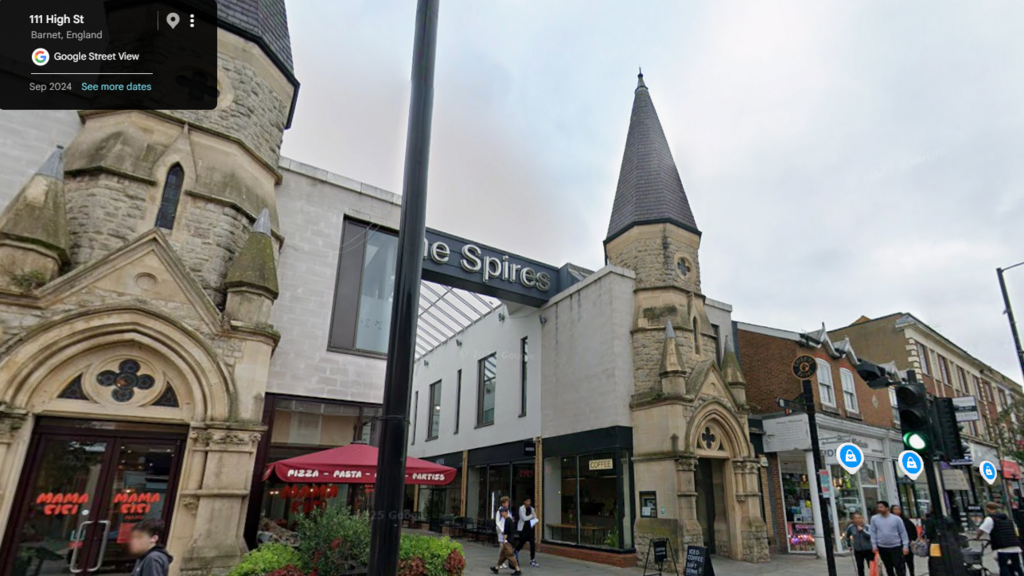
Consider The Spires, a major SDB project in north London. The shopping center, which houses dozens of stores, was purchased in 2021 for £28 million, equivalent to about NIS 126 million at the exchange rate at the time. It is one of SDB’s main British projects.
On March 30 this year, special administrators were appointed to the company holding the property. Public records show that the company had several active charges in favor of financial institutions. The appointment followed difficulties servicing the debt amid high financing costs. The project’s local developer, BYM Capital, had itself entered insolvency proceedings in 2023. Another investor subsequently injected capital into the project, but the move did not prevent the property-holding company from entering special administration.
Another property illustrating the difficulties facing some SDB investors is Riverview, which was sold last year for £9.25 million. The project was intended to convert two office buildings into residential properties, but it was placed in receivership after the developers failed to make payments. The sale generated a payment of about £8.65 million to Mizrahi Tefahot, the secured creditor, leaving the other investors who entered the project through SDB with no material proceeds, according to the information reviewed by Calcalist.
Another major SDB project is the Treaty Centre shopping center in London. The property was purchased in 2022 for £46 million, equivalent to more than NIS 200 million at the exchange rate at the time. The acquisition was financed in part with a £31 million loan. Since the purchase, the collapse of developer BYM and high financing costs have pushed the property into enforcement proceedings initiated by the lender.
Investors in Astral Towers, another SDB project, have also suffered a steep decline in value. According to records in England, the property was purchased in April 2021 for £11 million and sold in April 2025 for £4.5 million, a decline of about 59% in its sale price compared with the purchase price.
The known purchase or sale prices of the four British properties discussed here total approximately £110 million. That is nearly NIS 440 million at current exchange rates. Converted at the exchange rates prevailing when the properties were purchased, the total approaches half a billion shekels. These figures represent property transaction values, not the amount lost by investors.
Beyond its British projects, SDB has invested in East 101, a residential building in Manhattan, New York, comprising 34 units. The property was purchased for $12.5 million. According to a company report, the project encountered cash-flow difficulties in the first quarter of this year because of high maintenance costs.
The property no longer meets the debt-service coverage ratio required by its lender and has been put up for sale. The company warned that the situation could “lead to partial or full loss of the investors’ money.” The project recorded negative cash flow of $101,000 in the first quarter. Taken together, the projects discussed here show the scale of the financial pressure facing SDB’s portfolio, although the properties’ full current values and the total capital at risk are not publicly available.
SDB is one of Israel’s largest firms operating a model that raises money from private investors for overseas real estate projects. According to its website, the company manages 158 ongoing projects and has completed 86 exits.
But the concentration of several significant projects in distress is notable even for a relatively large firm. One investor told Calcalist that SDB had offered some clients the option of waiving certain claims in exchange for the right to participate in profits from other projects, if any were generated. According to the investor, many clients agreed to the arrangement, while some investors who suffered losses are seeking to organize and protect their rights through legal proceedings.
You don’t need to be a “qualified investor”
In SDB’s defense, the macroeconomic environment in Britain turned sharply against leveraged property investments. Interest rates rose rapidly, making debt-heavy projects significantly more expensive to finance.
At the end of 2021, the Bank of England’s benchmark rate stood at 0.1%. Against the backdrop of rising inflation, it climbed to 5.25% by August 2023. The central bank began cutting rates in August 2024, and the rate fell to 3.75% in December 2025, where it remained through 2026. Even so, the easing came too slowly to relieve the pressure on SDB’s investors, particularly those exposed to highly leveraged and risky projects.
Overseas real estate investments offered through private investment funds are generally marketed to qualified investors, a category defined by legal criteria relating to liquid assets or income. Such investments may be offered without a prospectus, and their risks may not be readily apparent to ordinary investors.
Israeli law allows securities to be offered without a prospectus to as many as 35 non-qualified offerees over any 12-month period, alongside qualified investors, who do not count toward that limit.
Under certain conditions, the law also permits separate counts for people offered shares or securities convertible into shares and those offered other types of securities. A structure involving separate debt and equity offerings may therefore allow separate counts, depending on the legal structure and the applicable rules of the Israel Securities Authority. According to SDB’s website, the minimum investment in its projects is $50,000.
SDB’s investment agreements also contain extensive contractual protections for the company, placing a significant share of the risk on investors. Among other provisions, investors declare that they understand they could lose their entire investment and that they have the knowledge and ability to independently analyze and assess the financial and business risks involved.
Even the big companies are feeling the pressure
The crisis is not confined to smaller private firms. Electra Real Estate, one of Israel’s largest and most established investors in U.S. real estate, is also facing a difficult period. Over four months, its stock lost 75% of its value, bringing the company’s market capitalization down to NIS 1 billion. Through four funds, the company manages approximately 37,000 housing units with a combined value of about $9.7 billion.
Many of these cases share the same underlying factors: properties acquired during the era of cheap money, high leverage, a sharp rise in interest rates and difficulty refinancing debt. SDB’s case adds another dimension: private investors’ exposure across numerous projects involving the same firm and, in some cases, the same developer.
In recent months, Calcalist has also reported on crises at Realco and Valore, two Israeli companies that raised money from private investors for overseas real estate investments. At Realco, a property purchased for about $17 million was sold for only about $2 million, while other properties were put up for sale at a loss. The developments prompted dozens of investors to organize in an attempt to regain control of their money.
At Valore, American banks began foreclosure proceedings against several projects, including three properties with a combined value of about $28 million. Another property, worth approximately $10 million, has also encountered difficulties.



