










“Our next milestone will be a billion-dollar valuation”: MIND triples valuation to $300 million with $72 million Series B
MIND has raised $112 million to date and reached a $10 million annual revenue run rate just 18 months after beginning to sell its product, as demand for data loss prevention grows with the adoption of GenAI and AI agents.
Cybersecurity company MIND Security has raised $72 million in Series B funding, just one year after securing a previous $30 million round. Company sources estimate that its valuation has tripled since then, reaching $300 million in the current round. Founded in 2023, MIND has now raised a total of $112 million.
All of the proceeds from the latest round went directly to the company, with no secondary sale involved. The round was led by Crosspoint Capital Partners, an investment firm specializing in cybersecurity and AI, which invested approximately $35 million, marking its first investment in an Israeli company.
Crosspoint was founded by veteran cybersecurity executives and is led by Greg Clark, the former CEO of Symantec and Blue Coat. Its portfolio includes companies such as McAfee and Forescout. Crosspoint had previously invested approximately $5 million in MIND a year ago during the RSAC Innovation Sandbox competition, where the Israeli startup was named one of the 10 most innovative cybersecurity companies and the only DLP-focused entrant for 2025.
Existing investors also participated in the round, including Yoav Leitersdorf’s YL Ventures and Paladin Capital Group, which led MIND’s previous funding round.
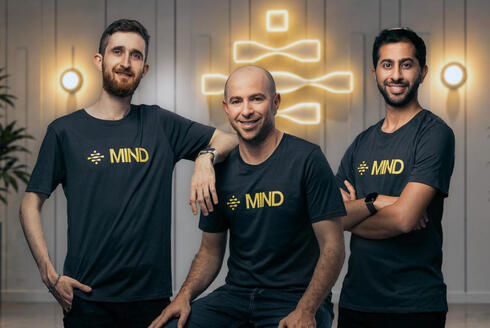
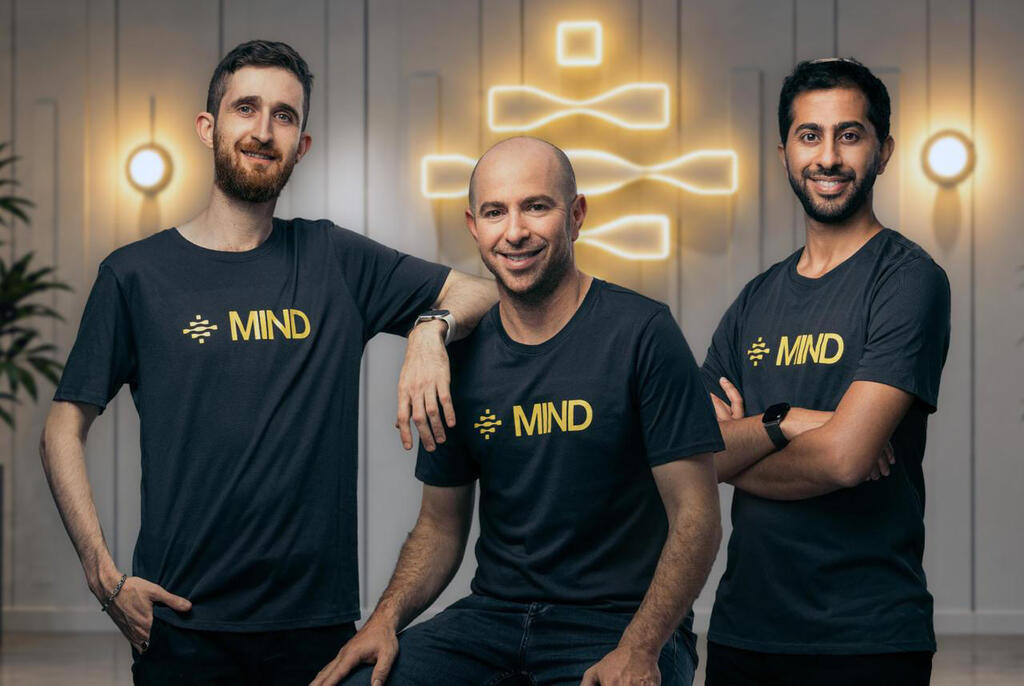
MIND Security was founded by CEO Eran Barak, a co-founder of Hexadite, which was acquired by Microsoft in 2017 for approximately $100 million, and CTO Itai Schwartz, who was the first employee at cybersecurity firms Torq and Axonius. The third co-founder, Hod Bin-Nun, the company’s VP of R&D, was the first employee at Dazz, which was acquired by Wiz, following a decade of service in command roles within Unit 8200.
The company currently employs approximately 70 people, with 40 based in Israel and the remainder in the U.S. MIND says it has achieved more than 1,700% revenue growth and 800% customer growth over the past year. It has analyzed billions of data events in real time across GenAI, agentic AI and IT environments, and says it has stopped sensitive data loss across hundreds of thousands of endpoints.
MIND operates in the data loss prevention (DLP) sector and has reached an annual revenue run rate of $10 million, just a year and a half after beginning to sell its product. The company also recently launched MIND AI DLP Agents, which autonomously handle day-to-day DLP tasks.
“We could have raised a larger round, including a secondary component, but I want to create real value for investors and employees. Today, we see quite a few unicorns whose valuations don't align with their actual size. Ultimately, it is the employees who pay the price, as they don't make money in such companies. That’s why we believe it’s wrong to raise $100-200 million if the company’s revenue run rate doesn't yet justify it,” Barak told Calcalist.
“We are confident that our next milestone will be a billion-dollar valuation and $100 million in revenue. I believe we’ll get there within two years.”
MIND is benefiting from the growing use of GenAI tools and AI agents, which are creating new challenges around the protection of sensitive corporate data. According to the company, 90% of enterprises have deployed GenAI tools and more than two-thirds are using AI agents, while 65% lack confidence in their AI data security controls. MIND also says that one in five AI initiatives fail because of weak data foundations.
As organizations integrate GenAI tools and AI agents into their daily workflows, sensitive corporate data flows across an expanding number of systems, applications, users and AI agents. Employees upload documents to AI tools, agents connect to internal systems and independently perform actions involving sensitive data, while information moves between systems in ways that traditional DLP tools were not designed to handle.
MIND has developed an AI-native DLP platform that enables organizations to discover and classify sensitive data, detect anomalous activity and prevent data leaks in real time. The platform protects data across SaaS environments, GenAI tools, agentic AI, endpoints, on-premises file shares and email.
The system analyzes both the content of data and the context in which it is being used to distinguish legitimate activity from potential risks and reduce false positives. Depending on an organization’s policies, it can automatically block risky actions, remediate data exposures and guide employees on how to operate securely. The company says its platform also enables autonomous investigation and response to data exposure and security issues.
MIND was recently accepted into Anthropic’s Cyber Verification Program and says it is the first data security company to receive ISO/IEC 42001 certification for responsible AI.
“Security leaders are being asked to protect data that moves at AI speed with complex, manual and incomplete tools designed for a slower world,” Barak said. “In less than two years since emerging from stealth, we’ve built an eight-figure revenue business trusted by dozens of customers. Our results, and this funding, put MIND among a select group of cybersecurity companies scaling at this pace, but what matters most is how this will accelerate our growth and bring Stress Free DLP to every enterprise working to achieve AI governance and security.”
One of MIND’s competitors is Varonis, the veteran Israeli cybersecurity company that is currently in talks to be acquired by U.S.-based Proofpoint for $6-7 billion.
The new funding will be used to accelerate development of MIND’s DLP platform, expand its presence in key enterprise markets, deepen technology and channel partnerships and increase its workforce as it scales its customer base.



