










Israel tests Arrow missile as Iran threat drives next generation upgrades
The successful trial comes as Israel relies heavily on its highest layer of defense against ballistic missiles and accelerates plans for Arrow 4 and Arrow 5.
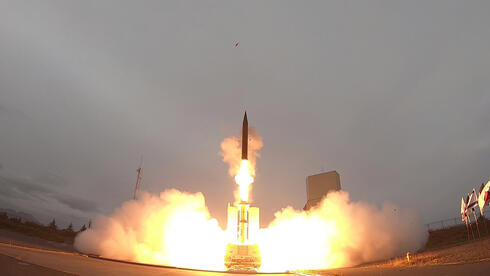
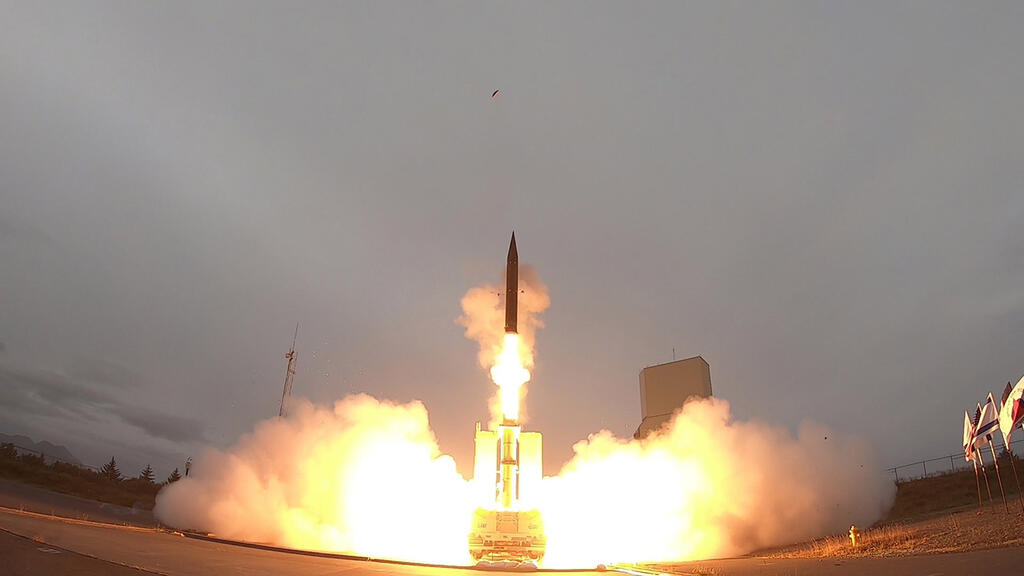
The Defense Ministry announced Wednesday evening that a planned launch test of Israel’s Arrow air defense system was successfully completed, as Israel continues to strengthen its ability to intercept long-range ballistic missile threats from Iran and Yemen.
The test was conducted by the Ministry of Defense, the IDF and Israel Aerospace Industries (IAI), which develops and manufactures the system.
“The Arrow system, including the Arrow 2 and Arrow 3 interceptors, has demonstrated unprecedented and groundbreaking capabilities at the global level in the field of missile defense over the past three years,” the Defense Ministry said. “The system has intercepted a wide range of threats from Iran and Yemen, including ballistic missiles in space and outside the atmosphere.”
The ministry added that the system is continuing to undergo development and upgrades in response to evolving threats expected in the coming years.
Earlier Wednesday, a missile trail was observed across Israel’s southern skies, prompting concern among residents and speculation on social media. The Defense Ministry later clarified that the trail was created by an interceptor launched as part of the planned Arrow test.
The launch was visible from several locations along the southern coastal plain, including Ashdod, where the sight of the interceptor’s trajectory caused alarm among beachgoers before the official clarification was issued.
The test comes as Israel’s missile defense systems face increasing operational demands following repeated ballistic missile attacks from Iran and Yemen. Since the October 7 war began, more than 1,300 ballistic missiles have been launched toward Israel from Iran and Yemen, with Arrow systems playing a central role in intercepting long-range threats.
The latest test also comes as Israel advances plans to reshape the future of the Arrow family.
Moshe Patel, director general of the Israel Missile Defense Organization, said recently that the Arrow 4 interceptor is in an advanced stage of development and approaching serial production, the transition from prototype manufacturing to a repeatable large-scale production process.
Arrow 4 is expected to replace the Arrow 2 interceptor, which entered operational service in 2000 and is designed to intercept ballistic missiles in the upper atmosphere. The new system will maintain that role while incorporating upgraded capabilities, including artificial intelligence technologies.
Beyond Arrow 4, Israel is also advancing plans for Arrow 5, a future interceptor designed to add another defensive layer against emerging ballistic missile threats.
According to Patel, Arrow 5 began as an internal research and development project at Israel Aerospace Industries before being adopted by the Israeli government. Israel intends to finance continued development of the system while coordinating with the U.S. Missile Defense Agency, which has been a partner in the Arrow program for decades.



