










Israel's Iron Dome and Arrow makers unlikely to reach the IPO market before 2027 as Tomer joins the queue
The Government Companies Authority wants missile engine maker Tomer to become Israel's next listed defense company, but elections, security restrictions and regulatory hurdles are expected to delay Tomer, IAI and Rafael well into the next government.
The Government Companies Authority wants another defense company on the stock market, but investors believe Israel's broader defense IPO agenda is unlikely to move forward before 2027.
At a government companies conference held at the Tel Aviv Stock Exchange, Roi Kahlon, General Manager of the Government Companies Authority, announced that Tomer, the state-owned manufacturer of rocket propulsion systems, is expected to become the next government defense company to go public within two to three years.
The announcement places Tomer alongside Israel Aerospace Industries (IAI) and Rafael, both of which have long been considered candidates for partial privatization. Yet despite the Authority's ambitions, market participants say none of the three offerings is likely to advance before Israel's October 27 election. Even after the vote, coalition negotiations and the formation of a new government are expected to take months, making 2027 the earliest realistic timetable for any significant defense IPO.
The Authority had hoped to advance Rafael's IPO alongside the more mature IAI offering. Unlike Rafael, IAI already has publicly traded bonds, publishes financial statements, and benefits from a 2020 government decision approving the sale of a minority stake.
In recent months, however, officials have come to recognize the gap between those ambitions and political reality. No government decision has been made regarding Rafael's flotation, while the Ministry of Finance continues to oppose the framework proposed by the Government Companies Authority. Although progress has recently been made on IAI's listing, bankers say it is unlikely to accelerate before a new government is formed.
Against that backdrop, Tomer's proposed flotation appears to remain a longer-term objective rather than an imminent transaction.
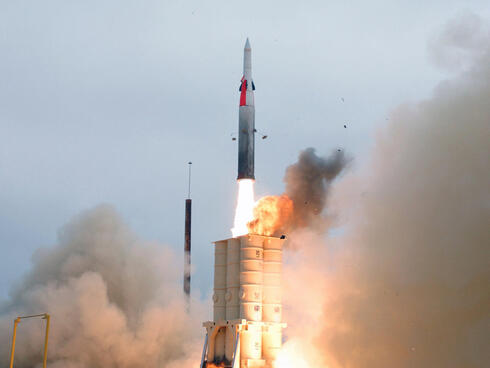
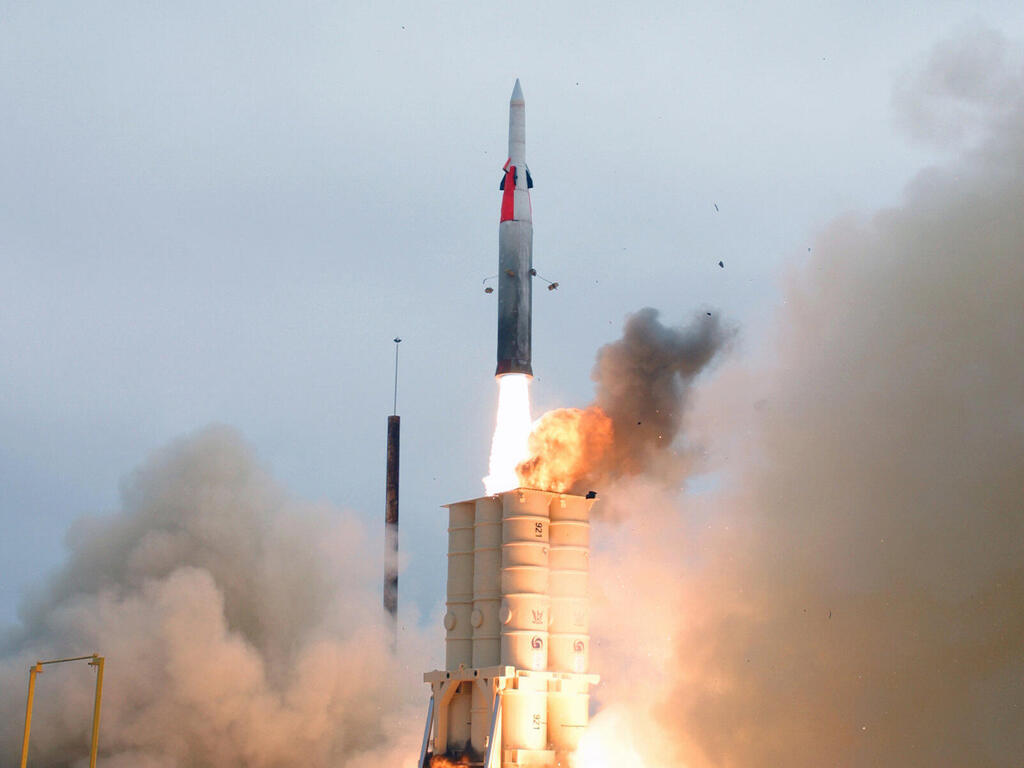
Established in 2015 following the breakup of IMI Systems, Tomer develops and manufactures rocket propulsion systems, including engines for the Arrow missile defense system, artillery rockets, and satellite launchers.
As a first step toward accessing the capital markets, Kahlon said the company plans to issue institutional bonds through the TASE UP platform, which is designed exclusively for qualified and institutional investors.
Although Kahlon's remarks suggested that the bond offering is approaching, Calcalist has learned that the process has already been underway for more than a year.
The main obstacle has been transparency. Accessing the capital markets requires a level of financial disclosure that is particularly challenging for a company whose operations are closely tied to classified defense programs.
To reduce that hurdle, Tomer intends to raise debt through the TASE UP platform, which enables private companies to issue securities without becoming fully public companies. While issuers are exempt from many of the reporting obligations imposed under Israel's Securities Law, they are still required to publish audited annual financial statements and periodic reports under the exchange's rules.
According to figures presented by Kahlon, Tomer generates annual revenue of approximately NIS 650 million and net profit of NIS 41 million.
Tomer's rocket propulsion business was originally part of IMI Systems. When IMI was privatized and sold to Elbit Systems in 2018, the Ministry of Defense carved out the propulsion division because of its strategic and classified nature, leaving it under government ownership.
The company generated approximately NIS 550 million in revenue in 2024. At the end of 2025, it paid its first-ever dividend to the state, distributing 50% of its annual profit, or approximately NIS 18 million.
Kahlon also highlighted improvements in productivity, saying annual revenue per employee is expected to rise from NIS 250,000 at the beginning of the decade to approximately NIS 1 million by its end, a figure he said demonstrates the company's growing operational maturity and readiness for the capital markets.
Based on its profitability and the valuation multiples of comparable defense and propulsion companies, Tomer could eventually seek a valuation exceeding NIS 2 billion.
Despite that potential, leading investment bankers remain skeptical.
"The company certainly knows how to build missile engines, but corporate governance and audited financial reporting are a completely different challenge," one senior underwriter told Calcalist.
Another added: "The government is talking about taking Tomer public before it has even completed the long-promised IAI offering. Once IAI is done, we can start discussing smaller companies. Until then, the rest are still a long way off."
Beyond capital-market requirements, Tomer also faces national security constraints. Any increase in public disclosure will require extensive approval from the Ministry of Defense because of the classified nature of its operations. Such approval is unlikely before comprehensive internal reviews are completed.
Any IPO would also require formal government approval, a step that is unlikely before the October election, with the new government unlikely to be formed at least until mid-December.
The Tomer announcement comes only weeks after the Government Companies Authority also identified Europe Asia Pipeline Company (EAPC) as a future IPO candidate, despite the fact that its financial statements remain inaccessible to the public under a sweeping and controversial confidentiality order.
Tomer said in response: "For several months, the company has been preparing an institutional bond issuance designed to provide financing for business growth, with the support and approval of the Government Companies Authority and the Ministry of Defense. Regarding a future share offering, if supported by the Ministry of Defense and the Government Companies Authority, Tomer will act accordingly."



