







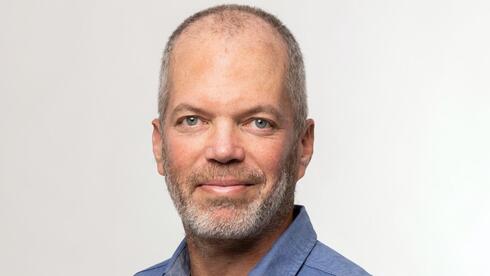



“Within 10 years, there will be at least 10 more Israeli companies like Wiz”
Cyberstarts founder Gili Raanan, the first investor in Wiz, says Google’s $32 billion acquisition will reshape Israel’s tech ambitions.
“The sale of Wiz to Google is an event that goes far beyond investors, employees, or taxes. Just as the ICQ deal broke the first glass ceiling for Israeli exits, followed by Waze, which broke the billion-dollar barrier, Wiz is now shattering every possible ceiling. This will influence Israeli high-tech, the economy, and the country for generations,” says Gili Raanan, founder of the venture capital firm Cyberstarts and the first investor in the cybersecurity company.
Speaking to Calcalist following the completion of Wiz’s $32 billion all-cash sale to Google, Raanan described the deal as a watershed moment for the Israeli technology ecosystem.

“Every team today looks at this and says: We can do it too, and they really can. I’m convinced that within ten years there will be at least ten more companies here of a similar scale to Wiz today,” he said.
Raanan is also one of Wiz’s largest shareholders, despite selling half of his stake for $120 million to the American investment firm Blackstone in 2021. According to estimates, Cyberstarts still holds about 4% of Wiz, a stake now worth roughly $1.3 billion.
Cyberstarts’ holdings are also expected to generate significant tax revenue for Israel, since a large portion of the fund’s limited partners are Israelis. Among them are several prominent figures from the cybersecurity industry, including Shlomo Kramer, co-founder of Check Point, Imperva, and Cato Networks; Marius Nacht, also a Check Point co-founder; Nir Zuk, founder of Palo Alto Networks; and veteran cybersecurity investor Mickey Boodaei, founder of unicorn Transmit Security.
Former NBA player Omri Casspi, who now runs his own venture capital fund, is also an investor in Cyberstarts.
Additional investors include Yevgeny Dibrov and Nadir Izrael, founders of Armis, which was recently sold for $7.75 billion to ServiceNow. Both are also direct investors in Wiz, meaning they are expected to profit twice from the largest exit in the history of Israeli high-tech.
“This is an achievement that should make us proud and optimistic,” Raanan added. “It shows that the country is recognized for the excellence of its young entrepreneurs. It’s a seal of approval that says we are operating at the highest level in the world.”
Raanan noted that several startups founded by Wiz alumni have already begun to emerge, although he has not yet invested in them.
Asked whether Wiz’s unprecedented success, particularly the speed at which it reached such a high valuation, has changed how he evaluates new startups, Raanan said the experience has provided valuable lessons.
“I definitely draw conclusions from the experience we’ve accumulated. When you start a company, you want to achieve true greatness. But what is greatness? It’s a bit like trying to describe a color, you can’t explain to a color-blind person what red looks like. But once you’ve seen red, you know how to recognize it. I hope that today it will be easier for me to pass that knowledge on to the next generation of startups, and I can already see Wiz’s fingerprints in some of our portfolio companies.”
Asked what specific factors contributed to Wiz’s success, Raanan emphasized the combination of deep personal trust among the founders and exceptional execution.
“When I look back, I see a remarkable story of friendship, talent, and execution,” he said. “Wiz would not have been as successful without the deep friendship between the founders, the clear division of responsibilities, and the trust between them. Alongside the soft skills there was uncompromising professionalism, ambition, and sometimes even a certain boldness in the scale of that ambition.
“The combination of these qualities is the real secret. Any founding team setting out today should look at this and recognize that there is both a professional and human code here that can serve as a powerful source of inspiration for entrepreneurs going forward.”



