









She was a furniture designer. Now she runs one of Ukraine’s biggest defense companies
Iryna Terekh helped turn a small manufacturing operation into Fire Point, a 7,000-person defense company producing long-range drones and missiles.
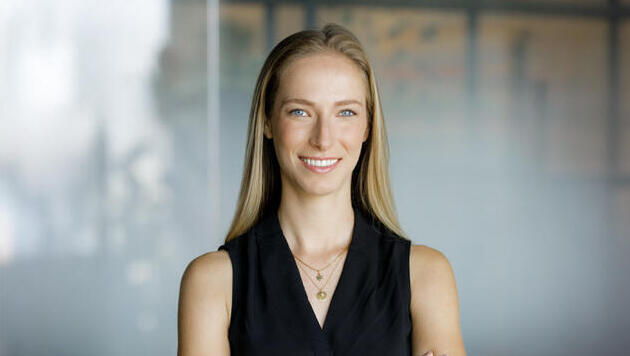
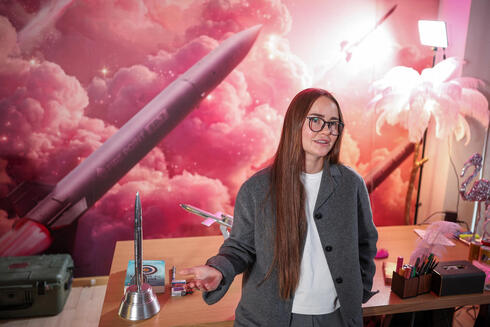
One of Ukraine’s largest defense companies, employing about 7,000 people and producing long-range drones and missiles, is led by an unlikely figure: a 34-year-old woman who trained as a furniture designer.
Iryna Terekh is the CEO and chief technology officer of Fire Point, whose drones and missiles are being used to strike targets deep inside Russia. She is also one of the few women leading a major company in Ukraine’s defense industry, where about 90% of the workforce is male.
“I am extremely proud and feel a great responsibility to be a part of this,” Terekh said. “We have to understand that all doctrines of war are life-changing at this stage.”
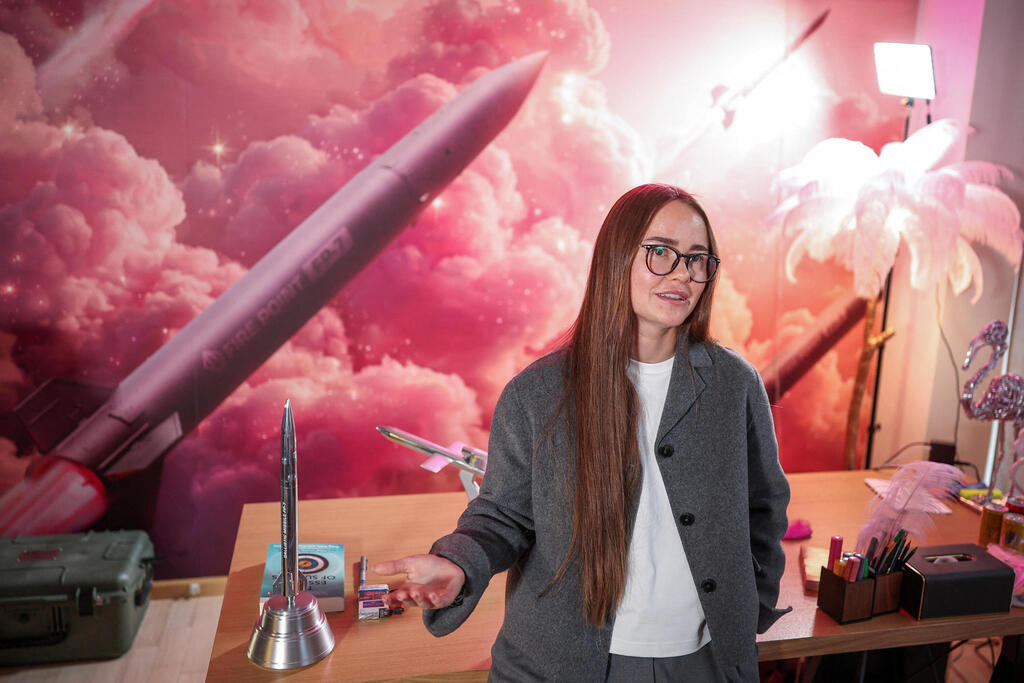
Terekh studied architecture at Kyiv National University but left before completing her degree. By the time she dropped out at the end of her third year, she was already running a business and raising two children.
“I was already running a business and trying to be a good mother to two children,” she said in a 2017 interview about her work as a furniture designer. “It was hard for me to balance everything, so I decided that university could wait.”
Before the war, Terekh owned a small furniture company producing outdoor items such as benches. Russia’s invasion transformed that business, and her career.
Her experience reflects a broader phenomenon in Ukraine, where people from civilian industries have redirected their skills toward the war effort. Flower designers have turned to assembling drones, while toy manufacturers have focused on producing decoys.
For Terekh, the transition began personally. As she and her mother tried to flee Bucha, north of Kyiv, the car they were traveling in came under Russian fire. The vehicle was damaged, forcing them to return to the city, where they hid in a basement for two days as Russian forces took control of the area.
They eventually escaped after Terekh documented the fighting around them. Weeks later, Russian forces carried out one of the war’s worst massacres of civilians in Bucha.
“I am one of those women who do not know how to fight,” she wrote on Instagram in March 2022. “But I am sure of one thing: I will absolutely do everything in my power to make sure that nothing like this ever happens again in my country.”
More than four years into the war, she still says she entered weapons manufacturing for one reason: “only because my country is under attack.”
Initially, Terekh established a nonprofit to channel humanitarian aid to Ukrainian soldiers. She later repurposed her company, Terekh Group, to manufacture concrete anti-tank fortifications.
In late 2022, she was contacted by Denys Shtilerman, an entrepreneur, engineer and physicist from Odessa who had founded Fire Point after becoming frustrated with the high cost of drones he had purchased for the Ukrainian military through a nonprofit he ran.
He recruited Terekh as production manager in 2023.
“He told me, ‘I can make almost anything, but I need you to help me make it happen,’” Terekh told the Wall Street Journal.
Shtilerman wanted her to turn the weapons he was testing, including a long-range drone, into mass-produced systems. Terekh, however, wanted a larger role.
She began teaching herself how missiles worked, studying Soviet-era manuals and consulting a rocket scientist she had hired as an adviser. Her previous experience with materials and manufacturing also proved useful. She proposed a new production method that cut the time needed to manufacture a drone wing from six days to about two and a half hours.
The FP-1 drone has since become Fire Point’s flagship product. The company says it has a range of nearly 4,000 kilometers and has been used in Ukrainian attacks on oil refineries and other targets deep inside Russia.
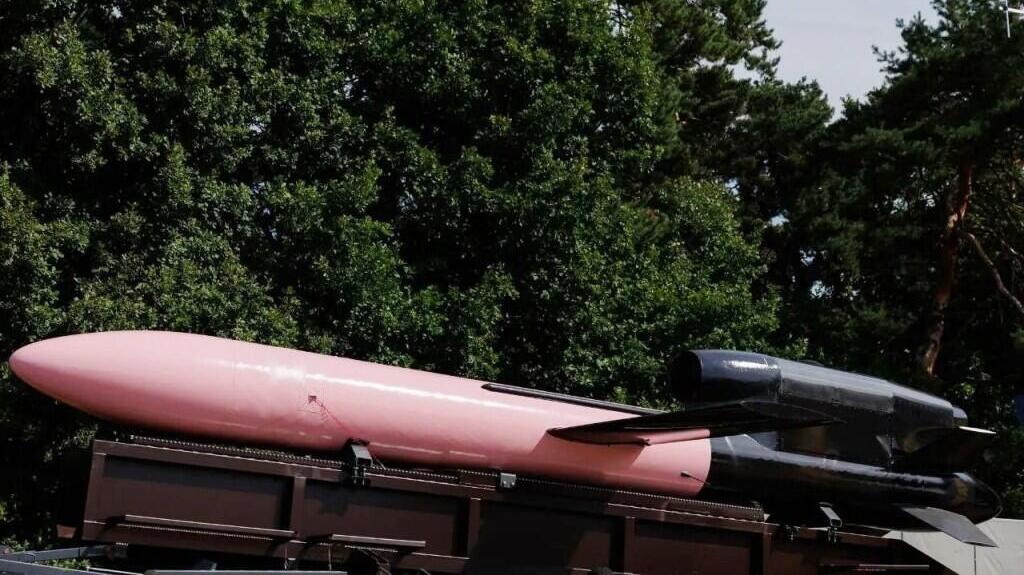
Fire Point has also developed a more powerful cruise missile. Its components were painted in bright colors, including pink, partly to make it easier to identify fragments after launches. Employees joked that the color reflected what happens when a woman takes over a defense company.
The missile eventually acquired the nickname “Flamingo.”
In an interview with CNBC earlier this month, Terekh said Fire Point now produces more than 60% of Ukraine’s long-range missiles. The company has also set its sights on developing interceptors that would cost a fraction of the price of U.S. Patriot missiles.
Terekh acknowledges the scale of the challenge. Achieving that goal, she said, would require the company to accomplish in a much shorter period what normally takes at least two decades.
“You have to understand that unfortunately we are living in the same era as a completely barbaric and imperialist neighboring country,” she said.
The rapid transformation of Terekh’s career has impressed some of the people who have watched Fire Point develop.
“The speed with which Irina was able to adapt to the complexity and the skill set required to run such a company was impressive to watch,” said former U.S. Secretary of State Mike Pompeo, who joined Fire Point’s board last year.
Yet Terekh did not enter the company without relevant experience. Before joining the defense industry, she had spent years running a manufacturing business.
In a 2017 interview about her decorative concrete business, she described management as an exercise in anticipating change.
“Flexibility and adaptability help businesses,” she said. “Every day there are difficulties. You have to be ready to solve any problem that arises while working, make decisions quickly, and always have several backup plans.”
That philosophy has taken on a very different meaning in wartime.
Terekh is also trying to change the composition of the industry itself. She has pushed for greater participation by women, including measures to eliminate wage gaps. She proposed establishing daycare centers at the company’s main sites, although the idea was rejected because of security concerns.
Before the war, Terekh described herself as a pacifist. She now views weapons as a means of protecting Ukraine’s sovereignty.
“To build something nice, you first have to destroy something ugly,” she said. “I am in a more privileged position, because I have the tools to release my anger. Even after the most difficult night of Russian shelling, I get to wake up and send all my emotions back.”



