











Israel’s Iron Dome and Arrow makers head toward IPOs, but the listing battle is far from over
Rafael and Israel Aerospace Industries are advancing toward partial privatization as officials debate whether the companies behind Iron Dome, Iron Beam and Arrow should list in Tel Aviv or on foreign exchanges.
The debate over the future of Israel’s two largest defense companies is intensifying, with market officials warning against plans to list Israel Aerospace Industries (IAI) and Rafael Advanced Defense Systems on foreign exchanges, particularly Nasdaq.
The Association of Public Companies in Israel has launched a campaign against the possibility of overseas listings, arguing that the country’s defense giants are strategic national assets that should remain connected to the Israeli capital market.
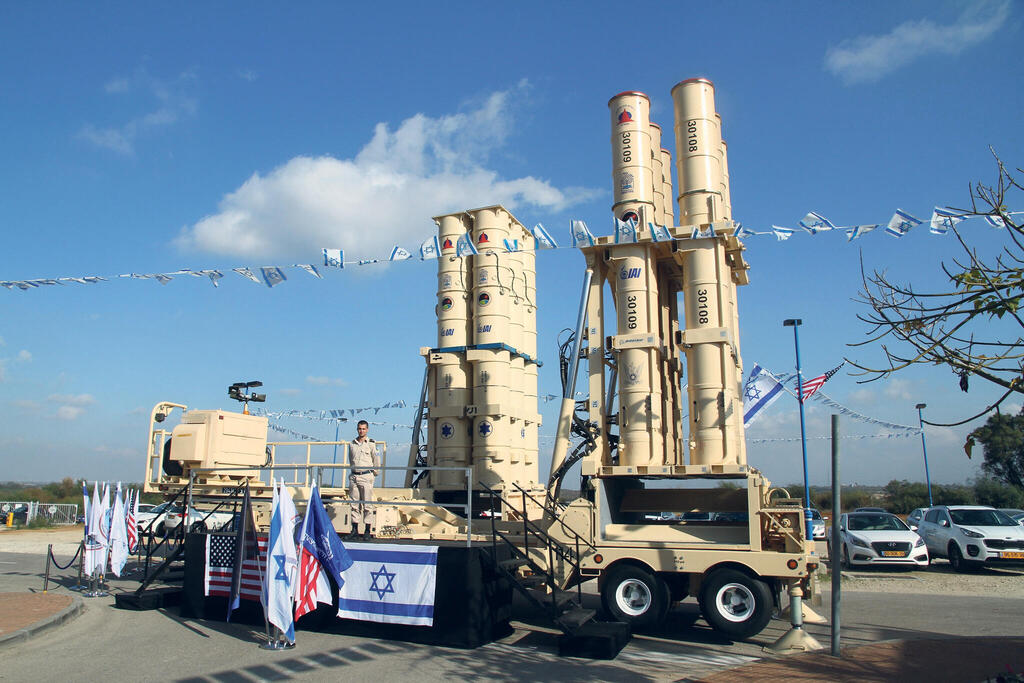
The comments were first reported by Gad Lior of Ynet.
"I would like to express our clear position that Israeli defense companies should be listed on the Tel Aviv Stock Exchange," Ilan Flato, CEO of the Association of Public Companies and former head of the defense sector at the Ministry of Finance’s Budget Division, wrote in a letter to Finance Minister Bezalel Smotrich, Economy Minister Nir Barkat, and Minister responsible for Government Companies David Amsalem.
Flato argued that IAI and Rafael should not be treated like ordinary commercial companies.
"These are strategic assets of the State of Israel, which constitute an integral part of its defense, technological, and industrial strength," he wrote.
According to Flato, the current market environment makes a public offering increasingly attractive. Global demand for Israeli defense technologies has surged, order backlogs are expanding, and investor interest in the sector is growing.
"Precisely for this reason, it is unacceptable for the State of Israel to examine the issuance of these companies abroad without examining the Tel Aviv Stock Exchange as the central, natural, and first target for their issuance," he wrote.
He added that an Israeli listing would allow the public to participate directly in the success of the country's defense industry.
"The Israeli public should be a partner in the success of these companies," Flato wrote.
The dispute comes as Israel is accelerating efforts to partially privatize its two largest government-owned defense companies after years of discussions.
The Government Companies Authority is advancing plans for initial public offerings of Rafael and IAI, according to government data. However, with elections approaching, officials believe it is unlikely that either transaction will be completed in the coming months.
The government is examining the possibility of selling minority stakes of up to 30% in the companies, potentially generating billions of dollars for the state at a time when defense spending is rising sharply.
Officials have also been exploring listings in the United States, where representatives of the government and the companies are expected to meet investors, investment banks, legal advisers and regulators to examine the feasibility of raising capital on American exchanges.
A key motivation behind considering U.S. markets is the different disclosure requirements for companies involved in classified defense programs. Officials believe foreign exchanges may offer greater flexibility in protecting sensitive information compared with the Tel Aviv Stock Exchange.
The two companies are moving at different speeds.
IAI’s privatization process is considered significantly more advanced. The company, which already has publicly traded bonds, is estimated to be worth approximately NIS 100 billion ($33.3 billion), according to government estimates.
Rafael’s process is more complicated. The company’s proposed IPO remains in an earlier stage after the Ministry of Finance opposed a proposal by the Government Companies Authority to sell shares privately to institutional investors rather than through a public offering.
The classified nature of Rafael’s activities has also created additional challenges, with Defense Ministry Director of Security Gil Reich recently reviewing the defense establishment’s position on the company’s planned flotation.
Rafael is currently estimated to be worth around NIS 60 billion ($20 billion).
The IPO discussions come as Israel’s state-owned defense sector benefits from unprecedented demand following years of rising geopolitical tensions and expanded military spending.
According to the Government Companies Authority’s 2025 report, state-owned companies generated combined revenue of approximately NIS 113 billion ($37.7 billion) last year, an 11% increase from 2024. Much of the growth was driven by record sales at IAI and Rafael.
Combined operating profit among government companies increased 64% to NIS 9.5 billion ($3.2 billion), while net profit rose 28% to NIS 9.8 billion ($3.3 billion), compared with NIS 7.6 billion ($2.5 billion) a year earlier.
The government companies distributed NIS 1.6 billion ($533 million) in dividends during 2025, including NIS 772 million ($257 million) from IAI and NIS 263 million ($88 million) from Rafael.
The companies also enter any potential IPO from a position of strength. Their combined order backlogs exceed $50 billion, with IAI accounting for more than $30 billion and Rafael more than $20 billion



