










AI chip unicorn Hailo to lay off nearly 10% of staff as it refocuses on robotics and Physical AI
Cuts come as the $344 million-funded startup prepares a new, significant fundraising round.
Hailo, one of Israel’s most prominent artificial intelligence chip startups, is laying off just under 30 employees, a move that affects slightly less than 10 percent of its workforce of more than 300 people, as the company reshapes its priorities amid a broader strategic shift.
Hailo, which has raised $344 million to date and holds unicorn status, is currently in the midst of a new and significant funding round.
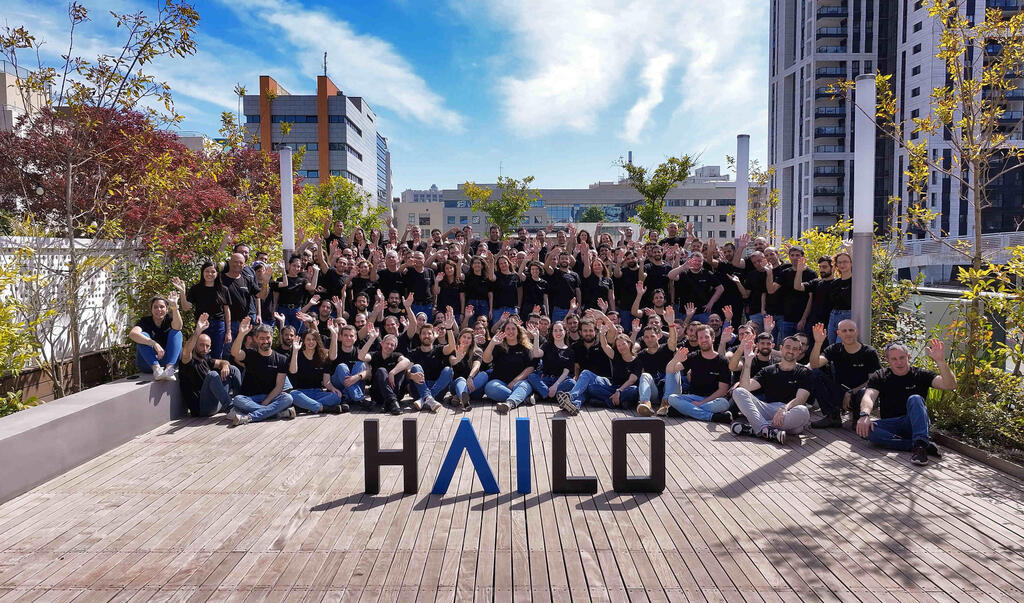
In a statement, the company said the layoffs are part of a deliberate reallocation rather than a retrenchment driven by financial distress.
“The company has made a strategic decision to expand its activities into the fields of robotics and Physical AI, sectors in which the adoption of artificial intelligence is accelerating, while reducing investment in several other areas that are adopting the technology at a slower pace,” Hailo said. “Accordingly, the company is making adjustments to its organizational structure to support its business focus and continued growth, including, among other measures, a minimal and targeted reduction in the number of employees.”
The company added that, as part of the move, it “is expected to raise significant capital that will enable it to execute its strategic plan.”
The layoffs highlight a familiar pattern in the current AI cycle: even well-funded companies operating at the center of the industry’s momentum are increasingly forced to make selective cuts as they pivot toward areas where customer adoption is fastest and capital efficiency is most visible. For Hailo, that appears to mean a sharper emphasis on robotics and so-called Physical AI, systems that combine perception, decision-making and action in real-world environments, at the expense of other segments progressing more slowly.
Earlier this week, ahead of the CES technology show in Las Vegas, Hailo published a detailed statement outlining its vision for the expansion of edge AI, artificial intelligence that runs directly on devices rather than in centralized data centers, across consumer and commercial markets. The company described deployments spanning security and surveillance, retail systems, robotics and healthcare, alongside demonstrations of on-device generative AI, and an announcement of a partnership with Asus.
Hailo’s chips are designed to bring data-center-level AI performance to edge devices, enabling real-time processing with lower power consumption and reduced reliance on cloud infrastructure.



