










Three years after October 7, Israeli reservists are still fighting to save their businesses
Hundreds of days in uniform have left self-employed reservists struggling with lost clients, stalled projects and businesses that can be difficult to restart. Three business owners describe the financial and personal toll of repeatedly leaving work to serve, and the support helping them prepare for the next call-up.
Three years after October 7, the war is far from over for thousands of reservists. Even after returning home and hanging up their uniforms, many must continue fighting on another front: for their jobs, the businesses they built, the clients they lost and the ability to revive operations repeatedly interrupted by successive call-up orders.
For the self-employed, hundreds of days of reserve duty represent more than a quantifiable loss of working days eligible for compensation. Small businesses often depend on a single individual, the person responsible for attracting clients, managing sales, developing products, providing services and overseeing cash flow. When that person disappears for months, sometimes returning home only to be called up again, the damage is far harder to calculate. Business relationships erode, growth plans stall, potential clients disappear, and the mental energy required to restart and move the business forward is depleted.
The continuing impact on self-employed Israelis is also reflected in the data. According to a survey conducted by the Israel Democracy Institute in May 2026, 64% of self-employed respondents reported a decline in business activity compared with the period before October 7, 2023, with an average decline of 51%. That marked a deterioration from January 2026, when 49% reported a decline, averaging 48%.
The broader picture for Israeli businesses is similarly troubling. According to business information firm Coface BDi, approximately 61,000 businesses closed in Israel in 2025, up from about 59,000 in 2024. The firm has highlighted persistent weakness, particularly among small and medium-sized enterprises. In the second quarter of 2026, its business risk index stood at 6.54 out of 10. Coface BDi said the economy continued to operate in a complex environment, with business activity recovering gradually amid high levels of security and geopolitical uncertainty.
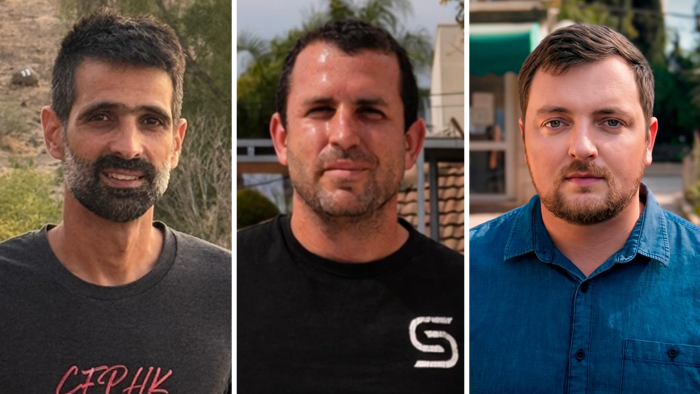
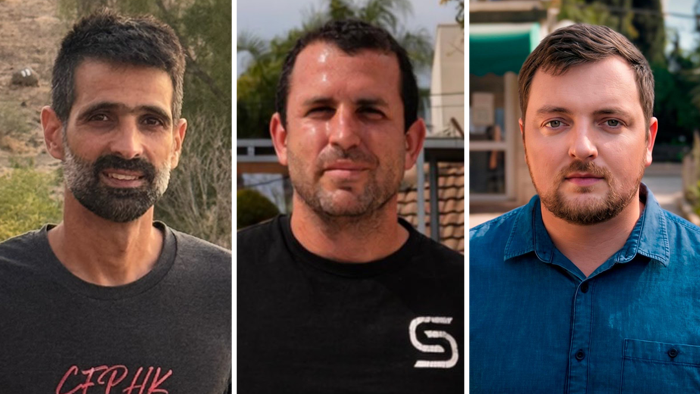
Behind the statistics are people such as Yoni Halimi, Eyal Shalev and Oleg Svezhintsev, three self-employed reservists who have each served hundreds of days. Their businesses were at different stages when the war began, but all three have discovered how difficult it is to balance two worlds that demand their full attention: military service and running a business.
Yoni Halimi: Losing clients and momentum
Halimi, 47, is a married father of two from Karkur and an independent IT professional. He owns Eurotas, a company that serves international clients in the pharmaceutical and medical device sectors and operates across five languages.
He served as an engineering officer during his mandatory military service and now serves as an operations officer in search-and-rescue battalions. Since the war began, he has accumulated more than 400 days of reserve duty, despite no longer being legally obligated to serve.
“On one hand, I realize I need to look out for my own personal interests. On the other, when the country is in a state of emergency, facing another round of conflict with Iran or preparing for a military operation, I understand that I have to be there. I put other matters aside and report for duty,” he says. “I don't have the luxury of saying, ‘I don't want to’ or ‘I can't.’”
Eurotas serves international clients, leaving it exposed to political shifts and changes in global sentiment toward Israel. Halimi says the damage took time to become apparent.
“While the first two years benefited from the momentum of initiatives launched well in advance, the real damage is now surfacing: clients are leaving, growth engines have stalled due to a lack of sustained sales activity, and new clients are increasingly deterred from working with an Israeli company.”
Despite these setbacks, Halimi says he remains committed to operating in Israel.
“And yet, for me, there is no other option. Our home and our business operations are right here in Israel. Driven by a deep belief in the Israeli economy and the Zionist spirit, I chose to strengthen our local presence and develop partnerships within the country, including a partnership with Monday.com. As we pursue further growth, we remain open to additional strategic alliances and collaborations.”
The disruption can be particularly costly when it comes at a critical moment in the sales cycle. Shortly after returning from an international conference, where tens of thousands of shekels had been invested in setting up a booth, Halimi was called up for reserve duty under an emergency order.
“The hot leads and valuable connections forged there had to be put on hold, and the momentum inevitably cooled. Balancing frontline military service with managing an international business from Israel is a massive challenge, yet our commitment to creating, growing and keeping the added value within Israel is stronger than any political uncertainty,” he says.
“I lost many clients, representing future income I was counting on, and the compensation from the military doesn't cover that loss. Another blow is that planned construction projects and new ideas I wanted to develop have all stalled. When I return, I'll have to start building everything up from scratch.”
Halimi learned about Gav LaLochem, a nonprofit supporting discharged combat soldiers and reservists, through an advertisement and joined a group for self-employed people from Pardes Hanna-Karkur.
The organization aims to help discharged combat soldiers transition to civilian life and supports self-employed reservists seeking to resume full business operations. Its services include guidance in areas such as artificial intelligence, finance and investments, entrepreneurship, career development and education, alongside connections to job opportunities, benefits and professional courses.
Gav LaLochem was founded by Oria Isaak, a major in the reserves and former combat company commander. According to the organization, Isaak established it after recognizing the lack of a national-level framework providing discharged combat soldiers with the support and community they needed. What began as a single local program expanded to include five additional programs. The organization says it is now launching approximately 100 programs across the country.
Isaak says the initiative for self-employed reservists has already supported more than 100 businesses, with a reported success rate of 95%. He says many of the businesses were close to collapse.
“The program's success stems from the fact that every business received comprehensive support, including a structured assessment and a tailored response covering financial, marketing and sales guidance,” Isaak says. Each business received 16 hours of individual consulting suited to its needs and was paired with a business mentor who guided it through the process alongside a cohort of other businesses. The group format, he says, helps participants build connections and find support while navigating the challenges of returning to work.
Halimi says the program's value extends beyond professional advice.
“Most of the consultants are volunteers from various fields who are themselves serving in the reserves. It is a beautiful example of mutual responsibility. Everyone, despite their own hardships, steps up to contribute however they can.”
The community is an important part of the experience, he says. Meeting other self-employed people creates opportunities to build relationships, exchange advice and learn how others in different fields are coping with similar difficulties.
“On a personal level, it's about pulling yourself together, defining your goals and envisioning where you want to be a year from now. It provides a mental boost and offers strategic guidance and sound advice, even regarding negotiations with clients. There is also close support for the technical aspects of running campaigns.”
The program included meetings every few weeks with guest speakers specializing in sales, marketing and AI, as well as individual consultations and a business mentoring process that lasted several months.
Eyal Shalev: Starting over after every call-up
Eyal Shalev, 35, is a married father of three from Pardes Hanna. A civil engineer, he also serves as a company commander's liaison officer in an infantry support company. Since October 7, he has completed approximately 350 days of reserve duty in Gaza.
He owns Steelo, a contracting firm specializing in construction using an advanced light-gauge steel method as an alternative to traditional concrete and block construction.
“Shortly before the war began, I struck out on my own after years as an employee at construction companies. In July 2023, I launched a project management business, but I didn't find my unique niche. I decided to pivot to something I truly believed in: advanced construction methods. October 7 hit right at the transition point between the two ventures,” he says.
“I never imagined I'd end up serving so many days in the reserves. Beyond the challenge of reserve duty, there was the challenge of managing a new business, something I hadn't done on my own before.”
Three years later, his military service continues. “I'm still doing reserve duty, and we make adjustments as we go.”
For Shalev, the damage extends beyond the financial losses that can be recorded in the books. The repeated interruptions make it difficult to establish momentum and maintain the motivation needed to run a business alone.
“Beyond the measurable financial losses, it halts momentum. Being self-employed involves a different emotional state. Unlike a company with a large staff, you have to generate your own energy and drive, and when reserve duty rounds begin, everything grinds to a halt.”
He had begun building a website and preparing price quotes, but the work stalled. Meetings scheduled before the war never took place, and quotes he had submitted to prospective clients failed to lead to business.
“For me, every client represents a multiyear relationship. These are major deals that take a long time to build, and leads are hard to come by. So, after a round of reserve duty, you're left feeling drained. It's true that you've served your country, but when you finish, you're exposed to the world again, realizing that everything you'd built beforehand has been lost along the way.”
Shalev found Gav LaLochem after seeing a post on Facebook. He says the first meeting gave him a sense that someone genuinely cared about his situation.
“When I arrived at the meeting, for the first time I felt that someone genuinely cared about my situation and my well-being. They truly want to support self-employed reservists. After the initial conversations and meetings, you start to feel better. Even before receiving anything tangible, it boosts your energy and motivation, and you feel less alone because you're among others in the same situation.”
The program also provided practical tools he had not previously encountered in his work. He focused on financial management and marketing, two areas he found particularly challenging.
“I gained things there that the average self-employed person in the market doesn't usually get exposed to, such as guidance and lectures from experts. It completely changed my financial perspective: organizing data in Excel spreadsheets, defining the business's DNA and setting annual goals. Today, I'm more stable. I have a clear picture of the business, and I also have the feeling that there's someone who truly cares about me.”
For Shalev, that support illustrates the difference between receiving compensation for lost income and learning how to keep a business viable through repeated periods of absence.
“The grants from the state provide some support, but it's sporadic and insufficient. I believe the main thing isn't the fish, but the fishing rod. It's less about the money and more about what you do to maintain your position and grow. It's about how you keep your head above water while dealing with the complex situation of being a reservist.”
Oleg Svezhintsev: A business put on hold overnight
For Oleg Svezhintsev, 32, a married father of two from Jerusalem, October 7 brought an abrupt halt to an expansion plan that had been months in the making. An infantry company commander, he has served more than 450 days in reserve duty, all of it in the Gaza Strip.
Svezhintsev runs Smart Campus, a system for managing boarding schools, youth villages and other educational institutions. It handles everything from group management, attendance and exit authorizations to learning centers, student records, documentation and communication with parents. Information entered by staff in the field reaches the relevant employees immediately, allowing management to monitor the situation in real time.
“Our team is composed of boarding school alumni and staff members. We built the system we had dreamed of when we were counselors ourselves, and we continue to develop it in collaboration with the teams in the field,” Svezhintsev says.
“The goal of the technology is to give educators back their time with the children. The system connects the staff and centralizes all information regarding the child in one place, so that educators don't have to chase down every update and can instead focus on the actual educational work.”
Svezhintsev immigrated to Israel from Russia at the age of 14 through the Na'ale program. He later attended Havat HaNoar HaTzioni, a youth village in Jerusalem, where he also worked.
“I loved the boarding school environment and saw the tremendous potential for what could be achieved there. It is the only educational framework that allows you to influence children and monitor them 24/7, whether dealing with children facing challenges or in boarding schools focused on excellence.”
Smart Campus has a team of 10 employees and works with 55 boarding schools and youth villages across Israel, as well as approximately 200 other educational institutions. When the war began, the company was preparing to launch several major projects.
“On October 7, I was called up for reserve duty in the afternoon and completely cut off from the business. There were several major projects we were scheduled to launch on October 8. We had already signed a contract with a municipality to manage its educational programs and were set to bring on another 200 educational institutions. We had spent six months developing these programs and were due to start the pilot on October 8. We had invested significant financial and human resources into this, only for it to come to a halt.”
The municipality was the first client to stop making payments, he says, and the company received nothing for the development work completed before the pilot. Sales activity also stopped. As the person responsible for sales and business development, Svezhintsev was suddenly unable to carry out even routine tasks.
“I was cut off from everything while fighting in Gaza, without a phone. I couldn't even handle simple tasks like sending payment requests to clients, so there was no cash flow coming in, not even from our regular clients.”
Despite the disruption, he continued paying employees who had not been called up for reserve duty. One technical support employee stepped in to manage the business during the war.
Svezhintsev came across Gav LaLochem on Facebook, but it was the name of its founder that caught his attention.
“What caught my eye was that the organization's CEO had been on my team during officers' training. I know the guy, and I told myself that if he was the one who started this, it was undoubtedly a high-quality initiative, and I had to be part of it. I submitted a request, and as I moved forward, I began to understand what the program was really about. It's amazing.”
He says the personal attention was as important as the professional guidance.
“It started with the personal attention and genuine care shown by the entire staff. It wasn't just about ticking a box or running a course. It continued with a meticulous, precise assessment of each participant. They identified everyone's specific needs and matched them with the right mentors. I hadn't expected such a high level of quality.”
The program includes in-person group meetings every two weeks, bringing together people who have experienced similar disruptions. Participants can share their experiences, discuss the challenges they face and learn how others have dealt with them. Sessions also feature professionals who offer practical guidance and digital tools to help businesses improve.
Svezhintsev says his business has made significant progress since he joined. He has worked on marketing strategy, financial management, pricing and partnerships, although he still has areas he wants to strengthen.
“I feel that the program has taken me to a completely different place, from marketing strategy to financial management, product pricing and collaborations. I'm heading off for two months of reserve duty soon and really hope we won't slide backward. It will certainly impact the business, but I hope not drastically. I've learned how to manage this over time.”
Three years after October 7, the experiences of Halimi, Shalev and Svezhintsev show that returning from reserve duty does not necessarily mean returning to business as usual. For the self-employed, there may be no office waiting for them and no colleague able to take over their responsibilities. Sometimes, returning to work means rebuilding almost from scratch.
When one period of service ends without any certainty about when the next will begin, the challenge is not simply to compensate reservists for the days they could not work. It is to help them build businesses resilient enough to survive the next call-up, when they must once again put everything aside and report for duty.



