










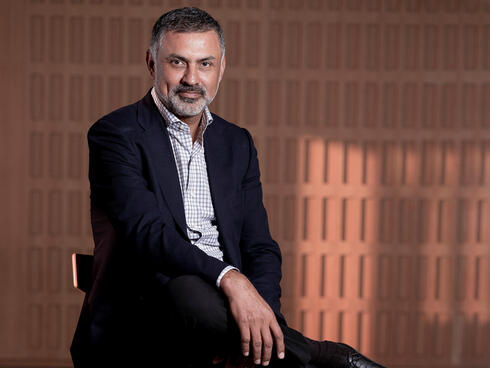
“A Darwinian moment”: Palo Alto CEO says India's IT workers must adapt to survive AI disruption
Nikesh Arora rejects predictions that artificial intelligence will kill India's IT-services industry, but says workers who fail to learn and demonstrate AI skills risk being left behind. “People have to be naturally curious,” he says.
Nikesh Arora does not believe artificial intelligence will spell the end of India's vast IT-services industry. But the CEO of Palo Alto Networks has a stark warning for the millions of people whose careers depend on it, saying the ability to adapt to AI will increasingly determine who succeeds and who gets left behind.
“I don't think it's a pivot a company can make. I think it's a Darwinian moment,” Arora said in an interview with CNBC-TV18. “People have to be naturally curious.”
Arora, who was in India last week and met Prime Minister Narendra Modi, argued that workers who teach themselves to use AI, become proficient with the technology and demonstrate what they can do will have an advantage over colleagues who do not. Those who fail to keep up, he warned, will have to go back and relearn.
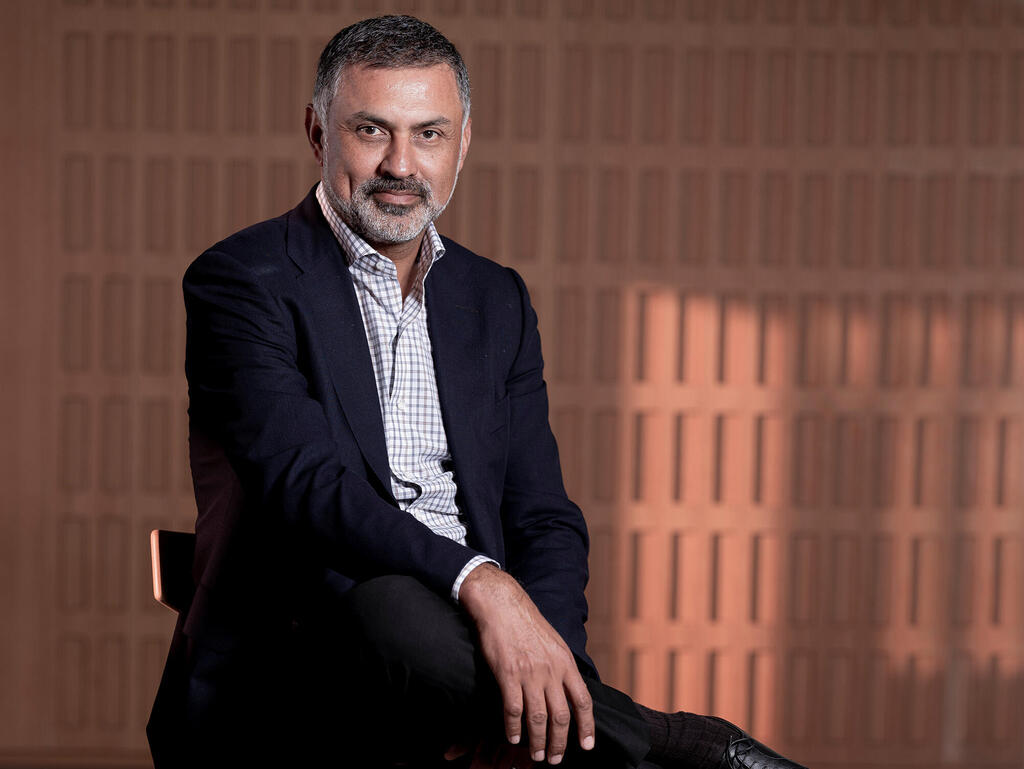
“You'll find that in groups of people in companies, some people will naturally learn AI, become adept at it, adapt it, and showcase their skills,” he said. “And the people who do will do better than people who don't.”
The comments offer a more nuanced view of the disruption facing India's IT-services sector than predictions that AI will simply eliminate the need for large workforces. Arora believes the technology will create demand for more people with AI skills, not fewer, as businesses and governments seek to reinvent their operations.
“I believe there is the need for more, better-trained AI people than less,” he said. He compared the current transition to the arrival of mobile applications, when people learned to use new services such as Uber and Spotify largely by experimenting with them rather than through formal education.
“I see no reason why the technically capable IT services resource is not able to transform themselves into a better AI resource,” he said, adding that every company, government entity and business needs reinvention.
But Arora placed much of the responsibility on employees themselves, rather than on companies to retrain their entire workforces through a top-down transformation. He said people need to develop a learning mindset and become comfortable using AI tools in their daily work.
Arora's assessment carries particular weight given his own position in the technology industry. Born in Ghaziabad, in the Indian state of Uttar Pradesh, he studied electrical engineering at the Indian Institute of Technology at Banaras Hindu University, graduating in 1989. He moved to the United States for further studies, earning a master's degree in finance from Boston College and an MBA from Northeastern University.
Before joining Palo Alto Networks in 2018, Arora spent a decade in senior positions at Google and served as president and chief operating officer of Japan's SoftBank Group. At Palo Alto, he has overseen an aggressive expansion strategy that has included approximately 40 acquisitions over eight years. The company now has roughly 23,000 employees globally. He said he asks employees whether they have run their work past the company's enterprise version of ChatGPT.
The first time someone answers no, he said, it can be a learning moment. After being encouraged to use the tool, employees can discover that it is already capable of producing documents and handling basic tasks at a level that can improve on their own work.
“You'd be surprised at the capability AI already has today,” Arora said. “People will have to learn, people have to transform.”
He added that the need to learn faster is particularly acute in IT services, where employees are expected to guide clients through their own technological transformations. Companies in the sector will need to create environments in which workers continually experiment with AI and develop practical skills, he said.
According to the Reserve Bank of India, the country's software services exports, excluding sales through overseas commercial presence, reached $221.4 billion in fiscal 2025-26, an increase of 8.2% from the previous year. IT services alone accounted for $147 billion of that total, while business process outsourcing generated another $56 billion.
Arora's comments came as the interviewer asked whether the spread of AI could mark the end of India's IT-services companies and software-as-a-service businesses. He rejected that pessimistic outlook, arguing that the global economy will need more people capable of implementing and working with AI.
“I think the idea that IT services companies are in trouble is a bad narrative. I think it's a faulty narrative,” he said toward the end of the interview. “We have the most trained workforce from a technology perspective, and the world needs more technologists.”
Arora also argued that India should not measure its AI prospects solely by whether it can develop the world's most advanced models. He said the country could create substantial economic value by applying AI across its population, drawing a comparison with the way it adopted mobile technology and used the internet to expand access to information and digital payments.
“It's okay. Let somebody else spend $50 billion to train the model every three months,” he said. India, he argued, should concentrate on making AI accessible and useful to businesses and citizens.



