












Top 50 Most Promising Startups
Goodbye SaaS, hello silicon
The AI boom is redirecting billions from software applications to the hardware that powers them.
In the early days of the iPhone App Store, toward the end of the first decade of the 21st century, fart apps were among the platform’s biggest hits. At a time when developers and users were still trying to figure out what could be done with the new device, a few quick programmers realized that with just a few lines of simple code, they could create an app that made a smartphone emit a variety of fart sounds. The public, surprisingly, responded enthusiastically. In December 2008, the iFart app, which sold for 99 cents, reported average daily revenue of nearly $10,000, rising to almost $30,000 around Christmas, when many consumers received new iPhones and promptly made them fart.
And they were not alone. The iBeer app, which simply simulated a glass of beer emptying when the user tilted the device, was generating between $10,000 and $20,000 per day for a period in 2008. Six years later, an app that did nothing more than allow users to send each other the push notification “YO” raised $1 million and attracted coverage from mainstream media outlets such as the Financial Times and CNN.
These apps are extreme, but not exceptional, examples of a trend that defined the two decades that followed: the rise of software as one of the most powerful forces in the technology industry. Throughout most of the 21st century, the industry’s biggest success stories have come from software and software as a service (SaaS). Companies, Israeli and global, such as Monday, Salesforce, Gong, WalkMe, Trello, NICE, and Wix achieved high valuations or significant exits by building cloud-based applications that delivered real value to businesses and users. For many years, as investor Marc Andreessen famously said in 2011, software ate the world.
But the days when any novelty app could generate millions are over. The success of the software industry rested on a central principle: solving a clear and often acute problem. Wix enabled small business owners to build websites easily. Monday developed tools to manage workflows. NICE created systems to improve customer interaction. These were solutions that organizations needed, and could not easily build themselves. Delivering them required skilled teams of developers and deep technical expertise.
Or at least, that was the case until recently. The AI revolution began with the launch of ChatGPT in November 2022, but it was not until early 2025 that dedicated AI coding tools such as Anthropic’s Claude Code, Cursor, and Replit entered the market. Almost overnight, a field that once required years of training became accessible to anyone capable of writing a natural-language prompt. In 2008, building even a simple app required familiarity with development environments and coding. Last week, my 5.5-year-old created a game about a cat dodging obstacles using three prompts in Cursor.
What a child can do at a basic level, more advanced users can now do at scale. The market has already absorbed this shift. In 2025, the SaaS index declined by 6.5%, while the S&P 500 rose by 17.6%. Leading companies continue to generate substantial revenues, but the industry increasingly recognizes that it is entering a new phase. Monday, for example, reported record performance in 2025, with revenue rising 27% to $1.23 billion. Yet in its February earnings report, it forecast a significant slowdown, with growth expected to reach no more than 19%. Over the past 12 months, the company’s stock has fallen by about 76%, including a decline of nearly 60% since the start of the year.
AI and “vibe coding” cannot yet fully replace software products, with the notable exception of relatively simple applications and website builders, where AI tools are already highly effective. But the pace of technological progress suggests that this gap may close quickly. Since the beginning of the year, multiple sectors have been shaken as Anthropic introduced new Claude features that replicate the functions of existing enterprise software.
In early February, shares of companies providing data analytics, legal software, and sales and marketing tools fell sharply after Anthropic launched AI agents capable of automating tasks in those fields. In early April, reports about a new model, Claude Mythos, not yet released publicly, raised further concerns. The model is said to be capable of identifying security vulnerabilities in software, prompting questions about the future of cybersecurity firms.
If the expectations surrounding AI models and automated coding prove accurate, the traditional software model faces a structural challenge. This transition will not happen overnight. Not every company will fail, and some will successfully reinvent themselves. But in a world where users can create tailored applications on demand, and where AI tools can replicate entire categories, the center of innovation is shifting away from standalone software products.
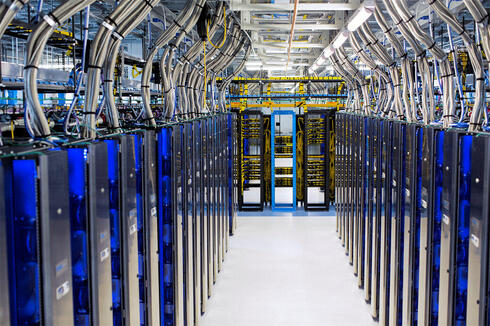
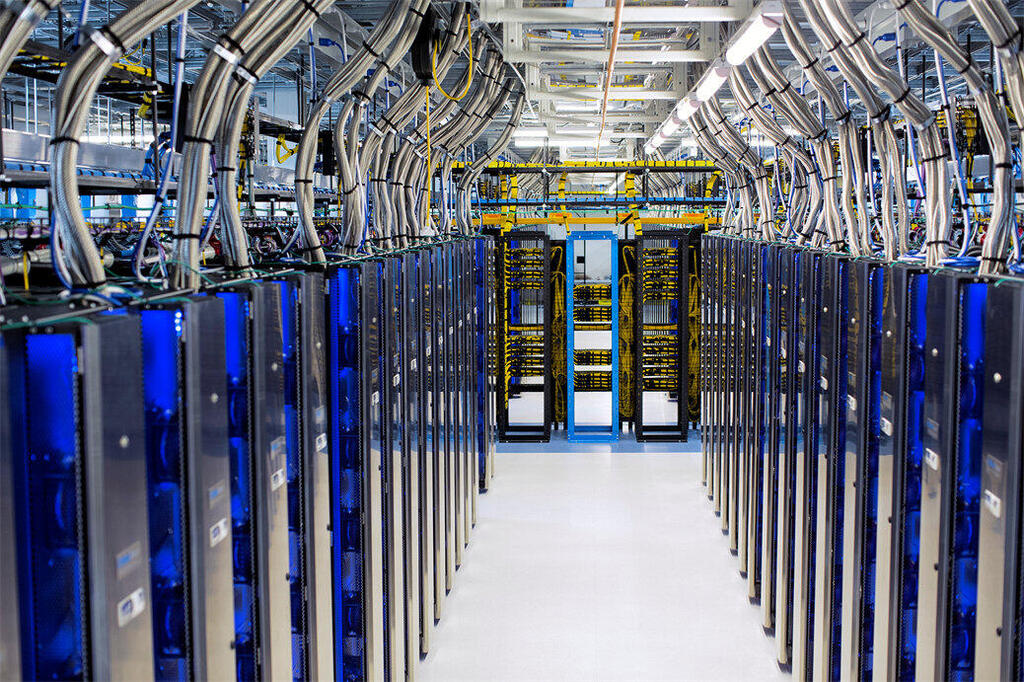
That is the bad news. The good news is that innovation, and investor value, is not disappearing; it is being redirected. Increasingly, the focus is moving away from the application layer to the infrastructure beneath it: the engines that power computation and the hardware that enables it.
Today, one of the key bottlenecks is computing power. Microsoft, Amazon, Google, and Meta are expected to invest at least $660 billion in AI infrastructure by the end of 2026 to meet growing demand. Companies such as OpenAI and Anthropic are expected to invest tens of billions more.
This demand, despite ongoing concerns about a potential bubble, is shifting innovation toward semiconductors. Nvidia, the dominant player in the field, is investing heavily not only in GPUs, the core processors behind AI models, but also in CPUs, networking chips, integrated systems, and emerging technologies such as silicon photonics, aimed at optimizing every layer of AI data centers.
Other technology giants are following. Google has been developing TPU chips for over a decade. Amazon entered the space through its 2015 acquisition of Annapurna Labs. Meta revealed in 2023 that it, too, had developed chips for AI inference.
At the same time, new entrants are emerging. Nvidia signed a $20 billion deal with chip startup Groq to gain access to its language processing units (LPUs), designed to accelerate AI inference. OpenAI signed a multi-year $10 billion agreement with Cerebras, whose wafer-scale chips offer a different approach to performance bottlenecks. Startups such as Etched and Halo are raising large sums to compete in this increasingly strategic field.
Parallel to this, companies that provide access to computing infrastructure are gaining traction. CoreWeave, which offers cloud-based AI processing, went public in 2025 and now trades at a valuation of $53.6 billion. Meta’s $14.3 billion investment in Scale AI underscores the growing importance of data infrastructure in training and evaluating models.
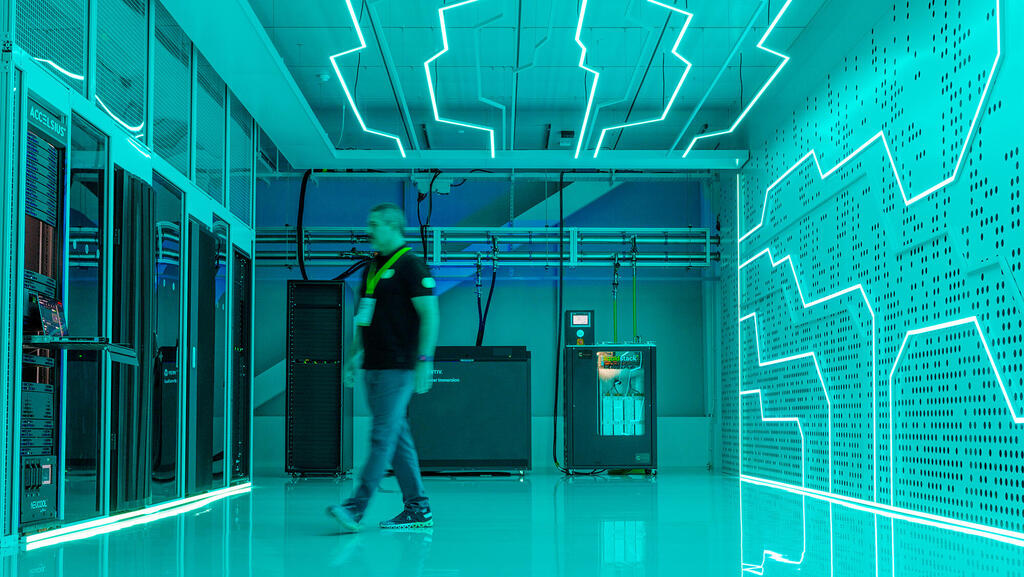
Another area gaining momentum is deep tech, technologies that require complex research and cannot be produced through simple prompts. Israel’s Q.ai, acquired by Apple for an estimated $1.5-2 billion, is one example, focusing on advanced human-machine interfaces. In energy, Helion Energy raised $425 million to develop nuclear fusion, reflecting the growing need for power to sustain AI infrastructure.
Cybersecurity, despite short-term market volatility, remains critical. While AI tools can identify vulnerabilities, the increasing sophistication of cyber threats, often powered by AI themselves, is driving demand for more advanced solutions. Google’s $32 billion acquisition of Wiz reflects this reality: even in an AI-driven world, security requires more than automation.
The common thread among these companies is that their innovations cannot be easily replicated through prompts alone. They rely on deep expertise, long-term research, and complex execution. AI plays a role in accelerating development, but it does not replace the underlying human ingenuity.
The same applies to companies with significant physical infrastructure. Platforms like Uber or Airbnb can be replicated at the interface level, but their value lies in real-world assets, drivers, vehicles, hosts, and logistics networks. Without those, the software itself is meaningless.
This does not mean the workforce is immune. Automation may reduce the need for developers, while robotics could reshape logistics and transportation. But the underlying business models remain intact.
Vibe coding has not eliminated innovation. It has simply shifted it, toward harder problems, deeper technologies, and physical infrastructure. This transition may undermine companies built on simple software layers, but it opens the door to more meaningful breakthroughs.
Certainly more meaningful than an app that makes a phone fart.



