










Opinion
AI makes a good assistant, but it makes an even better opponent
"Litigators learn from the witnesses their cases happen to give them," writes Verbit CTO Simon Rapoport. "AI simulation lets law firms choose who they need to practice against, including the witness nobody wants to face."
A lawyer can arrive at a deposition with the documents mastered and an outline built around every fact that needs to be established. Then the witness gives an answer narrower than the question. A detail surfaces that nobody anticipated. At a deposition, where a witness testifies under oath before trial, the lawyer has to decide in the moment whether to press, let it go or change direction, with opposing counsel listening and a court reporter recording every word. Experienced litigators make those calls with a fluency that only looks effortless.
It comes from having sat through a great many depositions, and it is a large part of what a client is paying for. Most firms cannot choose which situations build that experience. Associates learn from the witnesses who happen to turn up in their cases. A year of commercial disputes with courteous corporate witnesses is excellent training for commercial disputes with courteous corporate witnesses. It teaches very little about the person who has decided, before the first question, that the examination is going to fail. Mock depositions cover part of the gap and good mentoring covers more, but both draw on the resource firms are shortest of, a senior lawyer's hours, and both need several busy people in one room at one time.

Simulation lets a firm pick the skill first and build the practice around it, without waiting for the right case to arrive. Take a common objective: establishing who approved a particular decision. The witness answers in general terms about how the team worked, and in the moment the answer sounds responsive. Only on reviewing the transcript does the associate see that no name was ever given. The learning is in that review. The next attempt can go straight at the gap. It should not be a replay, though. If the same witness gives the same answers, the associate can pass by remembering them, and the exercise has quietly stopped testing the thing that matters, which is hearing an answer you have never heard before and deciding what to do with it.
Producing that uncertainty takes more than telling a language model to act difficult. That is the engineering problem we ran into building DepoSim: separate agents play the witness and the opposing counsel, each with its own objectives, and they react to each other as much as to the examining lawyer. An objection lands in the middle of a line of questioning and changes what the lawyer is managing. A different answer from the witness changes what the lawyer should be chasing. Keeping those agents coherent with one another, so that a real change in the lawyer's approach produces a real change in the room, turned out to be most of the engineering.
The persona we get asked about most, and the one that taught us the most, is the aggressive witness. Internally we call him the jerk. He is rude to counsel and dismissive of the case. He answers questions nobody asked and refuses the ones that were. The rules of the room he treats as suggestions. When lying is convenient he lies, and then he seems to enjoy watching the lawyer try to prove it. Every litigator has met a version of him, and every training program should have him on call, because nothing builds control of a deposition like holding on to it while someone is working to take it away.
The difficulty is that realism requires more than hostility. Language models are optimized to be helpful and agreeable, so a hostile persona tends either to drift back toward cooperation or to become a caricature.
Neither extreme is useful. A witness who attacks every question regardless of how it is phrased is a wall, and practicing against a wall teaches nothing. Real hostile witnesses are hostile with a purpose: they pick their fights, give ground to a well-constructed question and press hard when they sense hesitation. That is the standard a simulation has to meet. A practice environment only teaches judgment if a better question can change what happens next.
A realistic opponent is useful only if the lawyer can also see where the exercise went wrong. Afterwards a second group of agents reviews the transcript using a methodology we developed with our legal-training partners at AltaClaro. A score alone is not enough: it tells an associate the deposition went badly, which she already knew. What she needs is the moment forty minutes in when the witness answered something adjacent and she let it pass. Feedback anchored to that exchange, showing what was asked next to what the answer actually established, gives the next attempt a precise place to begin.
Senior lawyers still matter here, and probably more than before. A partner who once spent an afternoon playing a witness for one associate can spend an hour instead with the transcript of that associate's fourth attempt, arguing about the two decisions in it that were actually interesting: why she followed one answer and let another pass, and at what point the prepared line should have been abandoned. That is a better use of a partner's afternoon than pretending to be an evasive CFO.
Vanderbilt Law School recently announced that it would make DepoSim available through its courses and its law library, so students can practice on their own alongside instructor-led exercises. The library is the detail I find most telling. A student who struggled with a witness in class can go back that evening, alone, and face a different witness on the same skill, with no instructor to schedule and no classmates to recruit.
None of this reproduces the responsibility of representing a client, and nobody should pretend it does. Much of the discussion about AI in law firms centers on assistance: drafting, or finding the right document in a mountain of them. That value is real, and it is also the most predictable thing an intelligent system can do for a lawyer. An assistant makes the work easier. An opponent makes the lawyer better.
We have spent a good deal of our effort teaching a machine to be unpleasant without turning it into a caricature, and the more convincingly it fights back, the more it is worth. Some of the most valuable AI in this profession may turn out to be the kind we build as an "enemy": an opponent whose only job is to make us stronger.
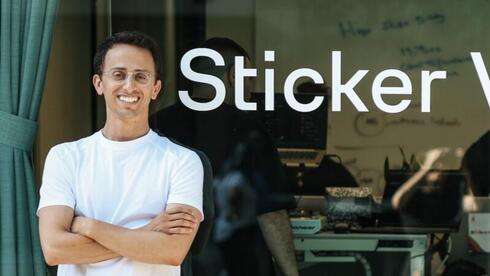
Simon Rapoport is CTO at Verbit.



