











Trump’s midterm defeat creates new uncertainty for AI stocks and Israel
Investors are weighing the possibility of tighter scrutiny of the AI industry and greater fiscal restraint, while the change in congressional control could intensify pressure on the U.S.-Israel relationship.
The vote count in the U.S. midterm elections is not yet complete, but the results confirmed so far point to a severe defeat for President Donald Trump and the Republican Party. Democrats have secured a majority in the Senate, while the House of Representatives appears to be heading in the same direction. Democrats currently hold 213 seats and need just five more from the 96 races that remain undecided. After two years of unified Republican control, Trump is set to face a particularly hostile Congress in January. One of the most notable reactions to the results came from, of all places, Tokyo.
The Nikkei index plunged by more than 3% during trading, although the decline later moderated to approximately 1.5%. What stands out is not only the scale of the drop, but also the stocks that led it. The declines were concentrated primarily in shares linked to artificial intelligence. SoftBank fell by about 7%, chip-testing equipment manufacturer Advantest lost 6.4%, Tokyo Electron dropped 5%, and memory chipmaker Kioxia fell by 10%. Optical fiber manufacturers Furukawa and Fujikura, both key suppliers to data centers, declined by 9% and 8.2%, respectively.
The Taiwan Stock Exchange fell by 2.3%, while Nasdaq futures retreated by approximately 2%. In contrast, Hong Kong shares rose and the Shanghai market remained virtually flat. The focus of the sell-off in Asia was clear: artificial intelligence stocks.
1 View gallery
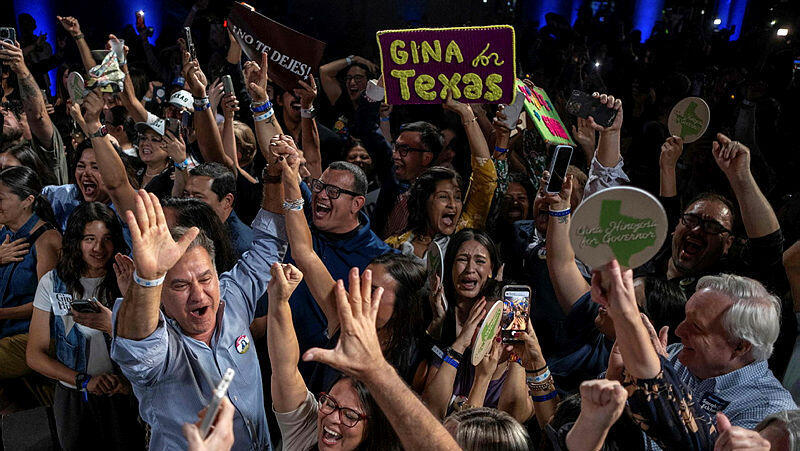
Crowd cheers for the Democratic candidate in Texas, Gina Hinojosa.
(Joel Angel Juarez / GETTY IMAGES NORTH AMERICA / AFP)
The cost of living, including electricity bills, was a central theme of the Democrats' campaign. Investors now fear that a Democrat-controlled Congress could lead to tighter regulation of the AI industry and the development of data centers. A shift is also taking shape at the state level. In Georgia, which, together with Texas, accounts for about a third of all data center investment, Democrats are expected to win the governorship.
These concerns are emerging at a time when AI stocks were already under pressure heading into the election. Goldman Sachs' basket of AI stocks fell 15% in October and is now more than 24% below its peak.
The implications extend beyond the stock market. Investment in technology, including artificial intelligence, accounts for about a third of U.S. economic growth this year. In the second quarter, its contribution reached 36%, after accounting for imports. Under a broader definition that also includes data center construction, technology investment accounts for about half of growth. A slowdown in this engine could therefore weigh on the wider economy.
That could set off a chain reaction. Slower growth could dampen demand and inflation, reducing pressure on the Federal Reserve to raise interest rates. For American consumers, that could translate into lower prices and borrowing costs. On the eve of the election, markets were pricing in a 77% probability of a December interest rate hike. If concerns about a slowdown in AI investment are borne out, those expectations could shift. The employment report due Friday will provide the first test of the market's assumptions.
The bond market is already reflecting some of these concerns. Overnight, as the scale of Trump's defeat began to become clear, the yield on the 10-year Treasury note fell by 7 basis points to 4.89%, according to Bloomberg. By this morning, however, it had climbed back to around 4.95%, close to its level the previous day. It is therefore too early to speak of a sustained rally in bond prices.
Still, the election results could offer some support to the market. A Republican president facing a Democratic-controlled Congress would have a harder time pushing through fiscal expansion using the special legislative process known as budget reconciliation.
That could also make Trump's proposal to distribute $5,000 stimulus checks to every American less likely to materialize. J.P. Morgan estimates that when control of the White House and Congress is divided between the parties, deficits tend to be "much more controlled or limited." That could be positive news for the bond market, particularly after the 10-year Treasury yield reached 5.3% last month.
Two forces could therefore push yields lower: greater fiscal restraint and weaker economic growth. The question is whether they will outweigh the effects of the war, falling oil prices and the expected confrontation over the debt ceiling in 2027. Further clues could emerge as early as today, with the release of the U.S. Treasury Department's quarterly borrowing announcement.
The shekel continues to weaken, but at a measured pace
Election Day also brought news for Israel. Yesterday, while Americans were voting, Trump told Fox News in a telephone interview that the United States would end its annual aid to Israel, worth approximately $4 billion, by 2027, while continuing to sell weapons to the country.
"We give them $4 billion in goods and cash, and they don't need it," he said. According to Trump, Prime Minister Benjamin Netanyahu had proposed the move, and the two had reached an understanding on the matter some time ago.
Come January, the debate will shift to Congress, where the Democratic majority includes lawmakers who oppose arms sales to Israel. A vote last April offers an indication of the strength of that opposition: 40 of the 47 Democratic senators voted to block the sale of bulldozers to the Israeli military. If a similar proportion of Democratic senators in the new Congress supports blocking future deals, congressional backing for arms sales to Israel could erode significantly.
The combination of an end to U.S. aid and growing opposition in Congress to arms sales could signal a profound shift in the relationship between the two countries.
The two months remaining until January 3, when the new Congress is sworn in, could also represent a window of opportunity for Trump to renew hostilities with Iran. Congress remains under Republican control until then, and the self-imposed constraint Trump had set by refraining from attacks before the election is no longer relevant. On Monday night, the United States carried out a limited strike on Qeshm Island, which was described as "defensive." Markets remain concerned about the possibility of a "short and intense" operation in Iran.
The shekel is also reacting to the developments, although so far the impact has been moderate. In the early hours of the morning, the dollar crossed the NIS 3.17 threshold, before giving up some of its gains. It continues to trade above NIS 3.16, with the shekel having weakened by approximately 3% since Israel's election day.
The domestic political deadlock, compounded by fears of dramatic developments surrounding the prime minister and his partners' demand to invalidate the election, is adding to concerns over the announcement on U.S. aid and the possibility of another round of conflict with Iran. Together, these factors are putting pressure on the local currency.
For bond investors, the U.S. election results point to limits on Trump's ability to increase government spending. For equity investors, they cast a shadow over the artificial intelligence sector's role as a key driver of economic growth. For Israel, the outlook is more concerning. Over the next two months, Trump will face mounting political pressure while his party still controls Congress. After that, he will have to contend with a hostile Congress, including members seeking to limit U.S. support for Israel.