










Anthropic mathematician says Claude helped solve a 165-year-old mathematical mystery
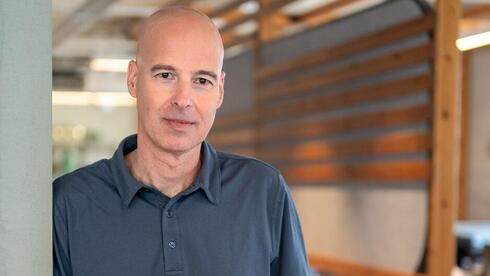
Levent Alpöge says the AI system helped him develop a proof of the Riemann hypothesis, one of seven Millennium Prize Problems carrying a $1 million award. The claim now faces scrutiny from the mathematical community.
For nearly 170 years, mathematicians have tried to prove one of the most famous conjectures in their field. Now, an Anthropic mathematician says he may have made progress with the help of an artificial intelligence system, after working alongside Claude for just six weeks. Whether the proposed solution is valid remains an open question.
Levent Alpöge, a Turkish American mathematician, published a proposed proof of the Riemann hypothesis on Friday, along with computer code written in Lean, a programming language used to formalize mathematical arguments. He says Claude helped develop the solution and that the code can verify its findings. Mathematicians have begun examining the work, but it has not yet been independently confirmed.
The claim is significant because the Riemann hypothesis is not simply another difficult mathematical exercise. First proposed by German mathematician Bernhard Riemann in 1859, it concerns the distribution of prime numbers, the building blocks of arithmetic. Specifically, it addresses patterns in the appearance of prime numbers and is closely linked to a formula for estimating how many exist below any given number.
The problem has resisted generations of mathematicians and is one of seven Millennium Prize Problems selected by the Clay Mathematics Institute in 2000. The institute offers $1 million for each problem that is successfully solved.
Alpöge described the collaboration as a case in which the AI system ultimately took the lead. “Claude and I have had a great time together with such breadth in recent months, but this time Claude far outpaced me near the finish line,” he wrote on his personal website. “No, Claude flew, and danced, and sparkled near that finish line.”
The announcement also came at an unusually conspicuous moment: one day after Anthropic made its debut on Nasdaq. Alpöge acknowledged the timing, writing: “The precise timing is horrible. If I could have, I’d have finished this all much earlier.”
The claim arrives as AI companies increasingly seek to demonstrate that their systems can contribute to advanced mathematics, an area where the distinction between producing a plausible argument and establishing a rigorous proof is especially important. A proposed solution must withstand independent scrutiny before it can be accepted as a mathematical breakthrough.
In September, OpenAI said a non-public version of its AI tools had helped solve part of another Millennium Prize Problem. The effort reportedly involved $15 million and 10,000 AI systems, an approach that struck some mathematicians and observers as unusual.
Alpöge had been working on that separate problem for Anthropic when OpenAI made its announcement. His latest claim now puts the two AI companies in an increasingly visible contest to show that their technology can contribute to questions that have challenged mathematicians for generations.
There is also a contrast between the AI-assisted effort and the work of mathematicians pursuing the problem independently. On Friday, Italian mathematician Alessandro Masullo released an incomplete proof of the Riemann hypothesis, which he said he had spent nearly 12 years developing. Masullo said he had not used AI because he did not fully trust the technology.



